Policy & Regulation
WHO's Message to the World This Week: 'Stand With Science.' Here Is What That Means for Indian Healthcare in 2026
By Mustafa Shariff, Editor in Chief · April 10, 2026 · 5 min read
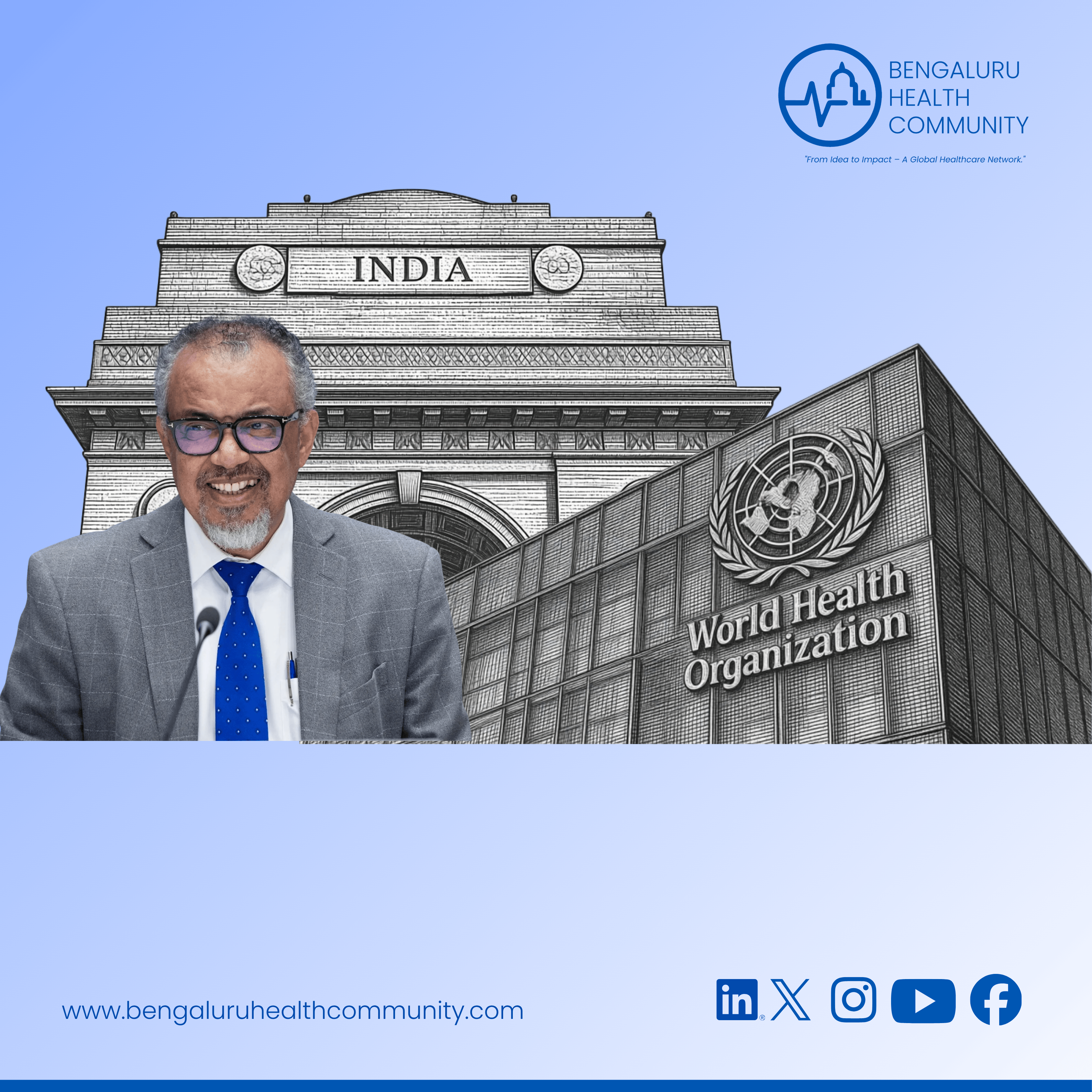
Summary
- World Health Day 2026 was observed on April 7 with the theme 'Together for Health. Stand with Science.' This is why the campaign matters for India and what it means for healthcare professionals, founders, and policymakers.
On April 7, 2026 — the 78th anniversary of the World Health Organisation's founding — the global healthcare community observed World Health Day under the theme: Together for Health. Stand with Science. It is the most direct statement the WHO has made in years about the existential threat that misinformation poses to healthcare systems worldwide. And for India, a country navigating the simultaneous pressures of rapid health-tech adoption, a post-COVID trust deficit, and an accelerating wave of health misinformation across social media, it is a message that lands with particular urgency.
The 2026 campaign was anchored by two historic global events. The International One Health Summit, hosted by France under the G7 presidency on April 5 to 7, brought together scientists, policymakers, and health systems leaders around the interconnectedness of human, animal, and environmental health. And the inaugural Global Forum of WHO Collaborating Centres — gathering scientific institutions from more than 80 countries — marked the largest network of scientific institutions ever convened around a United Nations agency. Together, these events represented a global reaffirmation of multilateral scientific cooperation at a moment when that cooperation is under unprecedented political and social pressure.
What the Science Theme Is Actually Responding To
The WHO does not choose its annual themes randomly. The Stand with Science framing is a direct response to a documented global pattern: declining trust in healthcare institutions, rising acceptance of health misinformation, and the growing influence of unverified health claims on patient behaviour and public health outcomes.
In India, this pattern is visible across multiple health categories. The generic semaglutide launch in March created an immediate wave of unverified health claims — social media posts promoting GLP-1 drugs for weight loss without any reference to prescription requirements, medical supervision, or side effects. The DCGI has already responded with enforcement actions against 49 entities for misleading GLP-1 promotion. Vaccine hesitancy, while lower in India than in some high-income countries, persists in specific communities and geographies. And AI-powered health advice — from chatbots, wellness apps, and unverified health platforms — is increasingly displacing evidence-based clinical guidance for a significant portion of India's digitally active population.
The One Health Framework and India
The One Health approach that anchors the 2026 World Health Day campaign recognises something that India's healthcare system has historically underweighted: human health, animal health, and environmental health are not separate systems. They are deeply interconnected. The emergence of zoonotic diseases — illnesses that jump from animals to humans — has been one of the defining public health challenges of the past three decades. COVID-19 was one such event. It will not be the last.
India is one of the world's most important One Health contexts. With one of the largest livestock populations globally, a dense human-animal interface in both rural and urban settings, significant antimicrobial resistance driven by antibiotic use in agriculture, and climate change altering the geographic distribution of disease vectors, the One Health framework is not an abstract academic concept for India — it is a practical public health necessity.
PM Modi's message on World Health Day 2026 reaffirmed India's commitment to building a healthier society, while Health Minister JP Nadda highlighted how India's approach integrates ancient wisdom with modern medical science through programmes like Ayushman Bharat and PM Bhartiya Janaushadhi Pariyojana.
What Healthcare Professionals and Founders Should Do
The Stand with Science theme creates a specific responsibility for every stakeholder in India's healthcare ecosystem. For healthcare professionals: the obligation to communicate evidence clearly, combat misinformation directly when they encounter it, and model evidence-based decision-making in their clinical practice and public communications. For healthcare founders: the obligation to build products grounded in clinical validation, communicate capability claims accurately, and resist the temptation to make unsupported health claims in marketing. For policymakers: the obligation to fund and support independent clinical research, strengthen regulatory frameworks for health claims, and invest in public health literacy.
BHC Perspective
At Bengaluru Health Community, Stand with Science is not just a WHO slogan — it is the operating principle for everything we build. The BHC Mentorship Platform connects healthcare founders with clinical experts and regulatory advisors precisely because we believe that healthcare innovation must be grounded in evidence. Every startup that builds clinical validation into its product roadmap, every hospital that invests in outcome measurement, and every physician who takes time to counter health misinformation in their community is standing with science. World Health Day 2026 is a reminder of why that work matters.
Frequently Asked Questions
Q: What is the theme for World Health Day 2026?
A: The theme is 'Together for Health. Stand with Science.' The year-long campaign celebrates scientific collaboration and urges governments, health workers, and the public to trust evidence-based medicine and counter health misinformation.
Q: What is the One Health approach highlighted at World Health Day 2026?
A: The One Health approach recognises the interconnectedness of human, animal, and environmental health. It promotes interdisciplinary collaboration to prevent diseases, address antimicrobial resistance, and build sustainable health systems that account for zoonotic disease risks and climate change.
Q: Why is the 'Stand with Science' theme relevant for India?
A: India faces active health misinformation challenges including unverified GLP-1 promotion post-semaglutide patent expiry, vaccine hesitancy in specific communities, and AI-generated health advice displacing clinical guidance. The Stand with Science framework creates accountability for healthcare professionals, founders, and policymakers to prioritise evidence in all health communications.