News
Telangana Life Sciences, BITS Pilani, and RMIT University Australia Are Launching a PhD Programme Together — India's Pharma Cluster Gets an Industry-Integrated Research Talent Pipeline
By Mustafa Shariff, Editor in Chief · August 11,2026 · 2 min read
Summary
- Telangana Life Sciences, BITS Pilani & RMIT University Launch Industry-Integrated PhD Programme — Building Research Talent for India's Pharma Cluster
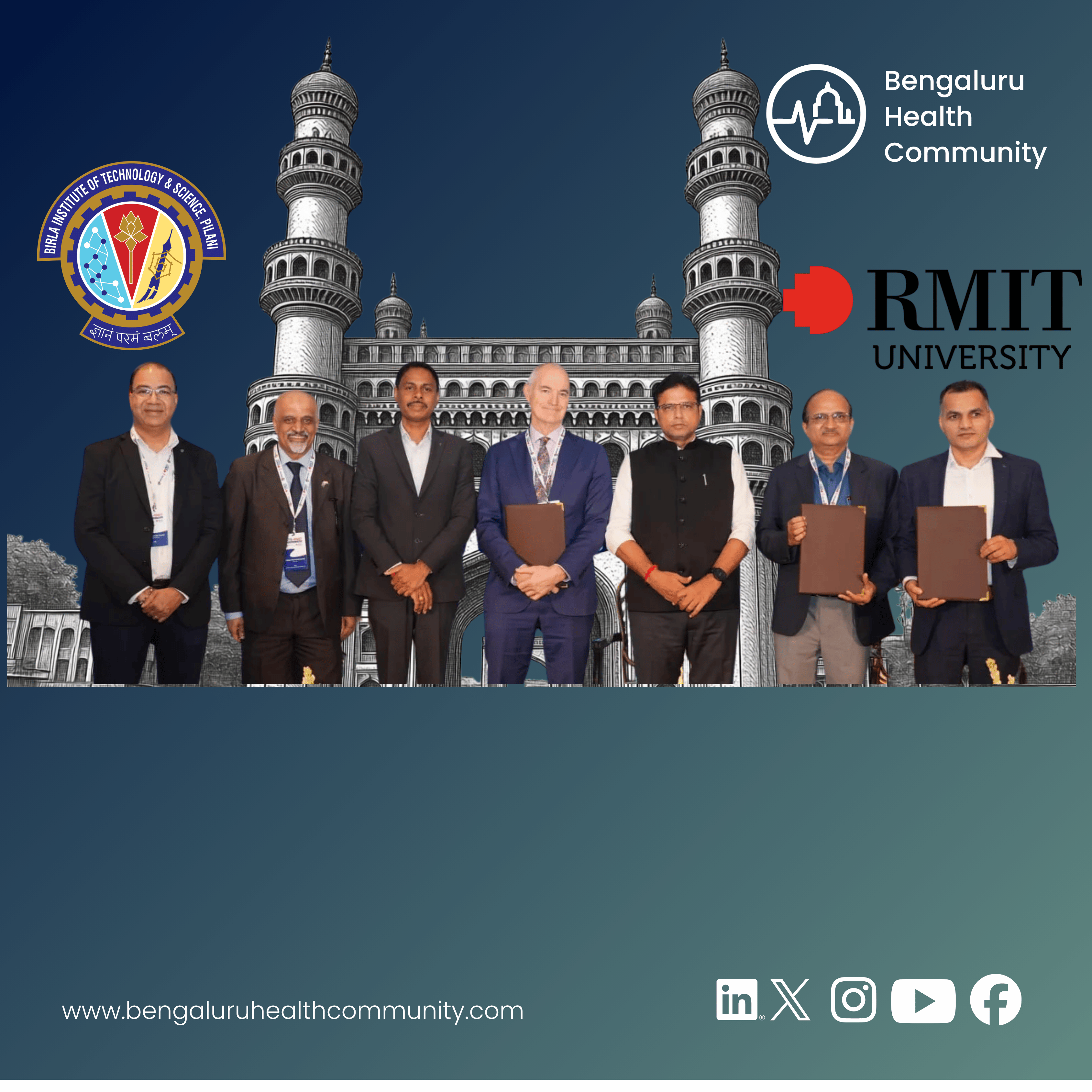
- Telangana Life Sciences, BITS Pilani, and RMIT University Australia launched an industry-integrated PhD programme in life sciences on August 4, 2026, connecting India's Hyderabad pharma cluster with two research universities to build translational research talent.
"This industry-integrated PhD programme represents a model we believe India's life sciences sector urgently needs. We are not training researchers in isolation from the industry problems they will spend their careers solving. Students will engage directly with Telangana's pharmaceutical and biotech companies from the first year — understanding real constraints, working on real challenges, and building the professional networks that accelerate both their careers and India's innovation ecosystem. This is how translational research culture is built."
Telangana Life Sciences, BITS Pilani (Birla Institute of Technology and Science, Pilani), and RMIT University (Royal Melbourne Institute of Technology, Melbourne, Australia) announced on August 4, 2026 the launch of an industry-integrated PhD programme in life sciences — creating a tri-institutional doctoral research structure designed to close the translational research gap between academic science and industrial pharmaceutical problem-solving in India's largest pharma cluster.
The programme brings together three distinct institutional capabilities. Telangana Life Sciences is the industry ecosystem anchor — connecting the programme to Hyderabad's pharmaceutical and biotech industry, which collectively hosts more than 300 pharmaceutical companies, 100-plus biotech firms, and multiple global pharmaceutical company R&D centres in the Genome Valley and HITEC City clusters that make Hyderabad one of Asia's most significant life sciences geographies. BITS Pilani contributes research university capability — one of India's most respected science and engineering institutions, whose practice school model (embedding students in industry for extended work-study periods) has been a template for industry-academia integration across Indian engineering education. RMIT University provides international research depth and access to Australian research infrastructure and collaborative networks.
The Industry-Integration Design
The defining feature of this PhD programme is the deliberate industry integration from the programme's start — not as a final-year project or optional placement, but as a structural element of the doctoral research design. Students will engage directly with Telangana's pharmaceutical and biotech companies throughout their PhD tenure, with research projects defined in co-creation with industry partners around problems that the companies are actually facing.
This industry-integrated model addresses one of the most persistent criticisms of India's academic pharmaceutical research output: the tendency for doctoral research to produce findings that are scientifically valid but industrially disconnected — optimising for publication in international journals rather than generating insights that pharmaceutical companies can directly apply to their manufacturing, formulation, analytical, or drug discovery challenges. By embedding industry engagement in the research design from the beginning, the programme aims to produce doctoral graduates who are simultaneously academically credentialed and industrially capable — the research talent profile that India's pharmaceutical innovation ecosystem currently lacks in adequate numbers.
Why Hyderabad Is the Right Location
Telangana's pharmaceutical cluster — anchored by Genome Valley's API and biologic manufacturing ecosystem, HITEC City's IT and digital health companies, and the city's concentration of global pharmaceutical company R&D centres — provides the industry engagement context that makes an industry-integrated PhD programme credible rather than aspirational. Unlike university-based doctoral programmes in cities where pharmaceutical industry presence is limited to a handful of companies, Hyderabad's scale of pharmaceutical company density means students in this programme have access to an exceptionally diverse range of industrial research problems across API manufacturing, formulation development, clinical research, regulatory affairs, quality management, and drug discovery.
The Australia-India Research Partnership Dimension
RMIT University's participation brings an Australia-India research collaboration dimension that connects to the broader deepening of Australia-India academic and scientific partnerships. Australian universities have been systematically building India partnerships following the Australia-India Education and Research Initiative and the Australia-India Strategic Research Fund — and RMIT's inclusion provides students with research mobility opportunities, access to Australian research infrastructure, and exposure to the international networks that doctoral graduates need to compete for research leadership positions globally.
BHC Perspective
At Bengaluru Health Community, the Telangana-BITS-RMIT PhD programme is a research talent development story that speaks to the most important long-term investment India's pharmaceutical innovation ecosystem requires: the human capital pipeline. Biopharma SHAKTI's 100 biologics by 2047 target and PharmaMed 2026's 1,000 clinical trial sites ambition both require pharmaceutical scientists with the dual capability — research rigour and industrial problem-solving — that this industry-integrated PhD programme is designed to produce.
Frequently Asked Questions
Q: What is the Telangana-BITS-RMIT PhD programme?
A: An industry-integrated doctoral research programme in life sciences announced August 4, 2026, by Telangana Life Sciences, BITS Pilani, and RMIT University Australia — structured to engage students directly with Telangana's pharmaceutical and biotech companies throughout the PhD, not just in final-year projects.
Q: Why industry-integration from the start?
A: To close India's translational research gap: conventional academic PhD programmes optimise for journal publications rather than industrially applicable insights. Industry integration from the programme's beginning produces doctoral graduates who are both academically credentialed and capable of directly addressing real pharmaceutical company research challenges.
Q: Why is Hyderabad appropriate for this programme?
A: Hyderabad's pharmaceutical cluster density — 300+ pharma companies, 100+ biotech firms, Genome Valley API and biologics manufacturers, global pharma R&D centres — provides unparalleled industrial engagement context, with students accessing diverse research problems across API manufacturing, formulation, clinical research, regulatory affairs, and drug discovery.