News
Serum Institute's CERVAVAC Earns WHO Prequalification — Unlocks Global UN Procurement
By Mustafa Shariff, Editor in Chief · October 07, 2026 · 2 mins read
Summary
- Serum Institute CERVAVAC Receives WHO Prequalification — India's HPV Vaccine Enters UN Supply Chain | BHC Media
- Serum Institute of India's CERVAVAC HPV vaccine receives WHO prequalification on October 5, 2026 — its 32nd — opening UN agency procurement and advancing global cervical cancer prevention. Full analysis on BHC Media.
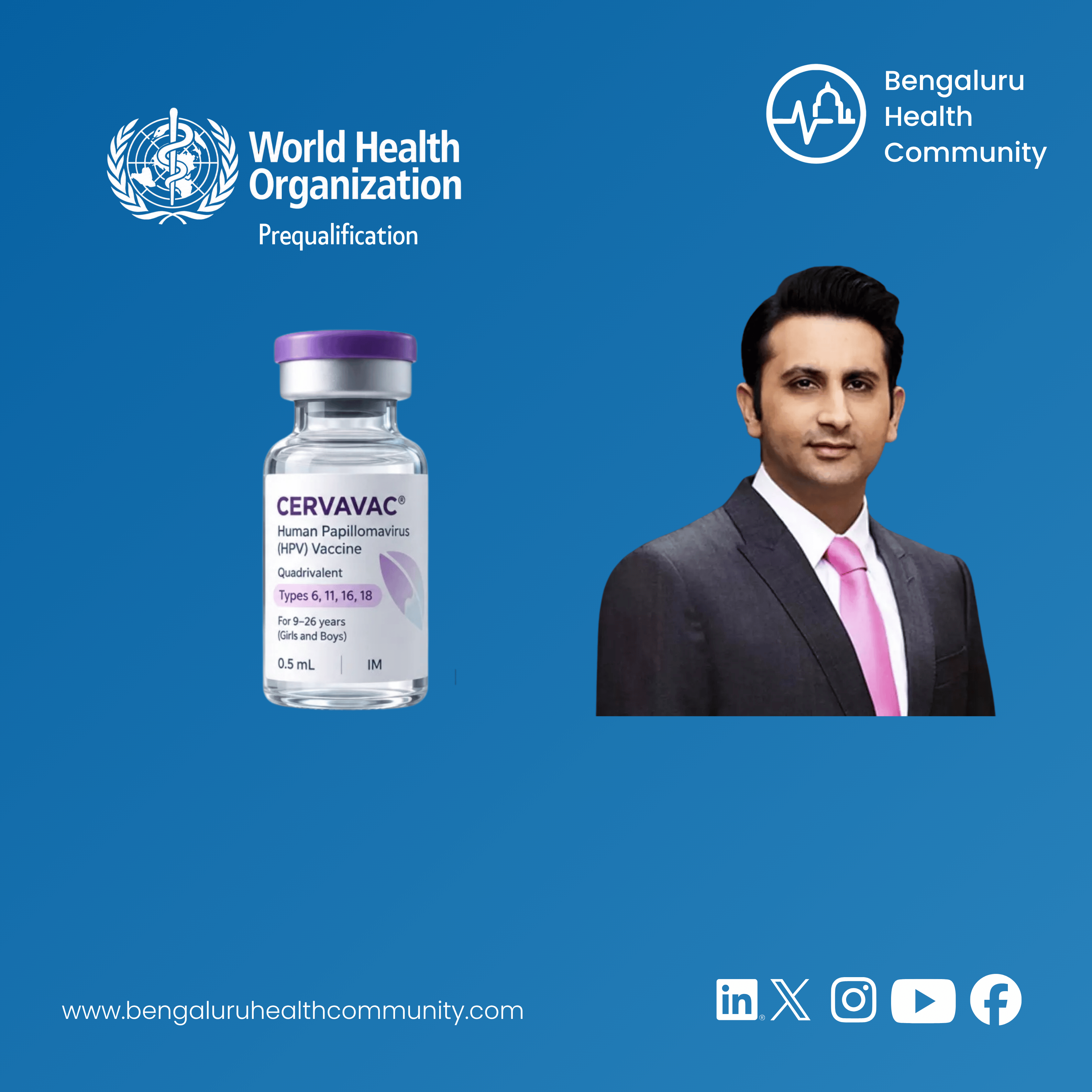
On 5 October 2026, Serum Institute of India (SII) announced that CERVAVAC — its recombinant quadrivalent Human Papillomavirus (qHPV) vaccine — received prequalification from the World Health Organization (WHO). The WHO's official prequalification listing records the effective date as 25 September 2026. This marks SII's 32nd WHO prequalification for biological products, and the first for an indigenously developed HPV vaccine from India.
Adar Poonawalla, Chief Executive Officer of Serum Institute of India, described the milestone as "an important step in strengthening the global response to HPV," adding that the prequalification would provide countries with another vaccine option for their immunisation programmes.
What Is CERVAVAC?
CERVAVAC is a recombinant quadrivalent HPV vaccine that targets four strains of the Human Papillomavirus: types 6, 11, 16 and 18. It is indicated for girls and boys aged 9 through 26 years. HPV types 16 and 18 are responsible for approximately 70% of cervical cancers globally, while types 6 and 11 cause the majority of genital warts.
The vaccine was developed by Serum Institute in collaboration with the Department of Biotechnology (DBT), the Biotechnology Industry Research Assistance Council (BIRAC), WHO's International Agency for Research on Cancer (IARC), and the Bill & Melinda Gates Foundation. This multi-institutional development partnership reflects India's increasingly sophisticated capacity for end-to-end vaccine innovation — from research through clinical development and large-scale manufacturing.
Why WHO Prequalification Is a Global Game-Changer
WHO prequalification is the gold standard quality certification that unlocks access to the most important bulk procurement channels in global health. Once prequalified, CERVAVAC becomes eligible for purchase by UNICEF, the Pan American Health Organization (PAHO), UNFPA, Gavi (the Vaccine Alliance) and other UN-linked agencies that supply vaccines to low- and middle-income countries (LMICs) at negotiated prices.
This matters enormously because India accounts for roughly one-fifth of the global cervical cancer burden — yet the disease disproportionately affects women in LMICs across Africa, South Asia and Southeast Asia who cannot access the expensive Merck (Gardasil) or GSK (Cervarix) vaccines. CERVAVAC, with its LMIC-friendly pricing potential, could substantially alter access dynamics. In the private market, CERVAVAC currently costs approximately Rs 2,000 per dose; Serum Institute has previously indicated that public procurement pricing could be significantly lower.
India's Cervical Cancer Burden
Cervical cancer is the second most common cancer among Indian women, with an estimated 1.25 lakh new cases and over 75,000 deaths annually. Despite being largely preventable through HPV vaccination and regular screening, India's national HPV immunisation programme has faced delays related to procurement logistics and vaccine pricing. CERVAVAC's WHO prequalification could accelerate India's own national rollout by enabling government bulk procurement at far lower cost — and potentially making CERVAVAC the vaccine of choice for India's Universal Immunisation Programme (UIP).
India's Vaccine Manufacturing Capacity
Serum Institute of India is the world's largest vaccine manufacturer by volume, producing over 1.5 billion doses annually across multiple vaccines. The CERVAVAC prequalification builds on SII's track record of supplying WHO-prequalified vaccines to Gavi-eligible countries — including DTP, BCG, measles and COVID-19 vaccines — and reinforces India's Vaccine Maitri (Vaccine Friendship) positioning as a global immunisation partner.
BHC Perspective
For Bengaluru's health innovation ecosystem, the CERVAVAC milestone is a landmark. It demonstrates that India can now develop, clinically validate, manufacture at scale, and earn global regulatory recognition for a novel vaccine — entirely indigenously. The collaboration between SII, DBT, BIRAC and the Gates Foundation is also a model for how public-private partnerships can compress vaccine development timelines. BHC Media will continue tracking India's growing vaccine and biologics pipeline, including the expected expansion of CERVAVAC into India's national immunisation calendar.
Frequently Asked Questions
Q: What does WHO prequalification mean for CERVAVAC?
A: WHO prequalification certifies that CERVAVAC meets WHO's rigorous standards for quality, safety and efficacy. It makes the vaccine eligible for procurement by UN agencies including UNICEF and PAHO, which supply vaccines to low- and middle-income countries globally — opening a massive new procurement channel for SII.
Q: Is CERVAVAC available in India right now?
A: Yes. CERVAVAC is available in the private market at approximately Rs 2,000 per dose. Government procurement pricing has not been publicly disclosed, but Serum Institute has indicated it would be substantially lower for public immunisation programmes.
Q: How does CERVAVAC compare to Gardasil and Cervarix?
A: CERVAVAC is a quadrivalent vaccine covering HPV types 6, 11, 16 and 18 — the same four strains as Merck's Gardasil. Gardasil 9 covers nine strains. CERVAVAC's key advantage is its Made-in-India cost structure, which should make it far more accessible for national immunisation programmes in India and across LMICs.
Q: What role did BIRAC and DBT play in CERVAVAC's development?
A: The Department of Biotechnology (DBT) and its industry-facing arm BIRAC provided early-stage research funding and institutional support that helped Serum Institute develop the indigenous HPV vaccine technology. The collaboration with WHO-IARC and the Gates Foundation added clinical trial expertise and global regulatory pathway support.