News
Piramal Pharma Solutions Has Partnered With Ajinomoto Bio-Pharma Services for ADC Manufacturing — India's CDMO Antibody-Drug Conjugate Capability Gets a Major Upgrade
By Mustafa Shariff, Editor in Chief · Aug 04,2026 · 2 min read
Summary
- Piramal Pharma Solutions Partners With Ajinomoto Bio-Pharma Services for ADC Development and Manufacturing — Expanding India's CDMO Oncology Capability
- Piramal Pharma Solutions has entered a strategic partnership with Ajinomoto Bio-Pharma Services for antibody-drug conjugate (ADC) development and manufacturing, combining Piramal's bioconjugation infrastructure with Ajinomoto's linker and payload chemistry expertise.
"This partnership strengthens our ADC CDMO offering by combining Piramal's extensive manufacturing infrastructure and regulatory expertise with Ajinomoto Bio-Pharma Services' established ADC linker and payload technology capabilities. Antibody-drug conjugates are among the most technically demanding pharmaceutical products to develop and manufacture. We are committed to building the integrated ADC capability that global pharmaceutical innovators need, and this partnership is a critical step in that commitment."
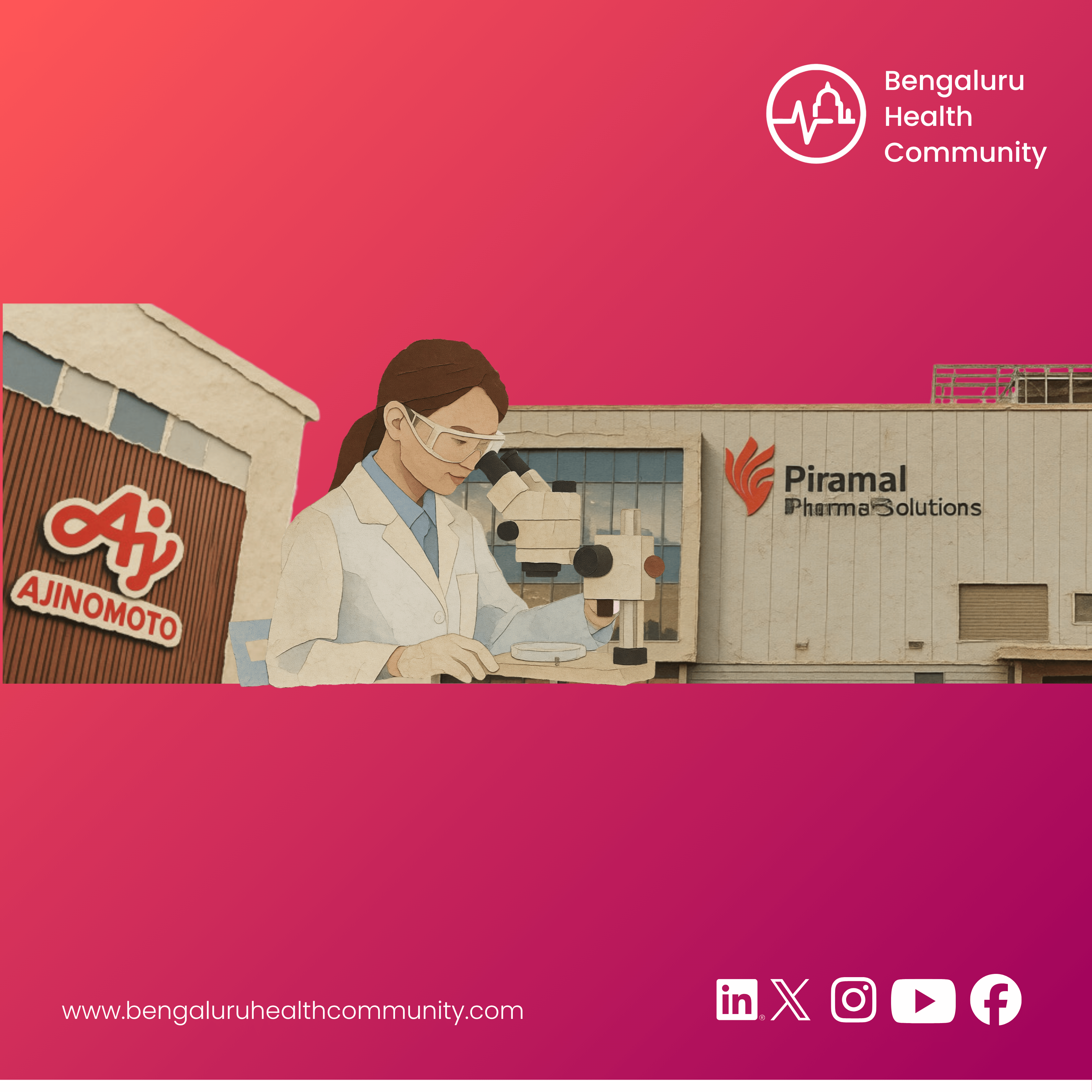
Piramal Pharma Solutions, the Contract Development and Manufacturing Organisation division of Piramal Pharma Limited (NSE: PPLPHARMA), has entered into a strategic partnership with Ajinomoto Bio-Pharma Services — a global pharmaceutical CDMO subsidiary of Ajinomoto Co., Inc. with established expertise in ADC linker chemistry, peptide synthesis, and high-potency API manufacturing — to support the development and manufacturing of antibody-drug conjugates.
Antibody-drug conjugates represent the fastest-growing category in oncology drug development: targeted therapeutics that combine a monoclonal antibody (which finds and binds to cancer cell surface targets) with a potent cytotoxic payload (which kills the cancer cell once the antibody has delivered it there) via a chemical linker that keeps the payload inactive in circulation but releases it specifically at the tumour site. The clinical rationale for this 'guided missile' approach to cancer treatment is compelling — delivering potent chemotherapy specifically to cancer cells while sparing normal tissues — and the clinical pipeline of ADCs has expanded dramatically, with multiple approvals across multiple cancer types in recent years.
Why ADC Manufacturing Is Technically Demanding
ADCs require the integration of three distinct manufacturing disciplines that are each individually complex. The antibody component is a large biological molecule produced through mammalian cell culture — the same high-complexity bioreactor manufacturing used for therapeutic antibodies like trastuzumab or bevacizumab. The payload component is typically a small-molecule cytotoxic agent — often significantly more potent than conventional chemotherapy drugs, requiring the contained manufacturing environments (high-potency API suites) that protect operators from cytotoxic exposure. And the bioconjugation step — chemically linking the payload to the antibody through a precisely engineered linker molecule — requires sophisticated analytical chemistry and specialised bioconjugation reactor infrastructure.
No single manufacturing facility has historically been able to manage all three of these disciplines internally with equal expertise — most ADC CDMOs have strong capabilities in one or two components and partnership agreements for the others. The Piramal-Ajinomoto partnership connects Piramal's bioconjugation and sterile fill-finish infrastructure (at its Grangemouth, Scotland and Lexington, Kentucky facilities) with Ajinomoto Bio-Pharma Services' established expertise in ADC linker chemistry and synthesis — creating a more complete integrated ADC CDMO offering than either company could provide independently.
Piramal's ADC Strategic Commitment
BHC Media has tracked Piramal Pharma Solutions' ADC strategy closely throughout 2026. In the FY2026 Annual Report (covered July 8 edition), Piramal committed $90 million to expand its sterile injectables and payload-linker capabilities at US facilities — explicitly naming ADCs and HPAPIs as the high-margin, differentiated CDMO categories where it is concentrating investment rather than the commodity generic GLP-1 manufacturing race. The Ajinomoto partnership extends this ADC commitment from infrastructure to capability: bringing the linker chemistry expertise that Ajinomoto has developed through its established pharmaceutical CDMO operations into Piramal's ADC service offering.
Ajinomoto Bio-Pharma Services
Ajinomoto Bio-Pharma Services is a global pharmaceutical CDMO that has built its business at the intersection of its parent company's amino acid synthesis expertise and pharmaceutical manufacturing — giving it distinctive capabilities in peptide synthesis, high-potency API manufacturing, and ADC linker chemistry that arise from the same chemical disciplines used in amino acid and fermentation chemistry. The company operates globally with facilities in the US, Europe, and Japan, providing clinical and commercial manufacturing services for small molecules, peptides, and increasingly, ADC components.
The ADC Pipeline Context
The global ADC clinical pipeline has expanded dramatically — with more than 100 ADCs in clinical development across oncology indications, several approvals in the past few years (AstraZeneca and Daiichi Sankyo's Enhertu, Pfizer's Padcev and Yeliva, Immunomedics's Trodelvy), and a wave of late-stage clinical assets approaching approval. The EU approval of Enhertu as the world's first tumour-agnostic HER2-targeted ADC (covered BHC Media July 7 edition) is the clearest recent signal of ADC's expanding clinical reach beyond the breast and gastric cancers where the category first demonstrated its potential.
BHC Perspective
At Bengaluru Health Community, the Piramal-Ajinomoto ADC partnership is a CDMO strategy story that illustrates one of the most important principles in high-value pharmaceutical manufacturing: the most technically demanding products reward the CDMOs that invest earliest and most systematically in the integrated capabilities they require. Piramal's $90M infrastructure investment plus the Ajinomoto capability partnership together define what serious ADC CDMO positioning looks like in 2026.
Frequently Asked Questions
Q: What is the Piramal-Ajinomoto partnership?
A: A strategic collaboration to support development and manufacturing of antibody-drug conjugates (ADCs) — combining Piramal Pharma Solutions' bioconjugation and sterile fill-finish infrastructure (US and UK facilities) with Ajinomoto Bio-Pharma Services' ADC linker chemistry and high-potency API expertise.
Q: Why are ADCs technically demanding to manufacture?
A: ADCs require integration of three distinct manufacturing disciplines: large-molecule antibody production (mammalian cell culture bioreactors), small-molecule cytotoxic payload synthesis (high-potency API suites), and bioconjugation (chemically linking payload to antibody via engineered linker). Each discipline requires specialised expertise and infrastructure.
Q: What is Piramal's broader ADC strategy?
A: Deliberately avoiding generic GLP-1 commodity manufacturing in favour of high-barrier, high-margin categories including ADCs, HPAPIs, and niche peptides — backed by $90M investment in payload-linker and sterile injectable capabilities at US facilities, now supplemented by the Ajinomoto linker chemistry partnership.