News
Piramal Pharma Solutions Has Added a Spray Drying Suite to Its Peptide API Facility — The Capability That Converts Peptides Into Inhalable and Oral Solid Dosage Forms
By Mustafa Shariff, Editor in Chief · August 08,2026 · 2 min read
Summary
- Piramal Pharma Solutions Expands Peptide API Facility With Advanced Spray Drying Suite — Enabling Inhalable and Oral Solid Peptide Dosage Forms
- Piramal Pharma Solutions has added an advanced spray drying suite to its peptide API manufacturing facility, enabling production of amorphous solid dispersions and dry powder inhaler formulations for complex peptide molecules.
"The addition of advanced spray drying capabilities to our peptide API facility is a natural extension of our integrated service offering. Spray drying enables us to take a peptide API and convert it into the amorphous solid form required for dry powder inhaler formulations, oral solid dispersions, and other solid dosage forms — expanding the range of drug products our customers can develop using our peptide manufacturing infrastructure. This is precision manufacturing at its most complex."
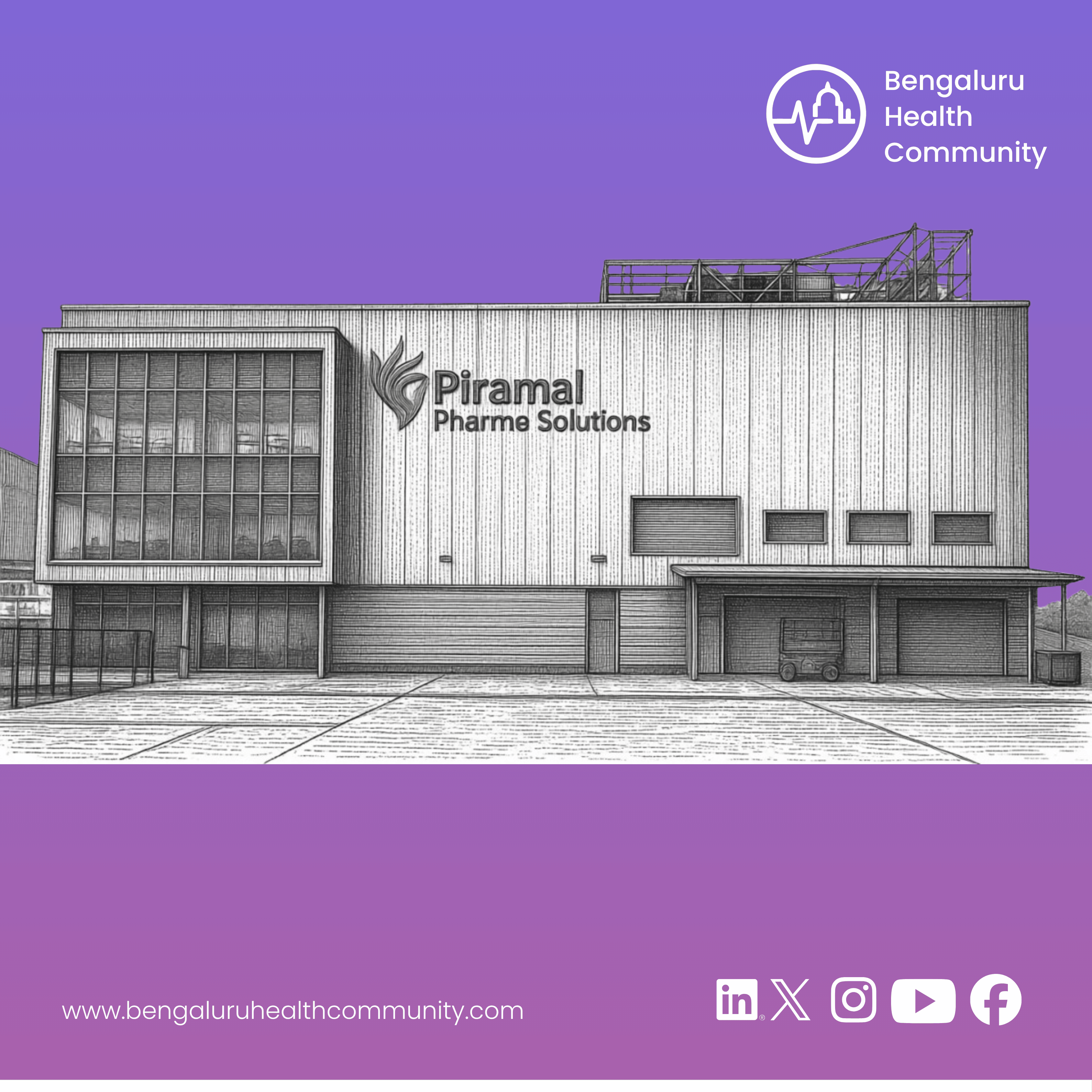
Piramal Pharma Solutions, the CDMO division of Piramal Pharma Limited, has expanded its peptide Active Pharmaceutical Ingredient manufacturing facility with an advanced spray drying suite — reported by BioSpectrum India on August 5, 2026. The addition of spray drying capability to Piramal's existing peptide API infrastructure represents a meaningful extension of the integrated service offering that Piramal has been systematically building since its 2021 acquisition of Hemmo Pharmaceuticals, one of India's largest and most experienced synthetic peptide API manufacturers.
Spray drying is a specialised pharmaceutical processing technology with specific applications across several high-value pharmaceutical product categories. The process works by atomising a liquid feed — which may contain the API, excipients, and solvent — into a fine mist that is exposed to a stream of hot gas, causing rapid evaporation of the solvent and leaving behind a fine, uniform solid powder with precisely controlled particle size, morphology, and solid-state form.
Why Spray Drying Matters for Peptide APIs
For peptide APIs specifically, spray drying addresses several critical formulation challenges. The most commercially significant application is the production of amorphous solid dispersions — a formulation approach that converts a poorly water-soluble API from its crystalline form into an amorphous state dispersed within a polymer matrix, dramatically improving dissolution rate and bioavailability. Many complex peptide molecules have poor aqueous solubility that limits their oral bioavailability when formulated in conventional crystalline solid dosage forms — amorphous solid dispersions produced by spray drying can overcome this limitation.
The second major application for spray drying in peptide drug development is the creation of dry powder inhaler (DPI) formulations for pulmonary delivery. Inhaled peptide therapies — targeting respiratory diseases or using the lung as a portal for systemic absorption of peptide drugs that cannot be administered orally — require the API to be reduced to precise particle size distributions (typically 1-5 micrometres for deep lung deposition) that are only achievable through controlled manufacturing processes including spray drying. Inhaled insulin programmes, inhaled interferons, and other inhaled peptide therapeutic investigations have all required this type of spray-dried formulation capability.
The Piramal Peptide Strategy
The spray drying expansion connects directly to Piramal Pharma Solutions' articulated strategy of building differentiated peptide CDMO capability — focusing on complex, technically demanding peptide manufacturing rather than commodity GLP-1 generic manufacturing (covered in BHC Media's July 8 edition analysis of Piramal's strategic decision to avoid the generic semaglutide race). The Hemmo Pharmaceuticals acquisition provided synthetic peptide manufacturing capabilities spanning both solution-phase and solid-phase peptide synthesis. The spray drying expansion extends this capability into peptide formulation development — allowing Piramal to offer customers an integrated service from peptide API synthesis through to the converted peptide drug substance in the solid form required for their target dosage form.
This integration is commercially important: pharmaceutical customers developing inhaled peptide or oral solid peptide products previously needed to engage two separate service providers — a peptide API manufacturer and a spray drying formulation developer. Piramal's expanded capability enables a single-source CDMO relationship for these development programmes, reducing supply chain complexity and regulatory filing burden.
The Broader Spray Drying Market
Amorphous solid dispersion manufacturing via spray drying has become one of the pharmaceutical CDMO sector's fastest-growing service categories as the drug development industry has produced an increasing number of poorly soluble drug candidates in recent years — a consequence of high-throughput screening approaches that generate lipophilic, high-molecular-weight compounds whose potency in biochemical assays does not translate to oral bioavailability without formulation intervention. India's pharmaceutical CDMO sector has been systematically building spray drying capability alongside its peptide and API manufacturing capabilities to capture the formulation services that these drug candidates require.
BHC Perspective
At Bengaluru Health Community, Piramal Pharma Solutions' spray drying expansion is a pharmaceutical manufacturing capability story that illustrates one of the most important competitive dynamics in the CDMO sector: the commercial value of integrated service platforms versus narrow point solutions. A CDMO that can take a peptide molecule from synthesis through API manufacture through solid-state formulation development can offer pharmaceutical customers a significantly more efficient development pathway than a fragmented supply chain of specialist providers.
Frequently Asked Questions
Q: What has Piramal added to its peptide API facility?
A: An advanced spray drying suite, enabling the production of amorphous solid dispersions (improving peptide API bioavailability) and dry powder inhaler formulations (for pulmonary delivery of peptide APIs) from the same integrated peptide manufacturing infrastructure.
Q: What is spray drying?
A: A pharmaceutical processing technology that converts a liquid API or formulation into a fine, uniform solid powder by atomising it into a hot gas stream, rapidly evaporating the solvent. Used to produce amorphous solid dispersions and DPI formulations with precise particle size control.
Q: How does this fit Piramal's strategy?
A: Builds on the 2021 Hemmo Pharmaceuticals acquisition (synthetic peptide API), extending the integrated service from API synthesis through solid-state formulation. Consistent with Piramal's focus on complex, differentiated peptide CDMO capability rather than commodity GLP-1 generic manufacturing.