News
Piramal Is Deliberately Avoiding the Generic GLP-1 Race — And Betting That the CDMOs Who Do the Same Will Win the Next Decade
By Mustafa Shariff, Editor in chief · July 16, 2026 · 2 min read
Summary
- Piramal Pharma Avoids the GLP-1 CDMO Rush: Focusing on ADCs, HPAPIs and Niche Peptides for Higher-Margin Differentiation
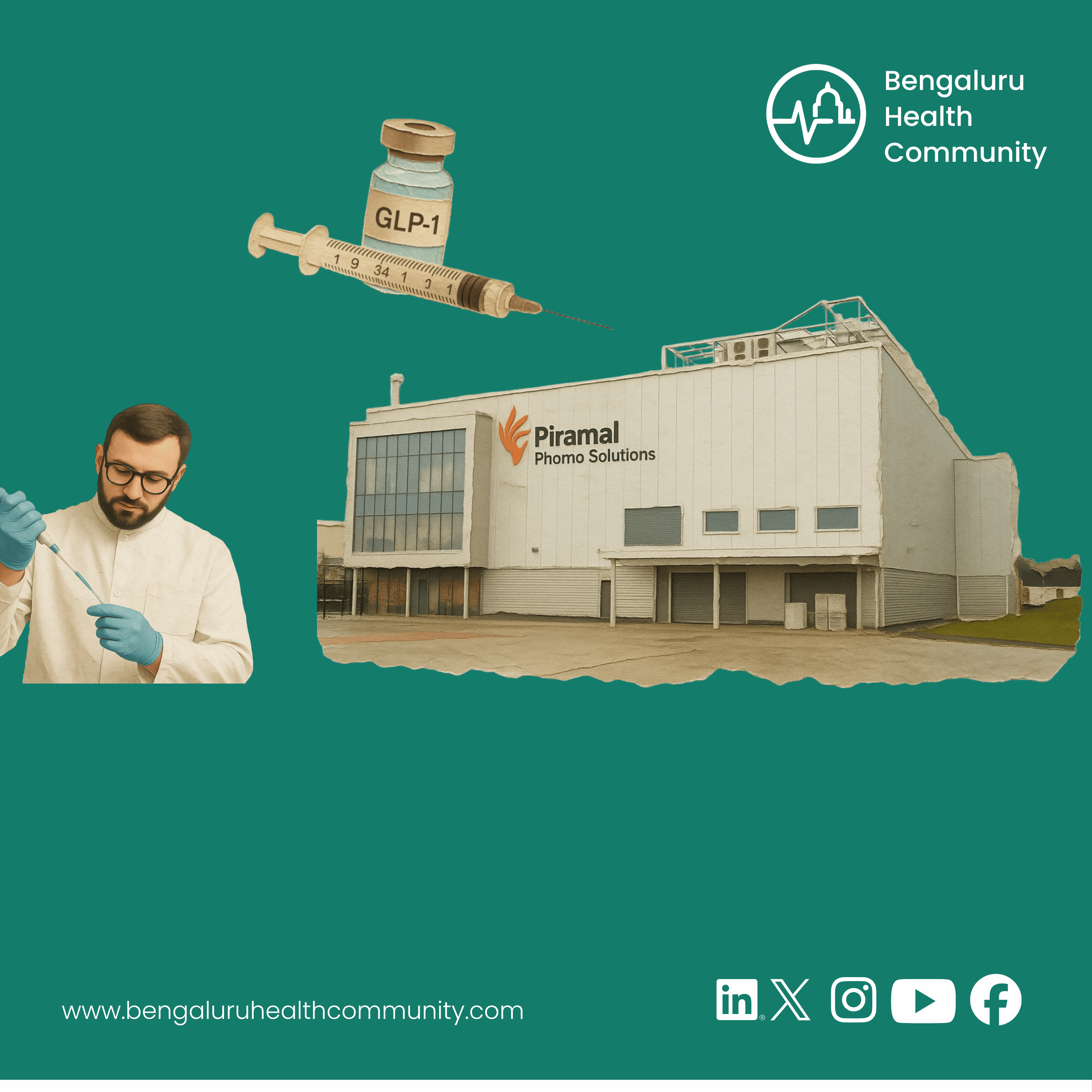
- Piramal Pharma Solutions has deliberately chosen not to enter the generic GLP-1 manufacturing market, instead focusing on ADCs, HPAPIs, sterile injectables and niche unique peptides — a CDMO strategy built around competitive differentiation over commodity volume.
"We are not entering the generic GLP-1 manufacturing space. There are plenty of CDMOs rushing to build GLP-1 capacity, and that will become a commodity market very quickly. Our focus is on ADCs, HPAPIs, sterile injectables, and niche peptides where we have genuine differentiation and where the competitive field is much smaller. We believe this is where sustainable CDMO margins are."
In the current global pharmaceutical manufacturing landscape, building GLP-1 manufacturing capacity is the most obvious growth play for any CDMO with peptide synthesis capability. The semaglutide patent expiry in India (March 20, 2026), the tirzepatide patent expiry trajectory, and Novo Nordisk's acknowledged loss of semaglutide exclusivity in multiple international markets have collectively created a peptide manufacturing demand wave that virtually every Indian and global CDMO is attempting to capture.
Piramal Pharma Solutions — the CDMO division of Piramal Pharma Limited that contributes approximately 55% of the company's consolidated revenue — has made the opposite choice. As articulated in Business Standard's June 14, 2026 reporting on the company's post-results investor communication: Piramal is deliberately avoiding the generic GLP-1 manufacturing space, choosing not to build GLP-1 capacity for the commodity generic peptide market.
The Rationale: Where Margins Will Actually Live
The CDMO market's competitive dynamics make Piramal's choice strategically coherent. When a manufacturing capability becomes widely distributed — as GLP-1 peptide manufacturing is becoming across India's CDMO sector — pricing power erodes toward marginal cost. Every Indian CDMO that enters the generic semaglutide manufacturing space is competing on the same solid-phase peptide synthesis capability, creating a commodity market where the largest-scale, lowest-cost producer wins.
Piramal's differentiation strategy focuses on manufacturing categories where the technical barrier to entry is genuinely high. Antibody-drug conjugates require the integration of complex bioconjugation chemistry, cytotoxic handling, specialised analytical methods, and biocontainment infrastructure that cannot be replicated simply by adding capacity. High-potency APIs require dedicated containment facilities and containment engineering that only a few manufacturers globally have built at scale. Sterile injectables require cleanroom infrastructure and validated aseptic manufacturing processes that represent multi-year capital investments. And niche unique peptides — customised for specific drug development programmes rather than produced generically — are manufactured under long-term, programme-specific agreements that generate more stable, higher-margin revenue than commodity peptide volumes.
The $90 million capacity expansion Piramal committed in FY26 — directed toward sterile injectables and payload-linker capabilities at its Lexington, Kentucky and Riverview, Michigan US facilities — explicitly targets this differentiated CDMO opportunity rather than GLP-1 generic capacity. Payload-linker capabilities are a specific building block for ADC manufacturing, connecting the cytotoxic payload component to the linker that attaches it to the antibody targeting agent.
The Contrasting Model: OneSource and the GLP-1 Market
The contrast with OneSource Specialty Pharma — the Bengaluru CDMO that BHC Media covered in yesterday's July 1 edition for its Health Canada approval of generic semaglutide for Dr Reddy's — illustrates the two different strategic bets available to India's peptide CDMOs. OneSource has built its business precisely around GLP-1 and complex peptide manufacturing for generic pharmaceutical clients, and has demonstrated that capability by securing USFDA-approved manufacturing and Health Canada-approved product launches.
Both strategies are coherent given their specific commercial positioning. OneSource is building a large-volume, regulatory-quality peptide manufacturing business serving the generic market's scale. Piramal is building a differentiated CDMO franchise in high-value specialty categories. The question the market will answer over the next five to seven years is whether the commodity GLP-1 manufacturing volume or the differentiated ADC and HPAPI margin delivers more durable commercial value.
What This Means for India's CDMO Sector Structure
The divergence in CDMO strategic positioning — some pursuing GLP-1 generic volume, others pursuing ADC and specialty differentiation — is healthy for India's overall CDMO sector development. A mature CDMO ecosystem requires both types: volume manufacturers who can respond to scale demand for established molecules, and specialty manufacturers who can support complex, innovative drug programmes from discovery through commercial manufacturing. India's CDMO sector is large enough and capable enough to support both strategies simultaneously.
BHC Perspective
At Bengaluru Health Community, Piramal's deliberate GLP-1 avoidance strategy is a business model case study that BHC's HMEP students studying pharmaceutical business strategy should understand. The choice between serving the biggest market at lower margin versus serving a smaller market at higher margin — with the latter requiring durable technical differentiation to maintain — is one of the most fundamental strategic choices in any manufacturing business. For BHC founders building in CDMO services or pharmaceutical manufacturing — understanding where durable competitive advantage lives in the value chain is the most important strategic question.
Frequently Asked Questions
Q: Why is Piramal avoiding generic GLP-1 manufacturing?
A: Piramal Pharma Solutions believes the generic GLP-1 market will become a commodity where large-scale, lowest-cost producers dominate at compressed margins. Instead, Piramal is focusing on ADCs, HPAPIs, sterile injectables, and niche unique peptides where manufacturing complexity creates durable competitive advantages and higher pricing power.
Q: What is Piramal focusing on instead?
A: Antibody-drug conjugates (ADCs), high-potency APIs (HPAPIs), sterile injectables, and unique niche peptides for specific drug development programmes. The company is investing $90 million in sterile injectable and payload-linker capabilities at US facilities to serve these higher-margin markets.
Q: What is the contrasting CDMO approach?
A: OneSource Specialty Pharma (Bengaluru) has built its CDMO business precisely around GLP-1 and complex peptide manufacturing for generic pharmaceutical clients, receiving USFDA facility approval and Health Canada product approval for generic semaglutide — representing the volume-focused, regulatory-quality approach to the same peptide manufacturing capability.