Funding News
Pacific OneHealth Is Building a Network of Micro Hospitals Across India for ₹300 Crore — The Anti-Corporate-Hospital Play
By Mustafa Shariff, Editor in Chief · April 08,2026 · 5 min read
Summary
- "India does not need more 500-bed mega hospitals in major metros. It needs trusted, high-quality clinical care within reach of every neighbourhood. That is what micro hospitals are designed to deliver."
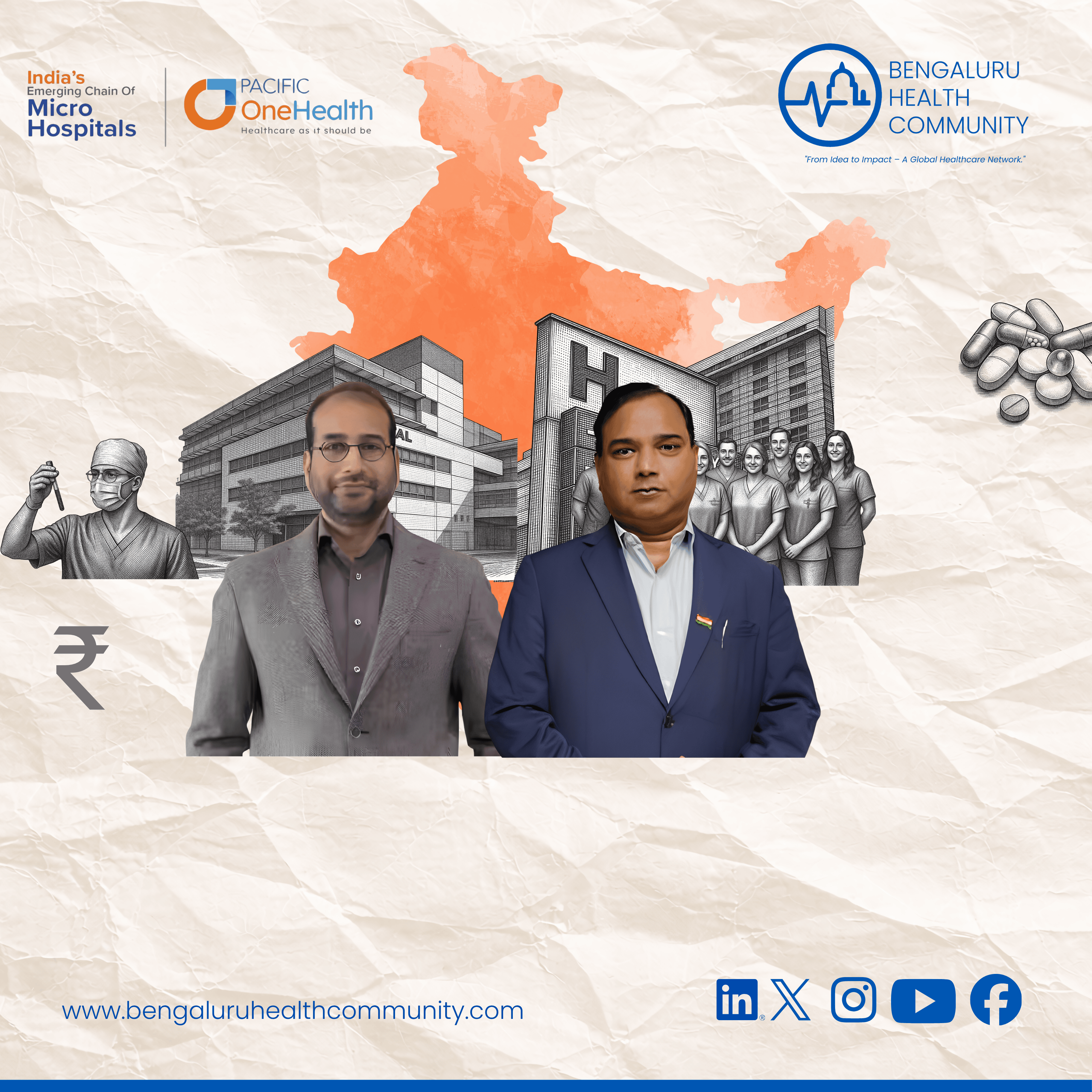
Two healthcare infrastructure announcements made within days of each other perfectly illustrate the two competing visions for India's hospital sector future. On one side: Adani's plan for 30 large hospitals under ₹60,000 crore — the mega-hospital, brand-driven model that has defined Indian private healthcare for three decades. On the other: Pacific OneHealth's commitment of ₹300 crore to build a network of micro hospitals across India — small, asset-light, neighbourhood-level facilities designed to deliver high-quality secondary care without the overhead, wait times, and inaccessibility of large hospital complexes.
Pacific OneHealth represents a bet on a fundamentally different architecture for healthcare delivery — and the logic behind it deserves serious examination.
What Micro Hospitals Are
Micro hospitals are small-footprint inpatient facilities, typically ranging from 8 to 50 beds, strategically located in residential neighbourhoods, tier-2 cities, or underserved urban areas. They focus on a specific, curated set of procedures and conditions — typically elective surgeries, maternity care, post-acute recovery, and selected secondary care — rather than trying to offer the full spectrum of services that a large multi-speciality hospital provides.
The micro hospital model has specific economic advantages. Land and construction costs are dramatically lower than for large hospitals. Working capital requirements are smaller. Clinical staffing is simpler — a micro hospital focused on specific procedures needs deep expertise in those procedures, not a full roster of every speciality. And asset utilisation — the percentage of time that operating theatres, beds, and equipment are in use — can be significantly higher because the facility is designed specifically for the procedures it delivers.
Why India Needs This Model
India's hospital sector has a structural access problem. The large multi-speciality hospitals that dominate private healthcare are concentrated in major metros and state capitals. Patients in Tier-2 cities, residential peripheries of metros, and semi-urban areas face a choice between overloaded government hospitals and a long, expensive journey to a private hospital in a larger city. The micro hospital model is designed to close that gap.
India also has a procedural volume opportunity that micro hospitals are well-positioned to capture. Cataract surgery, joint replacement, hernia repair, laparoscopic procedures, maternity care, and dialysis — high-volume, standardised procedures where clinical outcomes are predictable and cost efficiency is achievable — are exactly the service lines that micro hospitals specialise in. These are procedures that can be delivered at consistently high quality in small-footprint facilities without the overhead of a 500-bed multi-speciality complex.
The Pacific OneHealth Model
Pacific OneHealth's ₹300 crore investment will build a chain of micro hospitals across India with a specific focus on geographic markets that large hospital groups have systematically underserved. The company is positioning itself as an asset-light operator — using standardised facility designs, centralised clinical protocols, and technology to deliver consistent quality across a distributed network of small facilities.
This is precisely the model that Narayana Health pioneered at a different scale — standardised, protocol-driven, high-volume care with relentless focus on cost efficiency and clinical outcomes. Applied to micro hospitals and tier-2 markets, it creates a potentially highly scalable template for healthcare delivery.
BHC Perspective
At Bengaluru Health Community, we believe the micro hospital model is one of the most important healthcare delivery innovations of this decade. India's healthcare access gap is not primarily a problem of insufficient large hospitals in major metros — it is a problem of insufficient accessible, affordable, high-quality care in the 400+ cities and thousands of towns that have populations between 50,000 and 5 million. Pacific OneHealth's investment, Narayana Health's model, and Sukino's out-of-hospital care network are all pointing in the same direction: the future of Indian healthcare delivery is distributed, asset-light, and condition-specific. For founders building in this space, the commercial opportunity has never been clearer.
Frequently Asked Questions
Q: What is Pacific OneHealth building?
A: Pacific OneHealth has committed ₹300 crore to build a network of micro hospitals across India, targeting underserved urban neighbourhoods and tier-2 cities with small-footprint, asset-light healthcare facilities focused on specific high-volume procedures.
Q: What is a micro hospital?
A: A micro hospital is a small inpatient facility, typically 8-50 beds, located in residential or semi-urban areas. It focuses on a curated set of procedures — such as elective surgery, maternity care, or post-acute recovery — rather than offering the full spectrum of services of a large multi-speciality hospital.
Q: Why might micro hospitals work better than large hospitals in India?
A: Micro hospitals have lower land and construction costs, simpler staffing requirements, higher asset utilisation for the specific procedures they deliver, and can be located in underserved communities that large hospital chains systematically ignore. They are designed for the procedures that represent the highest volume and most predictable outcomes in secondary care.