News
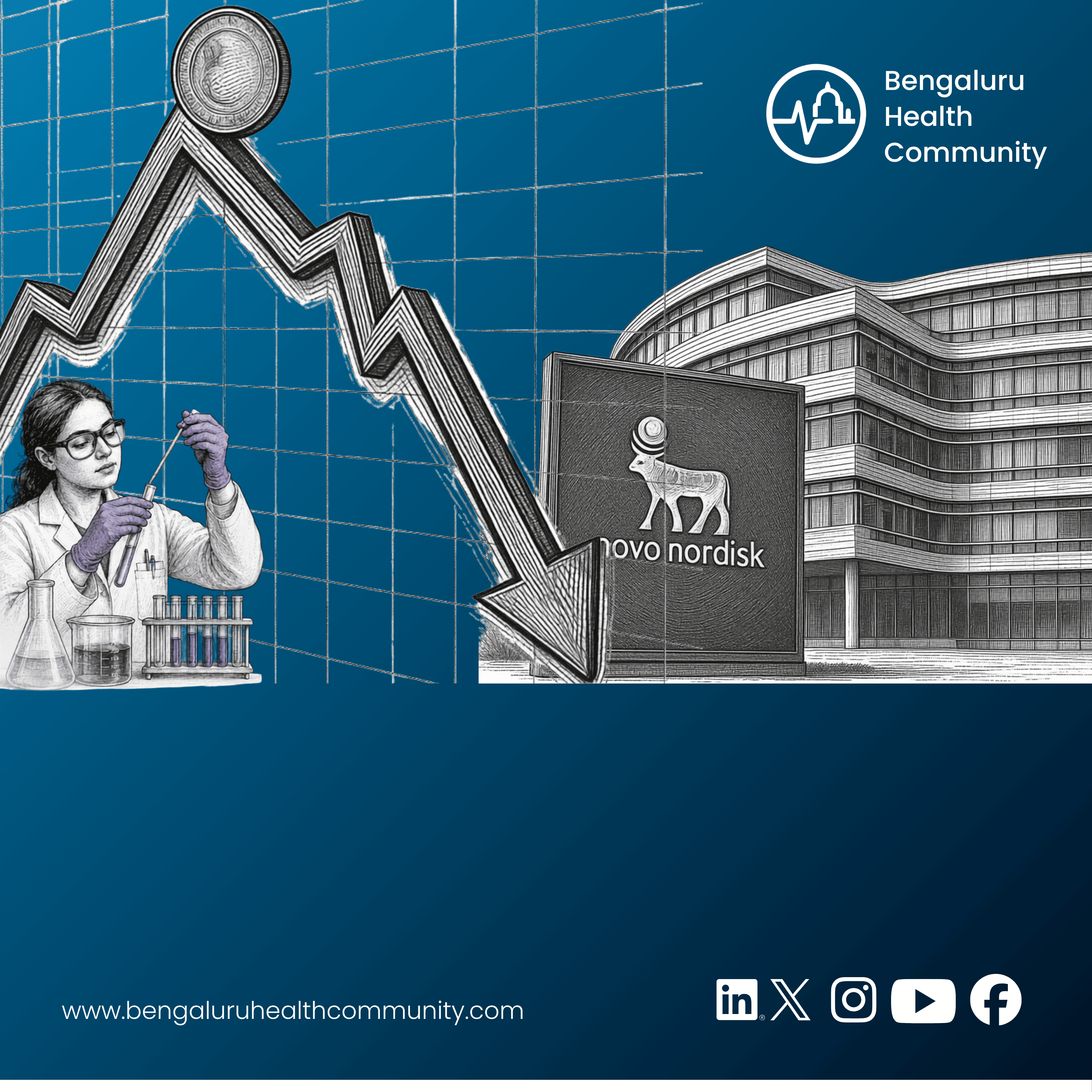
Novo Nordisk Has Cut Its 2026 Sales Guidance — And India's Generic Semaglutide Market Is One of the Named Reasons
By Mustafa Shariff, Editor in Chief · July 16,2026 · 2 min read
Summary
- Novo Nordisk Cuts 2026 Guidance: India's Semaglutide Patent Expiry Named as a Factor in International Operations Headwind
- Novo Nordisk has cut its 2026 full-year sales guidance to -4% to -12% at CER, partly citing loss of semaglutide exclusivity in international markets including India, where 10+ generic versions launched after March 20 patent expiry.
"The outlook is impacted by the loss of exclusivity for the semaglutide molecule in certain markets in International Operations. In International Operations, intensifying competition and negative impacts from the compound patent expiry of the semaglutide molecule in certain markets are included in our assumptions. The global GLP-1 market expansion continues, enabling Novo Nordisk to increase patient reach and expand volumes — but lower realised prices, including the MFN agreement in the US and the loss of exclusivity for semaglutide in certain international markets, are the key headwinds."
Novo Nordisk, the Danish pharmaceutical company whose semaglutide products Ozempic (for type 2 diabetes) and Wegovy (for obesity) made it briefly the most valuable company in Europe by market capitalisation in 2024, has filed a 6-K with the US Securities and Exchange Commission for FY2026 in which it acknowledges that the loss of exclusivity for semaglutide in certain international markets is contributing to a significant revision of its full-year 2026 sales outlook.
Novo Nordisk's revised 2026 adjusted sales guidance is a decline of 4% to 12% at constant exchange rates — a substantial downward revision that the company attributes to multiple factors including the US Most Favoured Nation agreement that reduces realised prices in its largest market, reduced Medicaid coverage for obesity medications, and explicitly: the loss of exclusivity for the semaglutide molecule in certain markets in International Operations, leading to intensifying competition and negative price impacts.
Why India Is Central to This Story
BHC Media has tracked India's semaglutide story with greater depth and continuity than almost any other publication in the Indian healthcare media landscape. The timeline: India's core semaglutide compound patent expired on March 20, 2026. Within days, five Indian pharmaceutical companies had launched generic semaglutide injections at prices 60-80% below Novo Nordisk's branded Ozempic. By April 2026, over 10 companies had launched generics. By June 2026, Dr Reddy's had received Health Canada approval for generic semaglutide manufactured at OneSource's Bengaluru facility. And by Q1 2026, Novo Nordisk's own quarterly financial disclosures explicitly acknowledged the adverse impact of Indian generic competition on International Operations.
The causality is now documented: India's pharmaceutical market — the world's largest market for generic medicines by volume — has generated competition against Novo Nordisk's semaglutide franchise at a price level (₹750/injection for Sun Pharma's version versus ₹8,800-10,000 for branded Ozempic) that has materially altered Novo Nordisk's realised pricing in the Indian market and, by extension, its International Operations revenue trajectory.
The 'Most Favoured Nations' Agreement Amplification
The US MFN agreement that Novo Nordisk references in its guidance revision compounds the international price pressure: by committing to sell GLP-1 medications in the US at prices benchmarked to a most-favoured-nations clause, Novo Nordisk has effectively created a mechanism by which price reductions in international markets — including those driven by generic competition in India — could influence US pricing negotiations as well. The regulatory and commercial pressure on Novo Nordisk's GLP-1 business is therefore not merely an India story or a US story but a genuinely global story where pricing in one geography has structural implications for another.
What This Means for India's Pharma Ecosystem
Novo Nordisk's guidance revision is, from India's pharmaceutical sector perspective, a validation of commercial scale that is historically extraordinary. India's generic pharmaceutical industry — through the exercise of its legitimate intellectual property rights following the semaglutide patent expiry — has materially affected the financial results of the world's most valuable pharmaceutical company in its most important commercial category. That is what 'pharmacy of the world' means in 2026: not just supplying affordable medicines, but genuinely disrupting the global pharmaceutical market's pricing dynamics through the competitive power of India's manufacturing scale and regulatory capabilities.
The Broader Semaglutide Market Context
Novo Nordisk notes that the global GLP-1 market expansion continues — enabling the company to increase patient reach and expand volumes globally even as prices face pressure. The Indian market is expanding access to GLP-1 therapy to tens of millions of patients who could not afford branded Ozempic at ₹8,800-10,000. India's moving annual turnover for GLP-1 drugs was ₹14.46 billion in February 2026, growing at 178% year-on-year before generic competition even began. Jefferies' projection of the Indian market reaching $1 billion as generic pricing extends access appears on track.
BHC Perspective
At Bengaluru Health Community, Novo Nordisk's guidance revision is the financial confirmation of what BHC Media's GLP-1 coverage has documented across more than a dozen editions in 2026. India's semaglutide generics are not a footnote to the global GLP-1 story — they are a structurally significant factor in the financial performance of the world's most important pharmaceutical company this year. For BHC founders in pharmaceutical market access, pricing strategy, or GLP-1 clinical platforms — understanding that India's generic competition can reach this level of global commercial impact is foundational context for every strategic conversation about the Indian pharmaceutical market.
Frequently Asked Questions
Q: What has Novo Nordisk disclosed about India's semaglutide impact?
A: Novo Nordisk's FY2026 filing explicitly cites 'loss of exclusivity for the semaglutide molecule in certain markets in International Operations' — including India, where the compound patent expired March 20, 2026 — as a headwind driving intensifying competition and lower realised prices, contributing to a revised sales guidance of -4% to -12% at CER.
Q: How did India's generic semaglutide market develop?
A: Following the March 20, 2026 patent expiry, 10+ Indian companies launched generic semaglutide at 60-80% below branded Ozempic pricing (Sun Pharma at ₹750/injection vs ₹8,800-10,000 for branded). Dr Reddy's subsequently received Health Canada approval for generic semaglutide manufactured at OneSource's Bengaluru CDMO facility.
Q: What is Novo Nordisk's broader 2026 guidance?
A: Full-year 2026 adjusted sales guidance revised to -4% to -12% at constant exchange rates, impacted by the US MFN pricing agreement, reduced US Medicaid obesity medication coverage, and loss of semaglutide exclusivity in international markets including India.