News
Neuland Laboratories Is Building a 135,000 Sq Ft Facility Dedicated Purely to Process Development — Not Discovery, Not Manufacturing, Just the Bridge Between Them
By Darshan S, Editor · 20 June,2026 · 5 min read
Summary
- Neuland Laboratories' $20 Million Process Development Facility: Inside India's Largest Dedicated CDMO Scale-Up Lab
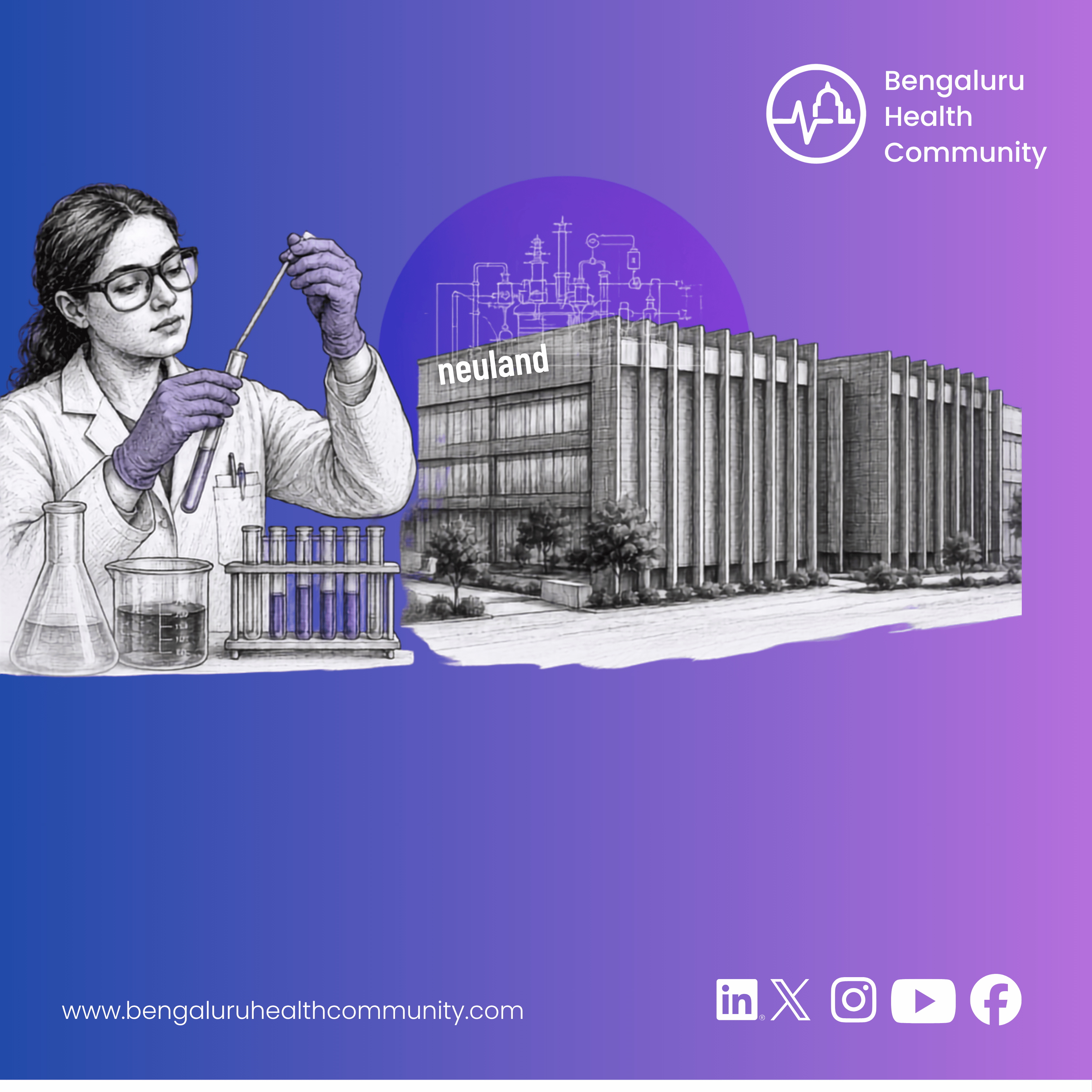
- Neuland Laboratories is investing $20 million in a 135,000 sq ft process-development facility at its Hyderabad Genome Valley campus, fully completed by October 2026.
"The end goal is to give clients parallel development and earlier manufacturability insight from the outset. We are using a pre-existing building, so the full $20 million investment is being directed entirely toward fitting out the facility for process development."
Neuland Laboratories, a global contract development and manufacturing organisation specialising in complex active pharmaceutical ingredients, has announced a $20 million investment to open a dedicated process-development laboratory and integrated kilo lab at its Genome Valley campus in Hyderabad. The 135,000 square foot facility will be fitted out in phases and is expected to be fully completed by October 2026.
The investment's distinguishing characteristic is purpose: unlike many CDMO process-development laboratories that also support discovery work or other mixed-use research streams, Neuland's new facility has been designed exclusively for process development and scale-up. Saharsh Davuluri, Vice Chairman and Managing Director of Neuland Labs, explained the specific design choice: the company is using a pre-existing building, meaning the full $20 million investment goes entirely toward specialist fit-out rather than constructing the shell — concentrating capital on equipment and capability rather than construction.
Why Dedicated Process Development Matters
Process development is the critical, often underappreciated bridge between a drug substance's initial laboratory-scale synthesis and its eventual commercial-scale manufacturing. The chemistry that works reliably at gram-scale in a laboratory flask frequently behaves differently when scaled to kilogram or tonne quantities — heat transfer, mixing efficiency, reaction kinetics, and impurity formation can all change non-linearly with scale. Companies that under-invest in process development discover these problems only after committing to commercial-scale manufacturing, resulting in costly delays, batch failures, and regulatory complications.
Neuland's facility addresses this risk directly by equipping process development teams with tools that simulate large-scale reactions at smaller, more cost-effective scale before committing to full manufacturing runs. Davuluri described the objective precisely: giving clients parallel development and earlier manufacturability insight from the outset — identifying weak synthetic routes earlier and reducing redundant testing through automated workflows, predictive modelling, and data-driven route selection.
The Technical Infrastructure
The new facility's specifications reflect a comprehensive bet on complex API and peptide manufacturing capability. The integrated kilo lab will be equipped with 20- to 250-litre all-glass reactors, cryogenic capability, and multiple filtration systems — equipment that allows scientists to test process performance at scales large enough to generate genuine scale-up data without requiring full GMP manufacturing capacity, which is typically scarce and expensive at CDMO facilities.
The facility includes dedicated areas for process engineering, polymorph studies (examining the different crystalline forms a drug substance can take, which affects solubility and bioavailability), process safety assessment, and advanced flow chemistry — alongside five dedicated peptide labs and three purification labs. The inclusion of five peptide-specific laboratories signals Neuland's strategic positioning toward peptide API manufacturing — a category that has become commercially critical given the GLP-1 peptide drug class's explosive global growth, covered extensively in BHC Media's recent semaglutide coverage.
AI-driven route scouting, parallel synthesis capability, and electronic laboratory notebooks integrate digital tools throughout the development workflow, alongside a centralised analytical wing that provides the characterisation and quality testing infrastructure that process development requires at every stage.
The Workforce and Genome Valley Context
Once fully operational, the facility will expand Neuland's process-development team to more than 500 scientists — making it one of the largest dedicated scale-up workforces in India. This concentration of process development talent at a single site reflects Hyderabad's broader position as India's most significant pharmaceutical manufacturing and research cluster, anchored by Genome Valley's 200-plus pharma and biotech companies.
Neuland's investment arrives in the same week as two other significant Hyderabad-focused institutional announcements: the Axis Bank-BITS Pilani ₹100 crore Industry Research, Technology & Innovation Park, also located near Genome Valley, and continuing momentum in Telangana's broader Life Sciences Policy execution. Hyderabad's pharmaceutical and biotech infrastructure investment pace remains the most active in India.
"BHC Perspective"
At Bengaluru Health Community, Neuland's process development investment is a story about the specific, less visible infrastructure layer that makes India's broader pharma manufacturing ambition achievable. Sun Pharma's Organon acquisition and Wockhardt's Zaynich FDA approval — both covered in BHC Media's recent editions — represent the commercial and regulatory milestones of India's pharma transformation. Neuland's process development facility represents the manufacturing science infrastructure that makes those milestones repeatable. For BHC founders in pharmaceutical process technology, CDMO services, or peptide manufacturing — Neuland's investment defines the technical capability benchmark India's CDMO sector is building toward.
Frequently Asked Questions
Q: What is Neuland Laboratories building?
A: A $20 million, 135,000 sq ft dedicated process-development laboratory and integrated kilo lab at its Genome Valley campus in Hyderabad, fully completed by October 2026 — designed exclusively for process development and scale-up rather than mixed-use discovery work.
Q: What equipment will the facility include?
A: 20-250 litre all-glass reactors with cryogenic capability, multiple filtration systems, five peptide labs, three purification labs, AI-driven route scouting, parallel synthesis capability, electronic laboratory notebooks, and a centralised analytical wing.
Q: Why does dedicated process development matter for CDMOs?
A: Chemistry that works at lab scale often behaves differently at industrial scale. Dedicated process development facilities let scientists identify scale-up problems and optimise manufacturability earlier, reducing costly delays and batch failures when transitioning to commercial-scale manufacturing.