Funding News
Narayana Health Just Bought a UK Hospital Chain for ₹2,200 Crore — Dr Devi Shetty's Vision of Global Affordable Care Is Now on British Soil
By Mustafa Shariff, Editor in Chief · April 6 · 5 min read
Summary
- "Like us, Practice Plus Group recognised that while the majority of patients struggle to access healthcare, only a minority can afford costly private care. Together, we are a perfect fit."
When Dr Devi Prasad Shetty founded Narayana Health in Bengaluru in 2000, his stated mission was radical: deliver world-class cardiac surgery at prices that ordinary Indians could afford. His hospital became famous for performing open-heart surgery for less than the cost of many Indian weddings. What began as a single cardiac hospital in Bengaluru has grown into one of India's largest hospital networks — and has now, with the acquisition of UK-based Practice Plus Group Hospitals, taken its model to one of the world's most established healthcare markets.
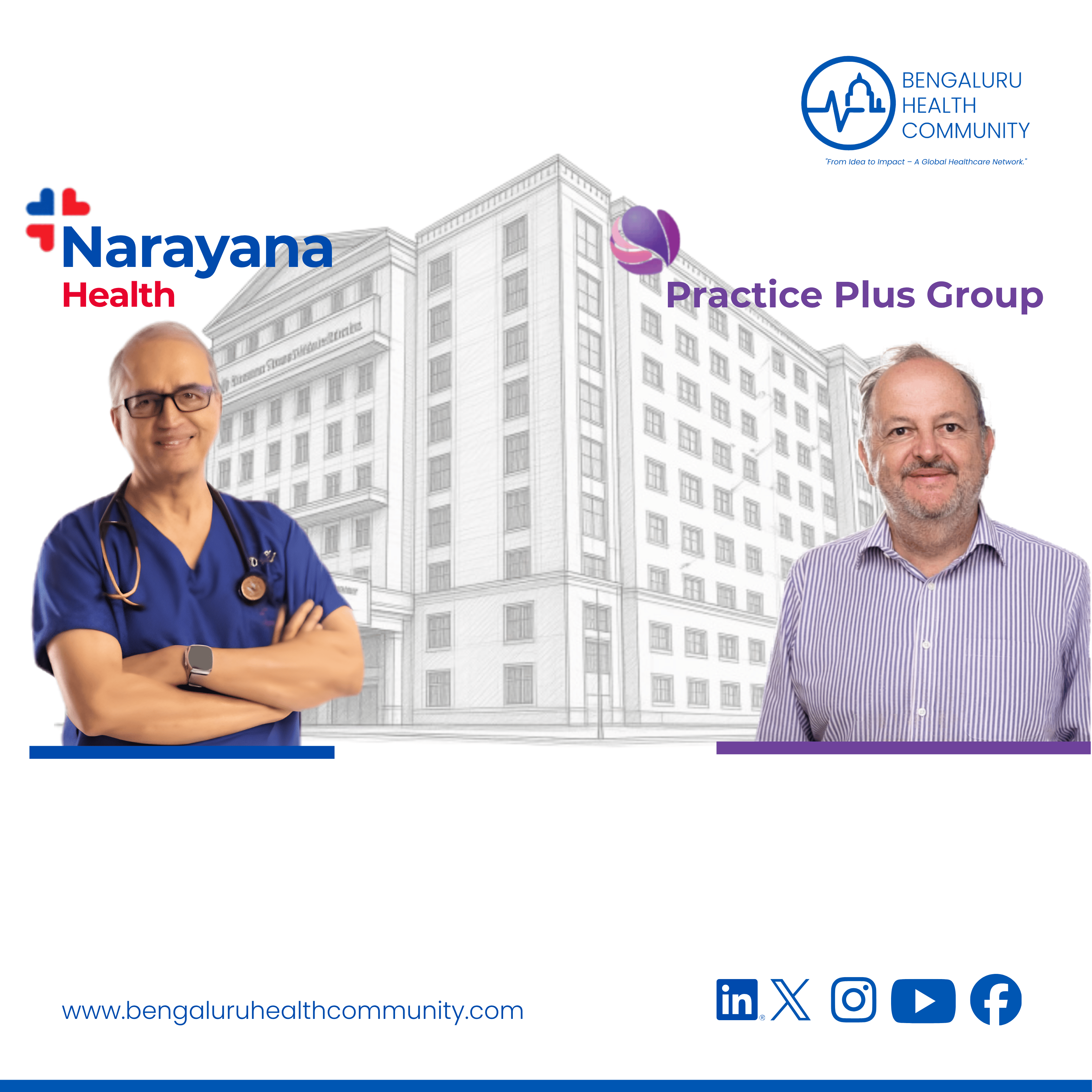
Narayana Health has completed the acquisition of Practice Plus Group Hospitals for £188.78 million — approximately ₹2,200 crore — making it the most significant entry by an Indian hospital group into the British healthcare market. The deal was completed through Narayana Health's UK subsidiary and gives the group immediate operational control of 12 specialty surgical centres across the UK, with a combined capacity of 330 beds, approximately 1,300 doctors and clinical staff, and a revenue base of approximately £250 million per year.
What Practice Plus Group Is
Practice Plus Group is not a peripheral player in UK healthcare. It is the UK's fifth-largest private hospital group and the fourth-largest NHS healthcare service provider — meaning it both treats privately paying patients and delivers services commissioned by the National Health Service. Its 12 hospitals and surgical centres specialise in three areas: orthopaedics, ophthalmology, and general surgery. The group performs approximately 80,000 surgeries annually and has been growing at 12% per year with improving profitability — EBITDA rising from £13 million in 2023 to £16 million the following year.
The acquisition covers Practice Plus Group's secondary care hospital business only. Its integrated urgent care business — including NHS 111 contact centres and out-of-hours GP services — and its Health in Justice division, which provides healthcare throughout the prison system, were not part of this transaction.
Why Narayana Health Made This Move
Dr Shetty's rationale is characteristically direct. Both Narayana Health and Practice Plus Group built their models around the same insight: the majority of patients who need surgery cannot afford high-cost private care, but they deserve better than what the purely public system can offer at current capacity. The two organisations have converged on what Dr Shetty describes as a new choice — accessible private healthcare for patients who fall between the fully subsidised public system and the expensive private sector.
For Narayana Health, the UK acquisition is also a strategic technology and capability play. The group explicitly plans to use its technology infrastructure to support integration with Practice Plus Group, driving innovation and operational efficiency. Narayana Health has built proprietary systems for high-volume, protocol-driven surgical care — a model that delivers consistent quality at significantly lower cost per procedure than traditional private hospital operators. Applying those systems to a UK hospital network with 80,000 annual surgeries creates immediate efficiency opportunity.
The Broader Signal for Indian Healthcare
Narayana Health's UK acquisition is not an isolated event. It is part of a pattern of Indian healthcare going global. Narayana already operates in the Cayman Islands, where its hospital model serves international patients. Apollo Hospitals has been expanding its presence in international markets. The acquisition of Practice Plus Group represents the most significant move yet: taking not just a brand but an operational hospital network into a tier-1 global market.
For the Indian healthcare ecosystem, this matters for several reasons. It validates that Indian hospital management expertise — built on decades of high-volume, low-cost, quality-driven operations — is exportable and commercially credible in developed markets. It demonstrates that Indian healthcare companies can execute complex international M&A. And it raises the ambition of what Indian healthcare organisations can aspire to build.
BHC Perspective
At Bengaluru Health Community, the Narayana Health-Practice Plus Group deal is a landmark story — and it is a Bengaluru story. Dr Shetty's hospital was founded in our city. The model that made Narayana Health what it is was built here. The fact that this Bengaluru-born organisation is now operating surgical centres in the United Kingdom is a signal of what Indian healthcare can achieve at global scale when clinical excellence meets operational discipline and long-term strategic vision.
Frequently Asked Questions
Q: What did Narayana Health acquire in the UK?
A: Narayana Health acquired Practice Plus Group Hospitals — 12 specialty surgical centres across the UK specialising in orthopaedics, ophthalmology, and general surgery — for £188.78 million (approximately ₹2,200 crore).
Q: Who is Dr Devi Prasad Shetty?
A: Dr Devi Prasad Shetty is the founder and chairman of Narayana Health, one of India's largest hospital networks headquartered in Bengaluru. He is known globally for pioneering high-quality, affordable cardiac surgery in India.
Q: What is the revenue of Practice Plus Group?
A: Practice Plus Group has annual revenues of approximately £250 million, with EBITDA of £16 million and 12% year-on-year growth. It performs approximately 80,000 surgeries annually across its 12 UK centres.