AI in Healthcare
Narayana Health Is Rebuilding Its Hospitals Around Intelligence — AI Documentation, Risk Score Dashboards, 10,000 Cardiac Patients on Virtual Wards. The Hospital That Thinks.
By Mustafa Shariff, Editor in Chief · June 03,2026 · 2 min read
Summary
- Narayana Health's AI Transformation: What the Intelligent Hospital Model Looks Like in Practice
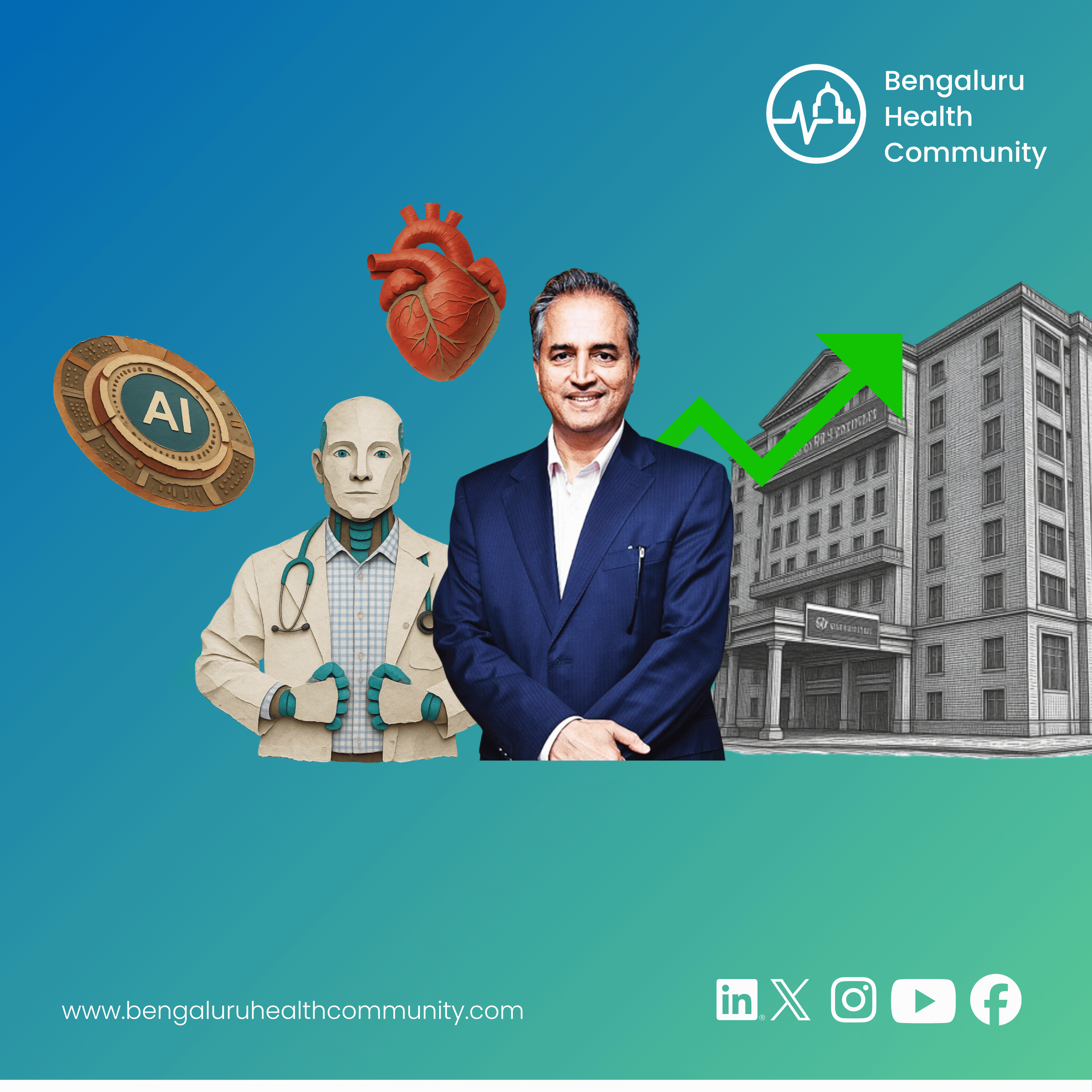
- Narayana Health is deploying AI across documentation, clinical workflows, and remote cardiac monitoring. Here is the full story of what the intelligent hospital model means and how it is being built.
"The question for healthcare leaders is no longer whether AI will be adopted. The real question is how quickly organisations can redesign their systems, workflows, and decision-making processes around intelligence. The future hospital will not just be digital. It will be intelligent."
Narayana Hrudayalaya — better known as Narayana Health — is a Bengaluru-based hospital chain that built its international reputation on a specific and powerful idea: that the highest quality cardiac surgery could be made affordable through operational scale and process efficiency. The Devi Shetty-founded network of 21 hospitals has cumulatively performed thousands of cardiac procedures at costs that are a fraction of equivalent procedures in Western healthcare systems, demonstrating that quality and affordability are not inherently in tension when operational systems are sufficiently optimised.
In 2026, Narayana Health is applying the same discipline of systematic optimisation to a new operational challenge: deploying artificial intelligence across its clinical workflows in a way that genuinely changes how care is delivered, documented, and monitored — rather than adding a technology layer that clinicians route around. The AI transformation being implemented at Narayana Health is substantive enough that it has attracted attention from the Hospital Management Asia publication and the HealthTechX Asia 2026 conference as a model for the region.
The Operational Problems AI Is Solving
The specific clinical and administrative problems that Narayana Health's AI deployment addresses are the same ones that consume enormous physician and nursing time across every hospital system in the world. Documentation: after every consultation, a doctor records clinical notes that capture the conversation, clinical findings, assessment, and plan. In most Indian hospitals, this documentation is typed or dictated by the physician, consuming 15-30 minutes of time per patient encounter that could be spent on clinical care. AI clinical documentation systems that capture the consultation in real time and generate structured clinical notes — for physician review and approval rather than physician authorship — represent a significant productivity gain.
Diagnostic report interpretation: radiological, pathological, and laboratory reports sit in queues waiting to be read and acted upon. AI-assisted prioritisation — flagging the reports that represent urgent findings for immediate clinical attention — reduces the latency between report generation and clinical response. Patient risk score monitoring: for complex patients managing multiple comorbidities, continuous updating of deterioration risk scores based on vital sign trends, medication compliance, and laboratory results enables earlier clinical intervention before deterioration reaches crisis.
The Virtual Ward for Cardiac Patients
The most operationally ambitious component of Narayana Health's AI deployment is its virtual cardiac ward — a platform that extends monitoring from the hospital to the patient's home through wearable ECG integration. Over 10,000 patients are monitored through this system annually, with wearable ECG data transmitted to central monitoring dashboards staffed by clinical teams who review automated alerts for arrhythmias, deterioration signals, and compliance anomalies. The platform aims to reduce hospital readmissions by identifying deterioration early enough to allow ambulatory intervention — a clinical and economic priority in a healthcare system where readmissions consume capacity and resources that the system cannot absorb at scale.
The post-discharge surveillance model Narayana Health has built for cardiac patients is a direct answer to one of India's healthcare system's most significant structural gaps: the absence of managed care infrastructure between hospital discharge and the next scheduled appointment. In the US and Europe, cardiac patients are typically enrolled in structured cardiac rehabilitation and monitoring programmes. In India, most cardiac patients return home to self-management with limited clinical support. The Narayana virtual ward creates a monitored intermediate space between acute hospital care and fully independent self-management.
The Vision and Its Implications
Narayana Health's articulation of where this journey leads is direct: the future hospital will not just be digital. It will be intelligent. The distinction matters: digital hospitals have replaced paper with electronic systems. Intelligent hospitals use those electronic systems as the data infrastructure for AI that actively improves clinical decisions, reduces administrative burden, and extends the hospital's monitoring reach beyond its physical walls.
The AI transformation at Narayana Health is being built on a foundation of existing digital infrastructure — electronic health records, hospital information systems, and the data interoperability that Narayana has invested in building over the past decade. Without that digital foundation, AI cannot function: the models require structured clinical data to learn from and generate outputs that integrate into clinical workflows.
BHC Perspective
At Bengaluru Health Community, Narayana Health's AI transformation is a Bengaluru story — one of India's most respected hospital groups, headquartered in our city, building the operating model that defines what intelligent healthcare delivery looks like. For BHC founders building in clinical AI, hospital workflow automation, remote patient monitoring, or post-discharge care coordination — Narayana Health is both a customer archetype and a demonstration that the market for your products is real, active, and being built right now.
Frequently Asked Questions
Q: What AI transformation is Narayana Health implementing?
A: AI clinical documentation (auto-generating notes from consultations for physician review), AI-assisted diagnostic report prioritisation, continuous patient risk score monitoring, and a virtual cardiac ward monitoring 10,000+ patients at home via wearable ECG integration.
Q: What is the Narayana Health virtual cardiac ward?
A: A remote monitoring platform where 10,000+ cardiac patients annually wear ECG devices at home, with data transmitted to central monitoring dashboards. Clinical teams review automated alerts for arrhythmias and deterioration signals to enable early ambulatory intervention and reduce hospital readmissions.
Q: Why is this AI model significant for India?
A: It addresses India's structural gap in post-discharge managed care — most Indian cardiac patients return home to minimal clinical monitoring. The virtual ward creates a monitored intermediate space that reduces readmissions and enables early clinical intervention in a system without adequate outpatient cardiac rehabilitation infrastructure.