News
MrMed Is Making Specialty Cancer and Autoimmune Medicines Available Within Hours Across Bengaluru — A New Hub, a New Standard for Critical Medicine Access
By Mustafa Shariff, Editor in Chief · May 12, 2026 · 2 min read
Summary
- MrMed's Bengaluru Expansion: Why Last-Mile Specialty Medicine Access Is One of India's Most Important Healthcare Infrastructure Problems
- MrMed has established a new distribution hub and operations centre in Bengaluru to ensure consistent last-mile access to specialty medicines for cancer and autoimmune patients. Here is the full story.
"Bengaluru is one of our largest target markets which makes it the natural starting point for this level of investment. The operational challenge was never just speed — it was ensuring consistency across the entire order lifecycle, from real-time availability to last-mile delivery, at scale."
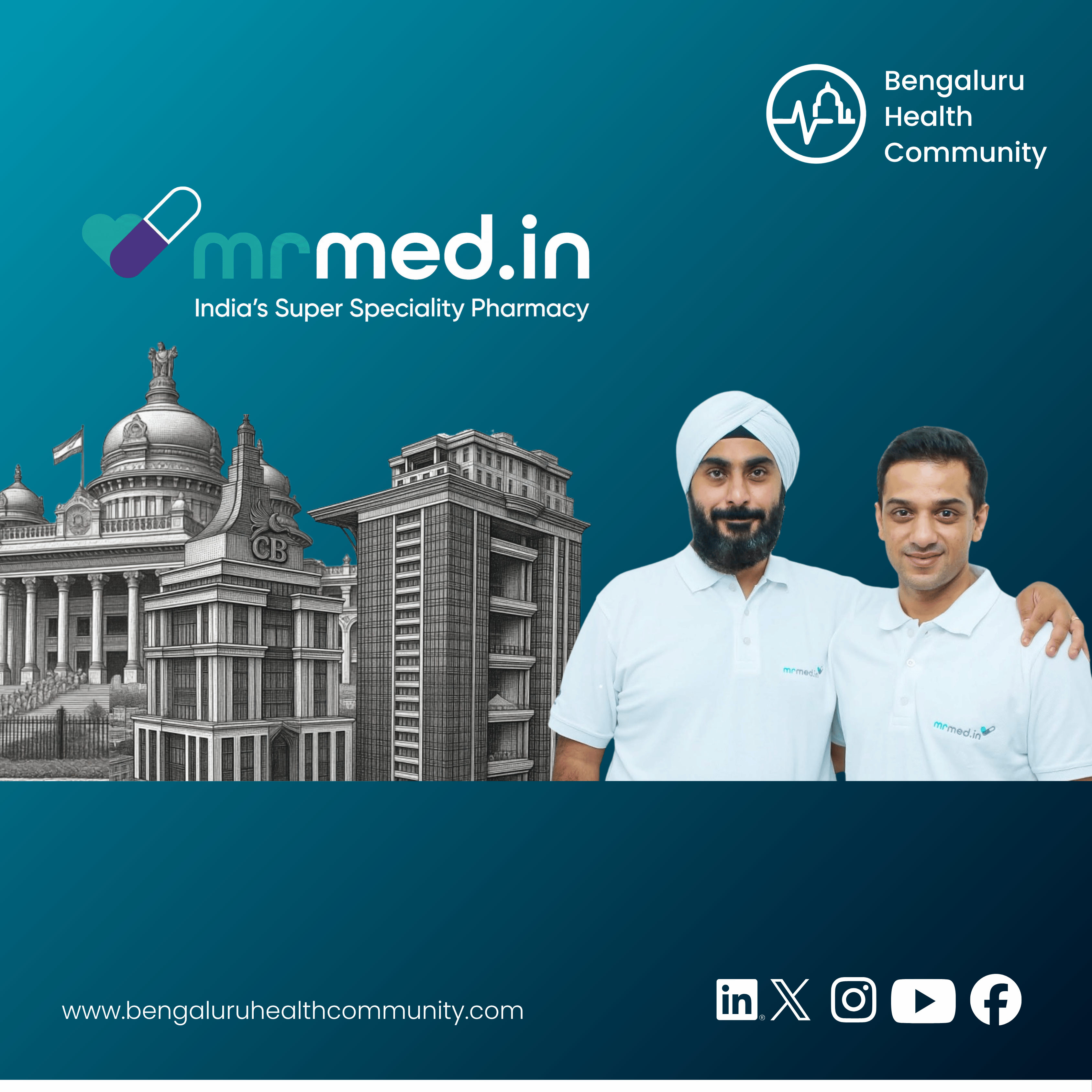
MrMed, the Chennai-headquartered specialty and super-specialty medicine platform, has announced a significant infrastructure investment in Bengaluru — the city it identifies as one of its top two revenue markets and the natural starting point for the distribution model it intends to replicate nationally. The investment comprises two complementary facilities: a new 850 square foot storage and distribution hub in Central Bengaluru, positioned for rapid dispatch across the city's diverse geographies, and a 2,000+ square foot Bengaluru office that functions as the operational command centre coordinating fulfilment not just within the city but across adjacent markets.
MrMed's business is built around a problem that barely registers in mainstream healthcare coverage but has enormous clinical consequences: patients managing serious chronic conditions — cancer, autoimmune diseases, complex metabolic disorders — depend on specialty medicines that are frequently unavailable at standard retail pharmacy channels. These are not the drugs that a neighbourhood medical shop stocks. They are high-cost, low-volume, temperature-sensitive, often imported or domestically manufactured in small batches, requiring specialist procurement, storage, and logistics. When a cancer patient on a specific chemotherapy regimen or an autoimmune patient on a biological drug cannot access their medication reliably, the clinical consequences range from treatment interruption to disease progression to life-threatening complications.
The Last-Mile Specialty Medicine Gap
India has approximately one million retail pharmacies — the densest pharmacy network in the world relative to population. But this network is optimised for the most common, high-volume generic medicines that any pharmacy can profitably stock. Specialty medicines — oncology drugs, immunosuppressants for transplant patients, biologic therapies for rheumatoid arthritis, multiple sclerosis, or Crohn's disease — are typically stocked only at hospital pharmacies or large dedicated specialty pharmacy chains in metro cities. For patients who need these medicines at home, between hospital visits, or in parts of a city not well-served by hospital pharmacies, access gaps create clinical risk.
Devashish Singh, Co-Founder and CEO of MrMed, articulates the operational philosophy directly: the challenge was never just speed — it was ensuring consistency across the entire order lifecycle, from real-time availability to last-mile delivery, at scale. That framing distinguishes MrMed's ambition from a simple delivery startup: the hard problem is not delivering a package quickly but guaranteeing that the specific medicine a patient needs is actually in stock, stored correctly, authenticity-verified, and delivered consistently across the full treatment duration — which for many specialty conditions means months or years.
Bengaluru as the Model Market
Bengaluru's position as one of MrMed's top two revenue markets reflects the city's specific characteristics: a large, educated, health-insured urban population managing complex chronic conditions at high rates — cancer incidence in Bengaluru is influenced by the city's demographic profile — with access to oncology and specialist care at Manipal, Apollo, Narayana, Kidwai National Cancer Institute, and other centres that prescribe specialty medicines at significant volumes. Patients discharged from these institutions to home management need reliable access to their ongoing therapy without requiring return visits to hospital pharmacies.
The new Central Bengaluru hub addresses a specific gap that MrMed had identified: areas of the city that had seen limited access to specialty medicines because they were not within rapid delivery range of the previous operational footprint. Complete geographic coverage of Bengaluru — achievable within 1-2 months of the hub launch according to the company — eliminates this gap and creates a city-wide service standard that can be benchmarked for the next market expansion.
The National Expansion Roadmap
MrMed's Bengaluru model is explicitly designed as a template for national replication. Following Bengaluru coverage, the company plans to deploy the same hub-plus-command-centre model in Delhi and Chennai, followed by Guwahati, Mumbai, and Hyderabad. The geographic sequencing reflects both revenue market priority and strategic logic: the four metro cities (Bengaluru, Delhi, Chennai, Mumbai, Hyderabad) together represent the majority of India's organised specialty medicine demand, while Guwahati addresses the northeastern market where specialty medicine access gaps are particularly acute.
For patients managing cancer or autoimmune conditions in cities outside the major metros, the consistent access to specialty medicines that MrMed provides in Bengaluru today represents the gap that will need to be filled nationally over the next 24-36 months. The NBCS 2026 hospital height reform that BHC Media covered this week will add more bed and treatment capacity in metro hospitals — creating more patients managed on specialty medicines who need reliable home access.
BHC Perspective
At Bengaluru Health Community, MrMed's Bengaluru expansion is a story about healthcare infrastructure at the last mile — the stage in the care pathway that receives the least attention but determines whether treatment decisions made in the hospital actually translate into consistent patient outcomes at home. For BHC founders building in pharmaceutical supply chain, specialty distribution, or patient adherence platforms — MrMed's model demonstrates what genuinely patient-centred specialty medicine access infrastructure requires.
Frequently Asked Questions
Q: What is MrMed?
A: India's specialty and super-specialty medicine platform providing reliable access to high-cost, low-volume medicines for cancer, autoimmune conditions, and complex metabolic disorders — categories underserved by conventional retail pharmacies.
Q: What has MrMed built in Bengaluru?
A: An 850 sq ft storage and distribution hub in Central Bengaluru for rapid city-wide dispatch, plus a 2,000+ sq ft operational command centre. The company expects complete Bengaluru geographic coverage within 1-2 months, followed by expansion to Delhi, Chennai, Guwahati, Mumbai, and Hyderabad.
Q: Why does specialty medicine last-mile access matter?
A: Specialty medicines for cancer, autoimmune disease, and transplant management are not stocked in standard retail pharmacies. When patients cannot access these medicines reliably at home, it causes treatment interruptions, disease progression, and life-threatening complications — making consistent last-mile distribution a direct clinical necessity.