Events
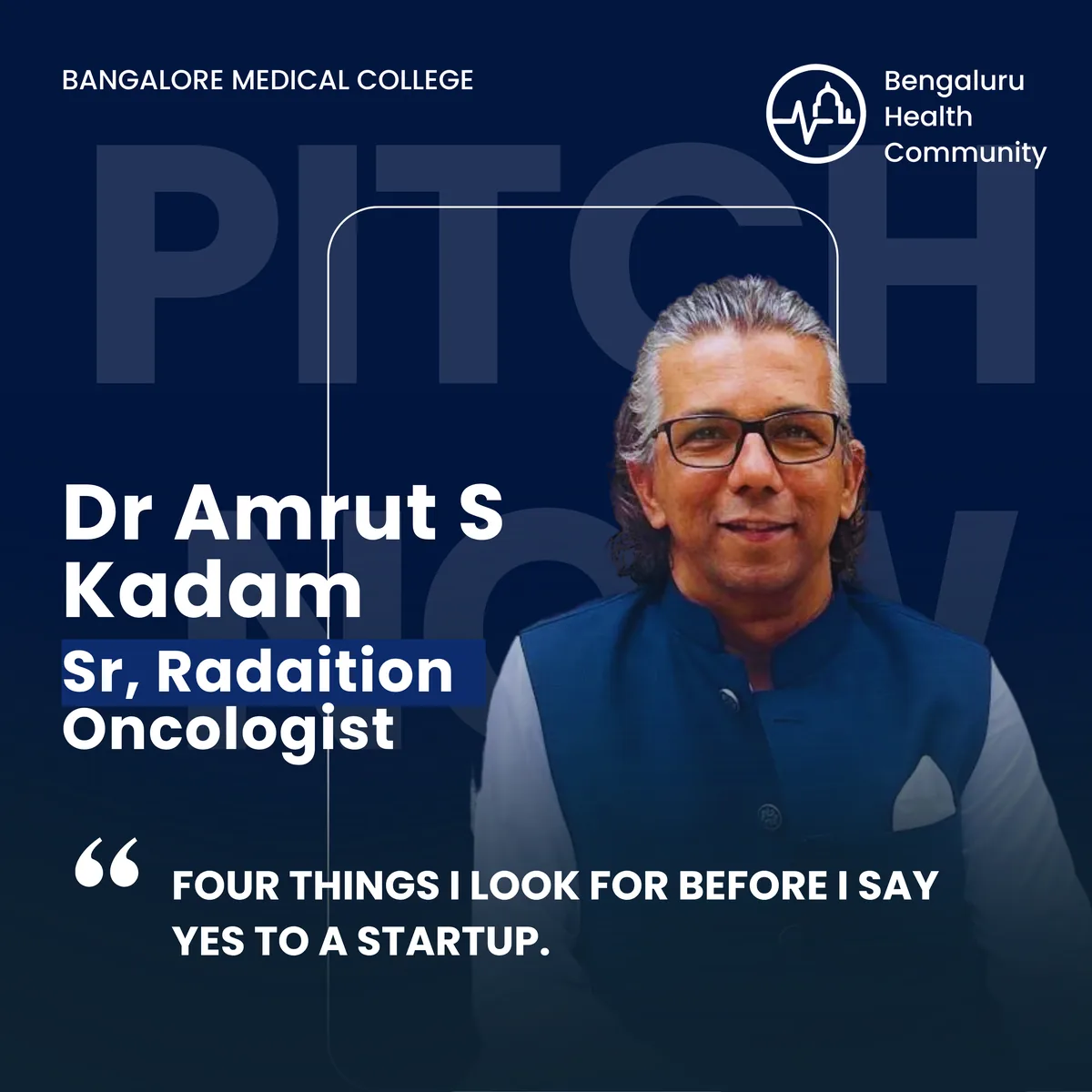
Four Things I Look for Before I Say Yes to a Startup.
Dr. Amrut Sadashiv Kadam's framework for clinical pilots: name the real challenge, minimise friction, show genuine passion, and follow up within 48 hours.
By Dr. Amrut Sadashiv Kadam, Sr. Radiation Oncologist, Victoria Hospital · Oct 9, 2026 · 8 min read
Summary
- Identify the specific clinical challenge in the department
- Design low-friction pilots that plug into existing workflows
- Follow up with a concrete next step within 48 hours
Most founders spend their energy trying to get in front of a doctor. Dr. Amrut Sadashiv Kadam gave them something more useful at BHC's Let's Validate Chapter 10: a clear picture of what happens once they do.
As Senior Radiation Oncologist at Victoria Hospital — a government institution — Dr. Amrut evaluates startups from a perspective that's different from private hospital administrators. His yes is harder to get. But his framework is something every healthtech founder should understand before they send their next cold message.
The Four-Point Framework
Dr. Amrut laid out four things that make him more likely to take up a pilot:
- Identify the actual challenge. Not a market problem. The specific, named challenge inside a department like his. "Tell me what you're solving, and show me you understand the environment you're solving it in."
- Minimise the friction your pilot creates. Every pilot requires the clinical team to change something. "The more friction created by the pilot, the lesser the likelihood of it being taken up." Low-friction pilots that plug into existing workflows get a faster yes.
- Show genuine passion. Conviction — a founder who has thought deeply about the problem and communicates that in the room. Doctors betting on startups are betting on the founder as much as the product.
- Respond quickly. "Maintain my interest by compressing the time taken to revert back to me." Follow up with a concrete next step within 48 hours.
Government Hospitals: A Different Calculus
Patient and clinical data privacy creates significant procurement friction. Decisions are made by the Medical Director or Superintendent, not individual clinicians. Landing a government hospital pilot does not mean you've landed the right to publicise it — get explicit, written permission before announcing anything.
The Skill of the Presentation Matters
A great product pitched poorly loses to a good product pitched well. The clinical value must be clear, and communicated clearly.
From Let's Validate — Chapter 10, Bengaluru Health Community.
FAQ
What does a senior doctor look for before agreeing to a startup pilot?
Dr. Amrut Sadashiv Kadam looks for four things: a clearly identified departmental challenge, a low-friction pilot that fits existing workflows, genuine founder passion, and a concrete follow-up within 48 hours.
How are government hospital pilots different from private hospital pilots?
Patient data privacy adds procurement friction, decisions sit with the Medical Director or Superintendent rather than individual clinicians, and startups need explicit written permission before publicising a pilot.
More from Dr. Amrut Sadashiv Kadam in the BHC Media Experts Spotlight.
From Let's Validate – Chapter 10, Bengaluru Health Community.