News
India's Resident Doctors Are Working Themselves to Illness — And Medical Colleges Are Finally Being Forced to Say It Out Loud
By Mustafa Shariff, Editor in Chief · April 15 , 2026 · 5 min read
Summary
- India's Resident Doctor Duty Hours Crisis: Why Fixing This Is a Patient Safety Problem, Not Just a Doctor Welfare Problem
- Indian medical colleges are reiterating duty hour norms amid growing concern about resident doctor workload. Here is why this is a systemic problem requiring urgent structural reform.
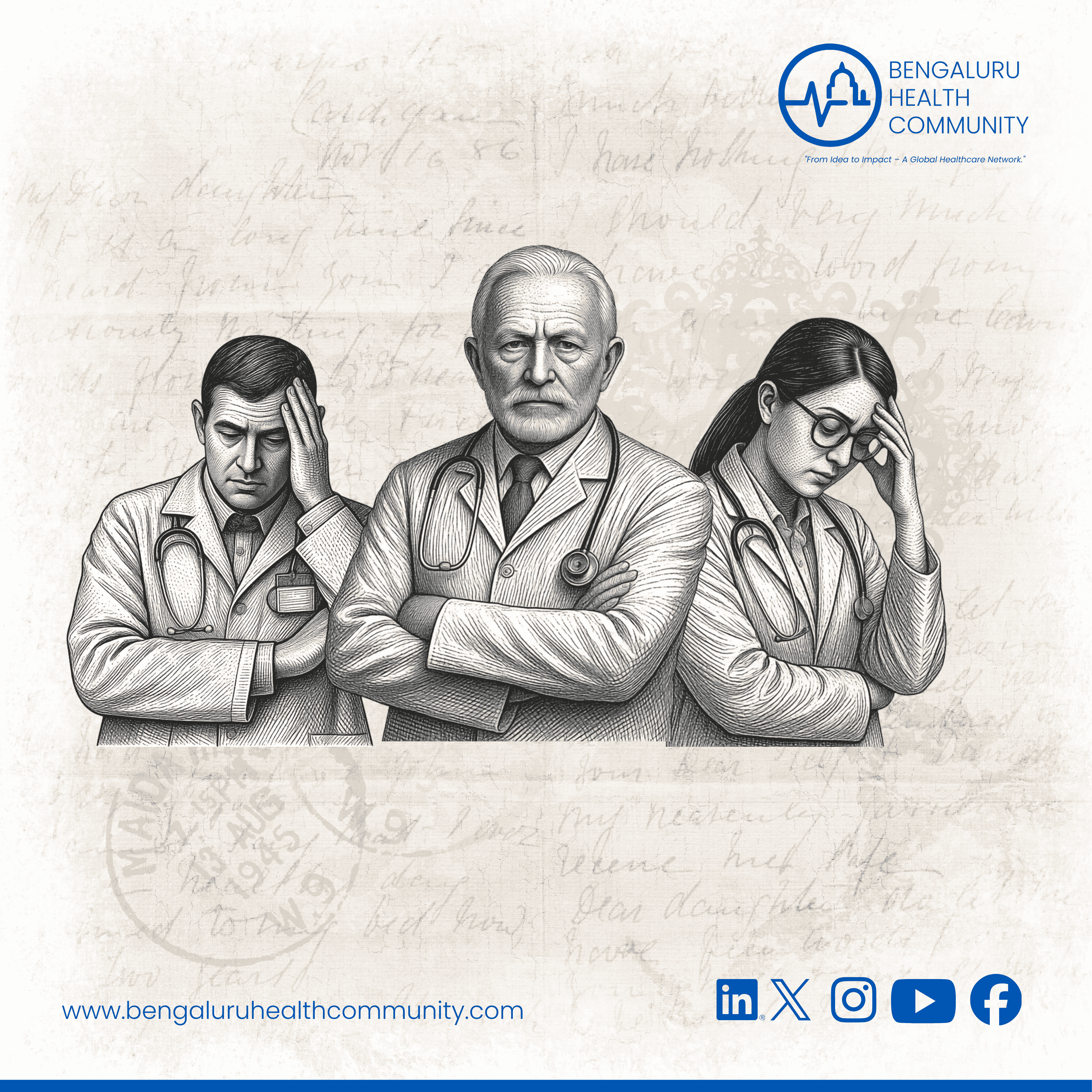
A medical college in Ahmedabad this week formally reiterated its resident doctor duty hour norms to faculty, MBBS students, and residents — the language of the communication itself a signal that those norms are not being routinely followed. This development is part of a pattern that has been building across India's medical education system: a growing recognition that the working conditions of resident doctors are unsustainable, and that the consequences extend well beyond the doctors themselves to the patients they treat.
India's resident doctors — postgraduate medical trainees working in the country's 650+ medical colleges and their associated teaching hospitals — form the operational backbone of government healthcare. In major public hospital systems, resident doctors provide the majority of direct patient care across emergency departments, wards, and intensive care units. They do this while simultaneously completing a postgraduate degree, managing clinical caseloads that would strain experienced consultants, and doing so within institutional cultures that have historically treated extreme working hours as a rite of passage rather than a systemic risk.
The Scale of the Problem
Duty shifts extending 24 hours or more are common in many Indian teaching hospital settings. Some resident doctors report working 80 to 100 hours per week during high-demand clinical rotations. The consequences are well-documented in the global medical literature: sleep deprivation of the magnitude experienced by residents working extended hours is clinically equivalent to alcohol intoxication in its effect on cognitive performance, reaction time, and decision-making accuracy. Tired doctors make more diagnostic errors, write incorrect prescriptions at higher rates, and have higher rates of needle-stick injuries and procedural complications.
This is not primarily a welfare argument, though the welfare dimension is real and serious. It is a patient safety argument. India's National Medical Commission is responsible for setting standards for medical education and training. The specific question the NMC must now answer — as medical colleges formally restate norms that are routinely violated — is whether the existing standards are adequate, whether enforcement mechanisms exist, and whether the systemic staffing constraints that drive excessive hours can be addressed at policy level.
The Staffing Reality
The root cause of excessive resident working hours in Indian teaching hospitals is not culture alone — it is structural. India's public hospital systems are chronically understaffed at all clinical levels. In many government teaching hospitals, residents cover clinical responsibilities that a well-staffed system would distribute across consultants, junior faculty, and structured shift systems. Addressing duty hours without addressing the staffing shortage that underlies them is a compliance exercise that changes nothing operationally.
The Union Budget 2026 has committed to training 1.5 lakh multi-skilled caregivers and expanding allied health professional capacity — which will eventually reduce some of the non-physician workload that currently falls on resident doctors. The government's plan to add medical college seats and expand training capacity will, over time, increase the number of trained physicians available to staff hospitals more sustainably. But these are five-to-ten-year timelines. The resident doctors working 30-hour shifts today need structural change now.
What Needs to Happen
Three specific reforms are necessary. The NMC must prescribe explicit maximum duty hour standards — not just guidance but enforceable limits with consequences for violations — aligned with international standards of 80 hours per week maximum and no single shift exceeding 16 hours. Teaching hospitals must be required to hire sufficient non-resident clinical staff to absorb the workload that currently falls on residents by default. And the culture of 'earning your stripes' through exhaustion must be explicitly challenged at curriculum and institutional leadership levels — because it creates senior doctors who replicate the same conditions on the next generation.
BHC Perspective
At Bengaluru Health Community, the resident doctor duty hours issue connects directly to what we stand for. The BHC Mentorship Platform is built on the belief that India's healthcare professionals deserve support, guidance, and the wisdom of those who have navigated the system before them. A resident doctor working their fourth consecutive 30-hour shift is not positioned to learn well, care well, or survive the decade of training ahead of them. The duty hours reform is a precondition for producing the kind of reflective, capable, burnout-resistant doctors that India's healthcare system needs.
Frequently Asked Questions
Q: What are the concerns about Indian resident doctor duty hours?
A: Resident doctors in Indian teaching hospitals commonly work shifts exceeding 24 hours and 80-100 hours per week. Sleep deprivation at this level is clinically equivalent to alcohol intoxication in its effect on decision-making, creating patient safety risks alongside significant welfare harm to doctors.
Q: Why does India have this problem?
A: The root cause is structural understaffing of government teaching hospitals. Resident doctors cover clinical responsibilities that a well-staffed system would distribute across consultants and faculty. Addressing hours without addressing staffing produces only cosmetic compliance.
Q: What reforms are needed?
A: The NMC needs enforceable maximum duty hour standards with consequences for violations, teaching hospitals need mandatory minimum non-resident clinical staffing, and institutional cultures that valorise exhaustion as training need explicit dismantling.