News
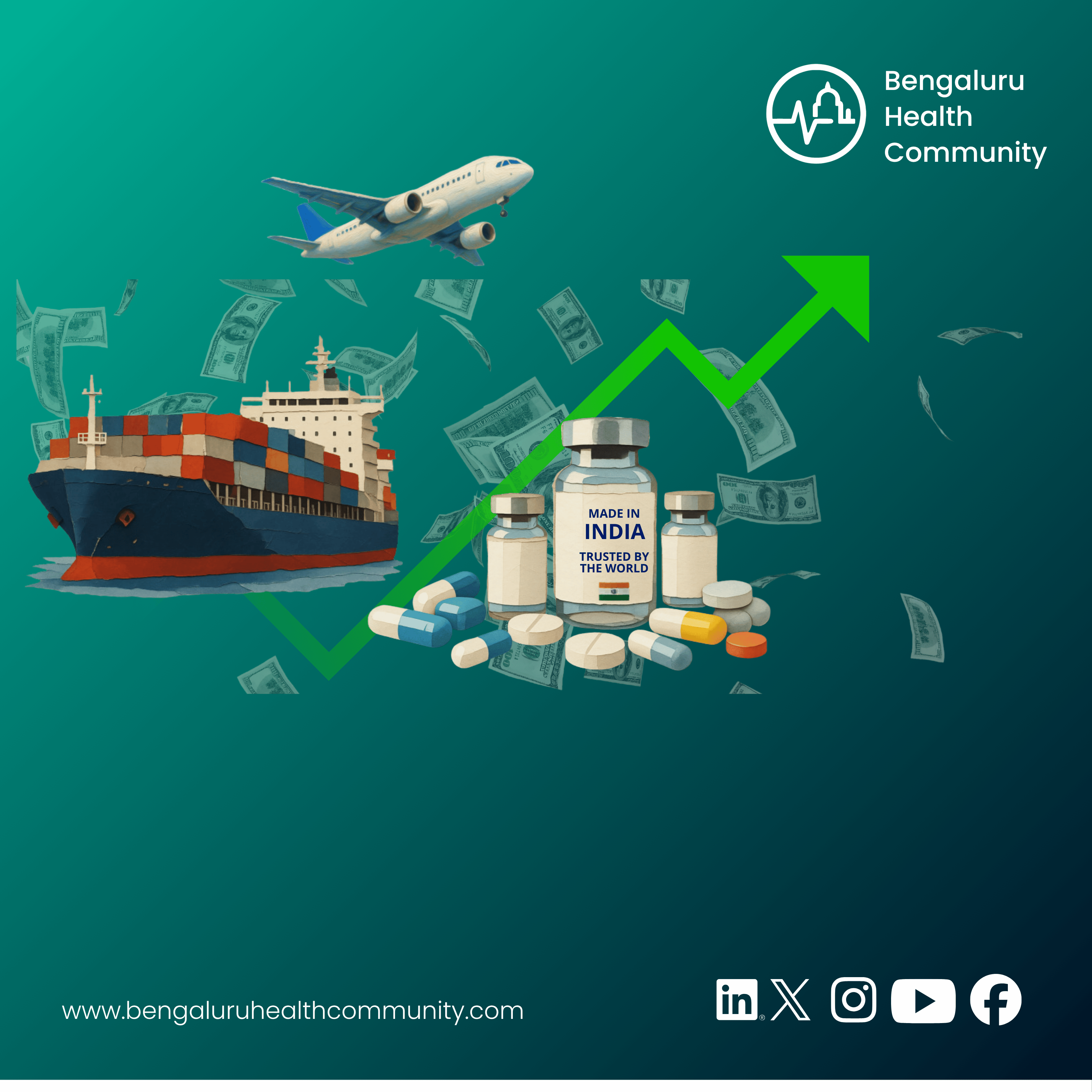
India's Pharma Exports Hit Rs 2.86 Lakh Crore ($31 Billion) in FY26 — Despite Operation Epic Fury, India Grew. That Is the Story.
By Mustafa Shariff, Editor in Chief · June 08, 2026 · 2 min read
Summary
- India Pharma Exports FY26: $31 Billion Despite Operation Epic Fury — What the Number Means and What Comes Next
- India's pharmaceutical exports crossed $31 billion in FY26 despite significant disruption. Here is the full analysis and what it signals for FY27.
"India supplies nearly 30% of global generic medicines and is the pharmacy of the world. FY26 pharma exports crossing $31 billion despite Operation Epic Fury-induced disruptions, doubled freight charges, and ₹5,000 crore in estimated March losses is a demonstration of exactly the resilience, diversification, and manufacturing depth that underpins India's pharmaceutical global position."
India's pharmaceutical exports for FY26 crossed Rs 2.86 lakh crore — approximately $31 billion — according to data compiled by the Pharmaceuticals Export Promotion Council of India and the Ministry of Commerce, reflecting both the structural strength of India's pharmaceutical export position and the resilience of the sector in the face of the most significant supply chain disruption since COVID-19.
The export figure is notable precisely because of the context in which it was achieved. Operation Epic Fury — the US-Israel coordinated military campaign against Iran that ran from February 28 to May 5, 2026 — created Strait of Hormuz disruption, doubled freight charges, ₹5,000 crore in estimated March pharmaceutical export losses, and rerouting costs that impacted every Indian pharmaceutical company with GCC, WANA, and Middle East market exposure. Against this backdrop, crossing the $31 billion threshold represents genuine resilience rather than an easy milestone.
The Market Composition
The United States remained India's largest single pharmaceutical export market by value — absorbing approximately 30% of Indian pharmaceutical exports as it has for the past several years. The US market's stability during the GCC disruption provided a crucial buffer: while GCC and WANA exports faced logistical and cost headwinds from late February, US-directed exports continued without material disruption, given that the primary shipping routes to the US from India do not transit the Strait of Hormuz.
Europe — the United Kingdom, Germany, the Netherlands, and other EU markets — contributed a growing share of Indian pharmaceutical exports, supported by the India-UK Free Trade Agreement's zero-tariff provisions on pharmaceutical exports that came into effect in 2025. Africa — particularly sub-Saharan Africa and Francophone Africa — continued to be one of India's fastest-growing pharmaceutical export regions, driven by the demand for affordable generic medicines in markets where Indian suppliers have built dominant positions over two decades.
The API and bulk drug export component of FY26 pharmaceutical exports posted its strongest year in recent memory, supported by the BIOSECURE Act derisking dynamic — as BHC Media covered in our May 26 edition — that has driven global pharmaceutical companies to accelerate qualification of Indian API and CDMO capabilities as alternatives to Chinese manufacturers.
The GLP-1 Contribution
One of the most significant contributors to India's FY26 pharmaceutical export growth was the generic GLP-1 market — driven by the semaglutide patent expiry in India in March 2026 and the subsequent launch by five or more Indian companies at dramatically lower prices. Dr Reddy's Health Canada generic semaglutide approval, Orbicular-Apotex US FDA Tentative Approval, and the nascent domestic GLP-1 market all contributed to building India's GLP-1 manufacturing and export capability during FY26. Jefferies projects India's total semaglutide market alone could reach $1 billion as generic access expands globally.
Looking Ahead to FY27
The structural tailwinds for FY27 pharmaceutical export growth are substantial. The India-Oman CEPA effective June 1 eliminates pharmaceutical tariffs to Oman and its Gulf re-export connections. The India-New Zealand FTA's GMP mutual recognition provisions accelerate entry to New Zealand and Australia. Post-Epic Fury GCC market recovery as Hormuz transit normalises through mid-2026. Generic GLP-1 export momentum as global markets open. BIOSECURE Act-driven CDMO qualification revenue. And continued generic drug demand from the US market where Abbreviated New Drug Applications continue to be approved across India's pharmaceutical manufacturing base.
India's Vision Pharma 2047 targets pharmaceutical exports of $350 billion by 2047 — a 10x increase from FY26. The journey from $31 billion to $350 billion runs through exactly the innovation, quality, and market access investments that FY26's record demonstrates India is capable of making and sustaining.
BHC Perspective
At Bengaluru Health Community, India's FY26 pharmaceutical export result is the annual confirmation that the structural investment thesis in Indian pharma remains intact — even through geopolitical disruption. For BHC's pharma ecosystem founders, mentors, and partners: the $31 billion figure is the market you are building for and building within. The $350 billion target for 2047 is the opportunity your lifetime's work can contribute to.
Frequently Asked Questions
Q: What did India's FY26 pharmaceutical exports total?
A: Rs 2.86 lakh crore (approximately $31 billion) — India's first crossing of the $31 billion threshold, achieved despite Operation Epic Fury-induced supply chain disruption, doubled freight charges, and ₹5,000 crore in estimated March GCC/WANA market losses.
Q: What drove export resilience despite disruption?
A: US market stability (30% of exports, unaffected by Hormuz disruption), growing Europe share supported by India-UK FTA zero tariffs, Africa growth, API export strength from BIOSECURE Act derisking, and early GLP-1 generic export revenue.
Q: What are the FY27 tailwinds?
A: India-Oman CEPA (June 1, pharma duty elimination), India-NZ FTA GMP mutual recognition, post-Epic Fury GCC recovery, generic GLP-1 export momentum, BIOSECURE Act CDMO qualification revenue, and continued US ANDA approvals.