News
India's Largest Senior Care Operator Has Signed an MoU With Singapore's Largest Hospital Cluster — Athulya Senior Care Meets SingHealth
By Mustafa Shariff, Editor in Chief · May 06,2026 · 5 min read
Summary
- Athulya Senior Care + SingHealth MoU: Why India's Senior Living Sector Is Looking to Singapore for the Future of Ageing Care
- Athulya Senior Care has signed an MoU with SingHealth to collaborate on senior care standards, training, and research. Here is the full story and the demographic drivers behind India's emerging elder care sector.
"This collaboration reflects SingHealth's ongoing commitment to building meaningful international partnerships that drive the exchange of knowledge, clinical expertise, and best practices. India's ageing population demands the highest international standards of senior care — and this is how those standards get transferred."
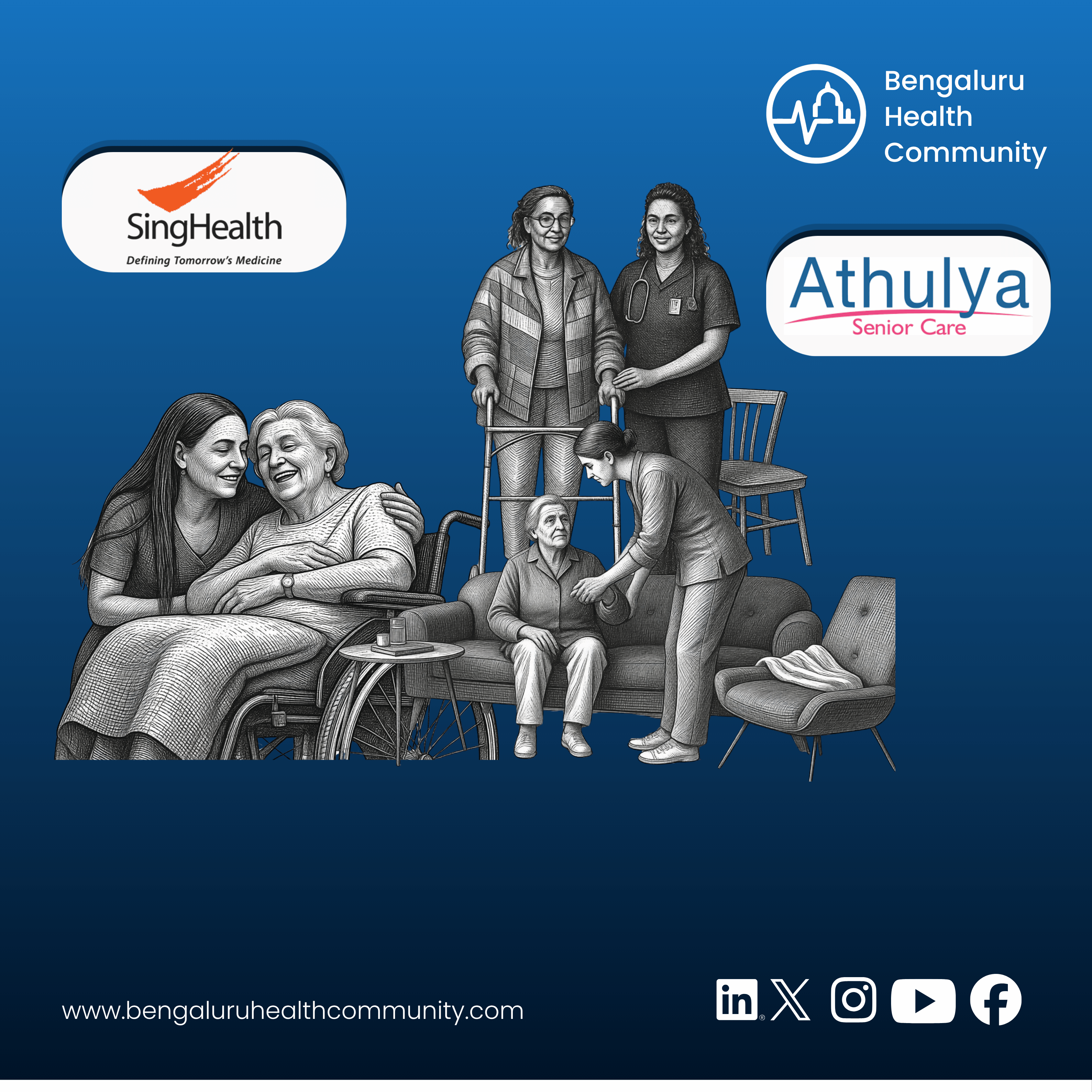
Athulya Senior Care — India's largest chain of senior living and rehabilitation centres — has signed a Memorandum of Understanding with SingHealth, Singapore's largest public healthcare cluster, to collaborate on medical services, professional training, research, and knowledge exchange in senior and elder care. SingHealth's network encompasses Singapore General Hospital, KK Women's and Children's Hospital, Changi General Hospital, Sengkang General Hospital, and national centres including the National Cancer Centre Singapore, National Heart Centre Singapore, National Neuroscience Institute, alongside polyclinics and community hospitals — collectively representing the most comprehensive integrated healthcare system in Southeast Asia.
The partnership merges Athulya's operational expertise in Indian senior living and rehabilitation with SingHealth's clinical depth and academic research capabilities. Planned initiatives include annual training programmes for doctors, nurses, and allied health professionals from Athulya's network; exchange of scientific materials and clinical protocols; joint research and publications on senior care outcomes; and regular participation in conferences, workshops, and bilateral professional meetings.
India's Senior Care Imperative
The MoU is directly driven by India's demographic trajectory. India is adding approximately 8 million people aged 60 and above every year — a figure that will create a senior population of 320 million by 2050, making India the world's second-largest elderly population after China. The clinical, social, and economic implications of this demographic shift are beginning to register in policy and investment — but the infrastructure, workforce, and clinical protocol development required to serve this population is significantly underdeveloped relative to the scale of the challenge.
India currently has an estimated senior care workforce of fewer than 100,000 trained professionals — caregivers, nurses, physiotherapists, geriatricians, and occupational therapists — against a population that will need orders of magnitude more of each. Geriatric medicine as a specialty is underrepresented in India's medical education system. The protocols for managing multi-morbidity — the condition of elderly patients who simultaneously carry diabetes, hypertension, osteoarthritis, early cognitive decline, and cardiovascular disease — are not yet standardised across India's healthcare system.
Why Singapore Is the Right Partner
Singapore has navigated the demographic transition that India is approaching. The city-state has one of the world's most rapidly ageing populations — approximately 21% of Singapore's population is already 65 or older, and the proportion is rising. The Singapore government's systematic investment in senior care infrastructure, the integration of primary care, acute care, step-down care, and community care through SingHealth and its peer institution networks, and the clinical research base that has studied ageing outcomes across Singapore's multi-ethnic population — all of this represents a knowledge asset that is directly applicable to India's emerging senior care challenge.
Lucien Ooi, Group Director of the International Collaboration Office at SingHealth, framed the partnership's philosophy directly: the collaboration reflects SingHealth's ongoing commitment to building meaningful international partnerships that drive the exchange of knowledge, clinical expertise, and best practices. For SingHealth, India's market is not only one of the world's largest senior care opportunities — it is a research setting with patient volumes, disease burden diversity, and multi-morbidity complexity that generates clinical learning at a scale Singapore's own patient population cannot provide.
The Athulya Network
Athulya Senior Care operates across multiple Indian cities with a model that integrates residential senior living, rehabilitation, memory care (for dementia patients), and palliative care within its facility network. Its positioning as India's largest senior care operator reflects both the growth of the organised senior care market in India and the consolidation of what was previously a highly fragmented, informal care sector into structured, facility-based models with trained staff and clinical governance.
BHC Perspective
At Bengaluru Health Community, the Athulya-SingHealth partnership is a story about India's senior care sector coming of age as an organised industry — one that recognises it needs international clinical standards and knowledge partnerships to serve India's ageing population at the quality level that growing demand will require. For BHC founders building in elder care technology, geriatric health management, rehabilitation platforms, or senior housing — this MoU signals that the institutional infrastructure for India's senior care sector is being built now, and that international partnerships are the route to clinical protocol development.
Frequently Asked Questions
Q: What is the Athulya-SingHealth MoU?
A: Athulya Senior Care — India's largest senior living and rehabilitation chain — has signed an MoU with SingHealth, Singapore's largest public healthcare cluster, for collaboration on medical services, professional training, joint research, and knowledge exchange in senior and elder care.
Q: Why is Singapore a relevant senior care partner for India?
A: Singapore is 20+ years ahead of India on demographic ageing — with 21% of its population over 65. SingHealth has built one of Asia's most comprehensive integrated senior care systems, generating clinical protocols, research, and workforce development experience directly applicable to India's emerging senior care challenge.
Q: What is India's senior care demographic imperative?
A: India is adding approximately 8 million people aged 60+ annually, heading toward a senior population of 320 million by 2050. Its current senior care workforce is estimated at fewer than 100,000 trained professionals — dramatically inadequate for this scale of demand.