News
India Just Released Its First-Ever National Childhood Diabetes Framework — Universal Screening From Birth to 18, the '4Ts', and a Structured Care System
By Mustafa Shariff, Editor in Chief · May 12, 2026 · 2 min read
Summary
- India's First Childhood Diabetes Guidance Document: What the '4Ts' Framework Means for India's Children
- The Ministry of Health has released India's first national guidance document on childhood diabetes. Here is the full analysis of what it establishes and why it is overdue.
"The Guidance Document on Diabetes Mellitus in Children establishes, for the first time, a structured and standardised national framework for the screening, diagnosis, treatment and long-term management of childhood diabetes. This positions India among a select group of countries that have integrated childhood diabetes care into the public health system."
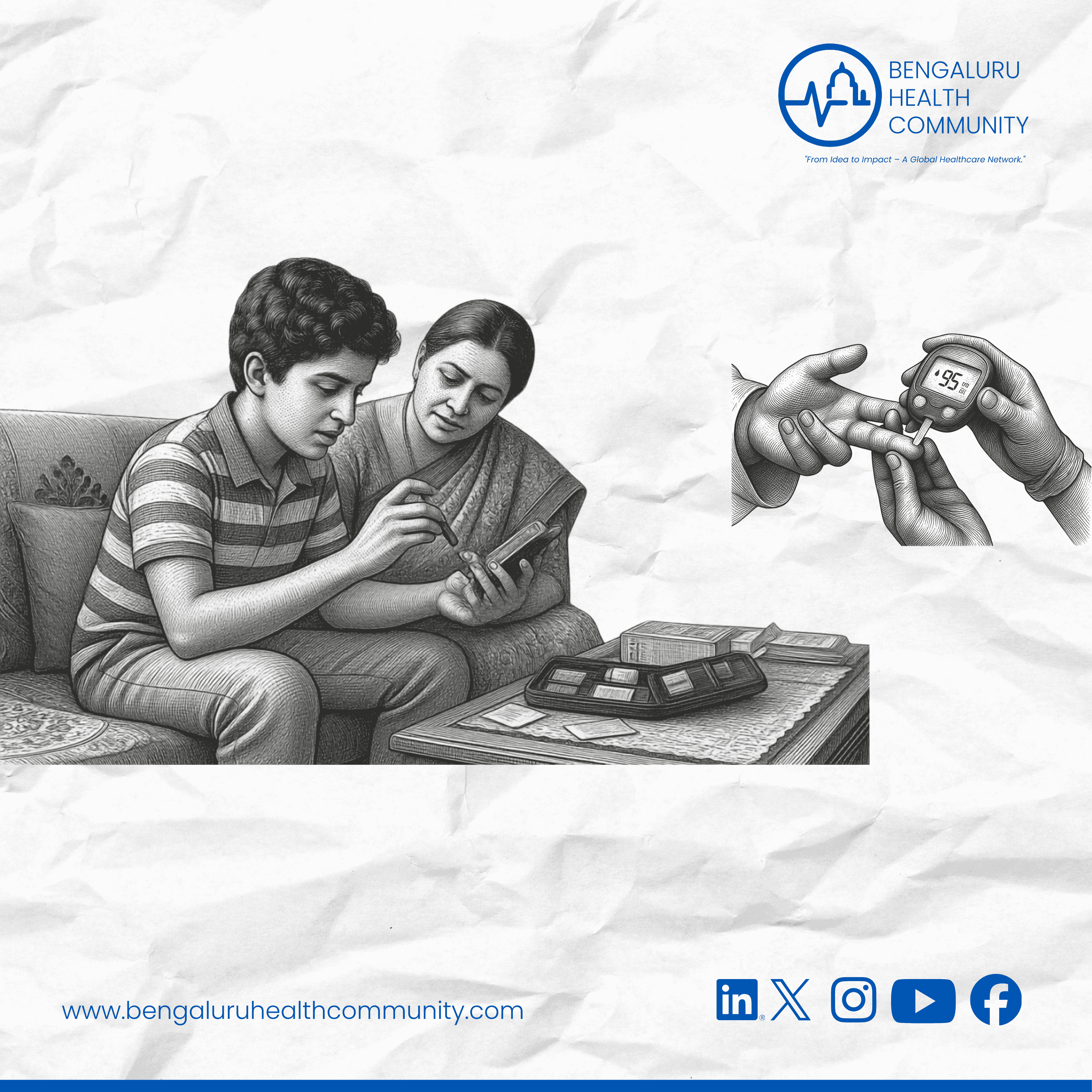
The Union Ministry of Health and Family Welfare has released the Guidance Document on Diabetes Mellitus in Children — India's first structured, standardised national framework for the screening, diagnosis, treatment, and long-term management of diabetes in children aged 0-18 years. The document was released at the National Summit on Best Practices in Public Healthcare Service Delivery and represents a landmark in India's approach to childhood non-communicable disease management.
The Ministry states that this guidance positions India among a select group of countries that have integrated structured childhood diabetes care into the public healthcare system. That this represents a first is significant not as an indictment of past policy but as a reflection of the epidemiological trajectory that makes the framework necessary now: diabetes in children, particularly Type 1 diabetes requiring lifelong insulin therapy, has historically been managed within India's healthcare system without the benefit of standardised protocols, universal screening, or a tiered referral structure.
Type 1 Diabetes in India — the Scale of the Problem
Type 1 diabetes — the autoimmune condition in which the pancreas produces little or no insulin — is the primary focus of the childhood diabetes guidance. It is fundamentally different from Type 2 diabetes in causation and management: it cannot be prevented or reversed through lifestyle modification, it requires lifelong insulin therapy for survival, and its diagnosis in childhood imposes a management burden on children and families that extends across decades.
India has one of the world's largest populations of children with Type 1 diabetes, with an estimated 95,000-100,000 new cases diagnosed annually in individuals under 15. The challenge in India has been that Type 1 diabetes is often diagnosed at an advanced and life-threatening stage — diabetic ketoacidosis — because the early symptoms are not recognised by parents, teachers, or primary healthcare workers, and systematic screening has not existed to catch cases earlier. Children die or sustain long-term organ damage from conditions that are entirely survivable when caught early.
The '4Ts' Framework
The guidance document introduces the '4Ts' as a community-level awareness framework enabling parents, teachers, and caregivers to recognise the early warning signs of Type 1 diabetes without requiring medical training. The four signs are: Toilet (increased urination frequency), Thirsty (unusual or excessive thirst), Tired (unexplained fatigue or loss of energy), and Thinner (unexplained weight loss). Any combination of these signs in a child warrants immediate blood glucose testing and referral.
The '4Ts' framework is not a new scientific concept — it has been used in UK and European Type 1 diabetes awareness campaigns for several years with measurable impact on earlier detection. India's adoption of the framework for its national guidance document is appropriate and well-evidenced. The challenge will be implementation: translating a Ministry-level guidance document into behavioural awareness among India's 250 million school teachers, ASHA workers, anganwadi workers, and parents requires an aggressive health communication campaign that the guidance document itself does not fully specify.
The Universal Screening System
The guidance establishes a tiered screening and referral system. Universal health screening of all children from birth to 18 years, conducted through community health platforms and school health programmes, provides the baseline detection layer. Children with suspicious symptoms or risk factors undergo immediate blood glucose testing. Suspected cases are referred to district-level health facilities for confirmatory diagnosis using HbA1c and C-peptide levels. Confirmed cases are managed within the public health system through district hospitals and medical college settings.
The tiered system is clinically rational, but its effectiveness depends on the availability of blood glucose testing at primary care level, diagnostic capacity at district hospitals, and insulin supply chains that can reliably deliver the insulin that diagnosed children will require for life. These operational prerequisites — particularly the insulin supply chain — are the implementation challenge that will determine whether the guidance document produces actual clinical impact.
The Broader NCD in Children Context
The childhood diabetes guidance arrives alongside other data points that BHC Media has tracked this year: Apollo Health of the Nation 2026 showing 1 in 5 under-30s is prediabetic, rising childhood obesity rates, and increasing rates of hypertension in adolescents. The non-communicable disease burden in India is shifting younger — and the public health infrastructure that was designed to address infectious disease in children must now be reoriented toward chronic disease management that begins in childhood and continues for life.
BHC Perspective
At Bengaluru Health Community, the childhood diabetes guidance document is a story about the public health system finally matching its framework to the epidemiological reality. For BHC founders building in paediatric health technology, diabetes management platforms, insulin adherence tools, or school health programmes — this guidance document creates a structured public health system that your solutions can interface with for the first time.
Frequently Asked Questions
Q: What is India's Childhood Diabetes Guidance Document?
A: India's first national framework for screening, diagnosis, treatment, and long-term management of diabetes in children aged 0-18, released by the Ministry of Health at the National Summit on Best Practices in Public Healthcare Service Delivery. It focuses primarily on Type 1 diabetes.
Q: What are the '4Ts'?
A: Toilet (increased urination), Thirsty (excessive thirst), Tired (unexplained fatigue), and Thinner (unexplained weight loss) — an early warning framework enabling parents, teachers, and caregivers to recognise Type 1 diabetes symptoms before diagnosis is delayed to the point of diabetic ketoacidosis.
Q: How does the tiered screening system work?
A: Universal screening through community and school platforms identifies symptomatic children for immediate blood glucose testing, followed by referral to district hospitals for confirmatory diagnosis using HbA1c and C-peptide levels, with management delivered through district hospitals and medical college settings.