Policy & Regulation
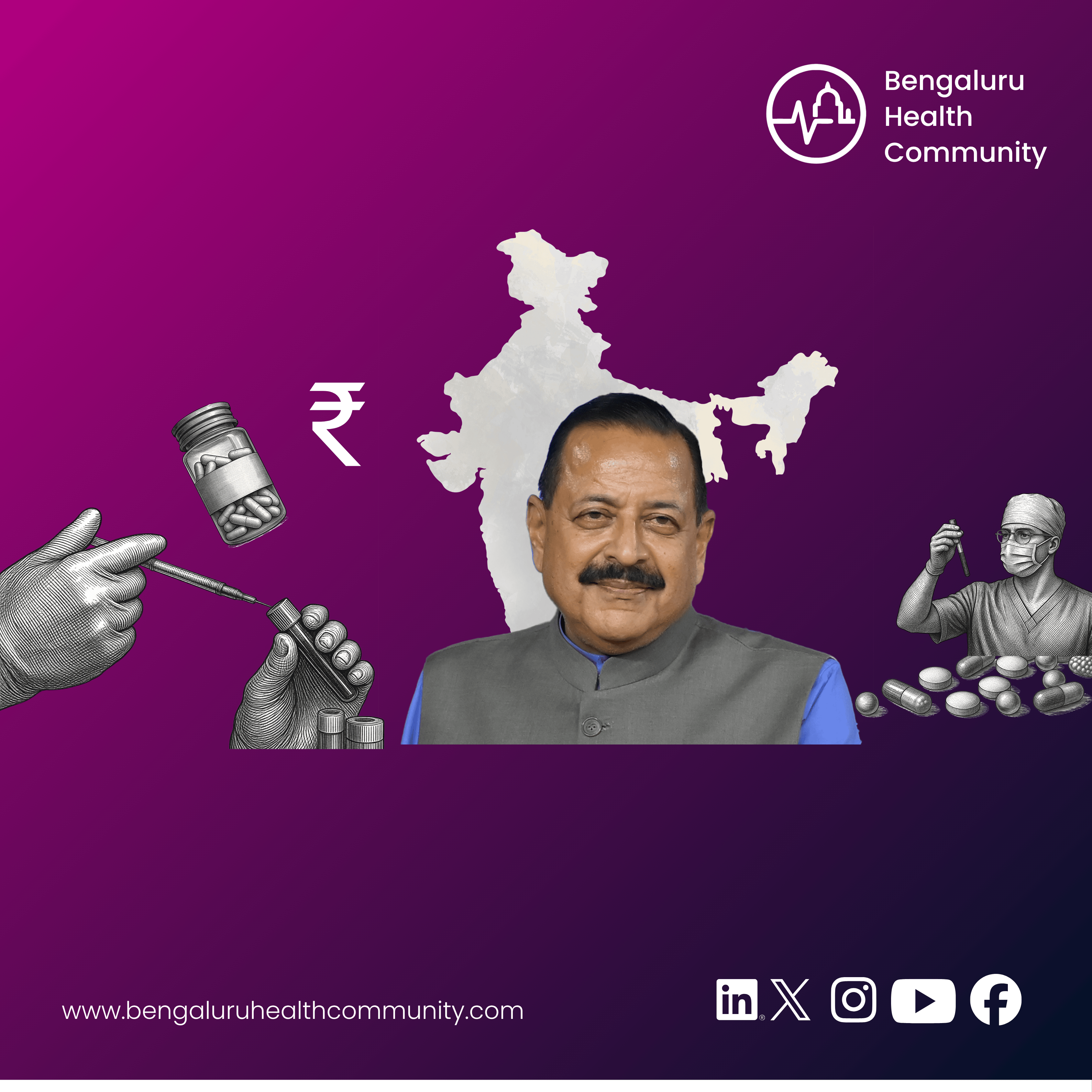
India Is Scaling Up Domestic Biosimilar Insulin Production — And Union Minister Jitendra Singh Is Making It a National Priority
By Mustafa Shariff, Editor in Chief · April 14, 2026 · 5 min read
Summary
- India's Biosimilar Insulin Scale-Up: How the Government's Biomanufacturing Push Could Solve One of India's Most Critical Public Health Challenges
- India is scaling domestic biosimilar insulin production as part of Biopharma SHAKTI. Here is why this matters for 100 million diabetic Indians and the global insulin supply chain.
India has 100 million people living with diabetes — the largest diabetic population of any country in the world. Every one of them who requires insulin is dependent on a medicine that has historically been expensive to produce, concentrated in manufacturing among a small number of global players, and priced at levels that stretch household budgets significantly even when government subsidies apply. Changing this equation is now a stated government priority.
Union Minister Dr Jitendra Singh met with the President-elect of the International Diabetes Federation this week to advance India's push for domestic biosimilar insulin scale-up — a conversation that sits squarely at the intersection of India's Biopharma SHAKTI mission, the government's commitment to affordable healthcare, and the strategic imperative of reducing dependence on imported biologics for the country's most prevalent chronic disease.
What Biosimilar Insulin Is and Why It Matters
Insulin is a biologic medicine — produced using living organisms through complex biotechnology processes, not simple chemical synthesis. This complexity makes insulin significantly more expensive to manufacture than conventional small-molecule drugs, and it historically limited production to a small number of specialised manufacturers globally: Novo Nordisk, Eli Lilly, and Sanofi dominate insulin supply for most of the world.
Biosimilars are biologic medicines that are highly similar to an approved originator biologic, with no clinically meaningful differences in safety, purity, or effectiveness. When patent protection expires on originator insulin products, biosimilar manufacturers can enter the market — typically at 40-70% lower prices than originator products. India already has domestic biosimilar insulin manufacturers: Biocon, Cipla, and a handful of others have developed and manufactured biosimilar insulin for both domestic and export markets.
The government's push is not to start from scratch — India already has a biosimilar insulin capability. The push is to scale it: to expand domestic manufacturing capacity, to drive down production costs through the kind of process innovation and scale that India applied to small-molecule generics over three decades, and to build the regulatory and quality infrastructure to make Indian biosimilar insulin acceptable in regulated markets globally.
The Biopharma SHAKTI Connection
The biosimilar insulin scale-up is a direct application of the Biopharma SHAKTI mission announced in Budget 2026-27 — the ₹10,000 crore, five-year initiative to build India into a global biologics and biosimilars manufacturing hub. Biopharma SHAKTI includes infrastructure for Non-Animal Methodology testing — organoids, organ-on-a-chip, 3D bioprinting — that are particularly valuable for biologic quality testing and process validation. The three new NIPERs being established and the seven existing NIPERs being upgraded will create specialised biomanufacturing education and research capacity that India currently lacks at scale.
For biosimilar insulin specifically, the roadmap involves strengthening the domestic regulatory pathway through CDSCO for biosimilar approval — making the process faster, more predictable, and aligned with international standards — and building the clinical data infrastructure to support biosimilar approvals in the US (FDA) and Europe (EMA), which represent the highest-value export markets for biosimilar insulin.
The Global Market Opportunity
The global insulin market is undergoing a significant transition. Multiple blockbuster insulin patents have expired or will expire in the coming years, creating a substantial biosimilar opportunity in the US, Europe, and other regulated markets where Indian manufacturers have historically been absent. Biocon's partnership with Sandoz (Novartis's generics arm) has already demonstrated that Indian biosimilar insulin can penetrate the US and European markets — and that the commercial opportunity is very real.
India's scale advantage in biomanufacturing is similar to its small-molecule generics advantage: large, experienced manufacturing sites, a deep pool of biochemistry and bioengineering talent, and cost structures that can undercut Western biosimilar manufacturers while meeting regulatory quality standards. If India can achieve in biosimilar insulin what it achieved in generic small molecules, it can simultaneously improve affordability for Indian patients and capture a significant share of the global biosimilar insulin market.
BHC Perspective
At Bengaluru Health Community, the biosimilar insulin scale-up story connects to some of the most important healthcare challenges in our ecosystem. Bengaluru is already home to Biocon — India's largest biopharmaceutical company and a pioneer in biosimilar insulin — as well as a growing cluster of biotech and life sciences startups building in the biomanufacturing space. The government's push, backed by the Biopharma SHAKTI mission, creates both policy tailwind and commercial opportunity for the Bengaluru biotech ecosystem. For founders building in biomanufacturing, regulatory science, and diabetes care technology — this is the moment to build.
Frequently Asked Questions
Q: Why is India scaling up biosimilar insulin production?
A: India has 100 million diabetic patients — the world's largest — and insulin is expensive due to complex biomanufacturing. Scaling domestic biosimilar insulin production will improve affordability, reduce import dependence, and position India to capture global biosimilar insulin export markets as originator patents expire.
Q: Who makes biosimilar insulin in India?
A: Biocon is India's largest biosimilar insulin manufacturer, with established international partnerships (including with Sandoz/Novartis) for US and European markets. Cipla and other companies also have biosimilar insulin manufacturing capabilities.
Q: How does Biopharma SHAKTI support biosimilar insulin?
A: The ₹10,000 crore Biopharma SHAKTI initiative funds biomanufacturing infrastructure, Non-Animal Methodology testing capabilities, NIPER upgrades for translational biologic research, and CDSCO strengthening for faster biosimilar regulatory approvals.