News
India Is Getting an Ultra-Compact RT-PCR Machine That Fits Anywhere — Cubo Is Coming and It Could Change Who Gets Molecular Diagnostics Access
By Mustafa Shariff, Editor in Chief · May 06, 2026 · 5 min read
Summary
- ASMS + Huwel Cubo: India's First Indigenous Ultra-Compact RT-PCR Platform and Why Point-of-Care Molecular Diagnostics Changes Everything
- ASMS and Huwel Lifesciences have announced the upcoming launch of Cubo, an ultra-compact indigenous RT-PCR platform. Here is the full story and why decentralised molecular diagnostics matters for India's healthcare system.
"Cubo has been engineered to combine scientific precision with operational simplicity. Early leadership in compact molecular diagnostics can translate into sustained long-term market strength. This is about bringing advanced molecular testing capabilities to the point of care — wherever care is delivered."
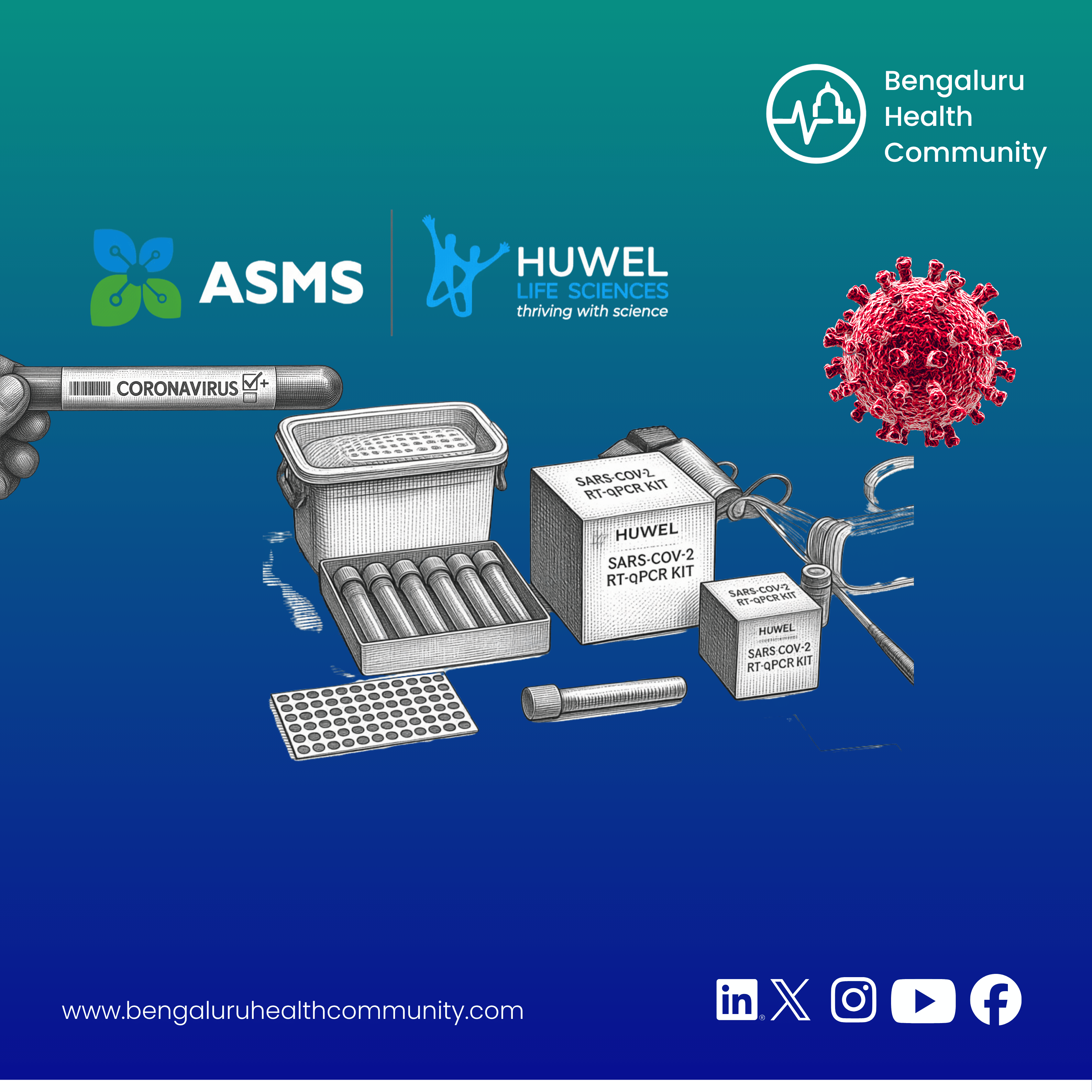
Avio Smart Market Stack Limited — formerly known as Bartronics India Limited — and Huwel Lifesciences, a Hyderabad-based life sciences company, have announced the upcoming launch of Cubo: an ultra-compact, affordable RT-PCR platform positioned as India's first indigenous innovation in portable molecular diagnostics.
RT-PCR — Reverse Transcription Polymerase Chain Reaction — is the gold standard method for detecting nucleic acids from pathogens, making it the reference-standard test for diagnosing infectious diseases including COVID-19, influenza, dengue, TB, and a growing range of other conditions. The clinical challenge has always been infrastructure: conventional RT-PCR requires a laboratory with controlled temperature environments, trained technicians, and sample management systems. This has historically meant that RT-PCR testing is only available in centralised laboratory settings — in India, typically in urban diagnostic chains, government district laboratories, and tertiary hospital labs.
What Cubo Changes
Cubo's design premise is that laboratory-grade RT-PCR accuracy can be delivered in a form factor compact enough to deploy anywhere clinical need exists — without requiring the infrastructure footprint of a conventional diagnostic laboratory. The platform enables advanced molecular testing at or near the point of care: rural primary health centres where the nearest RT-PCR lab may be hours away, district hospitals that process high volumes of infectious disease cases but lack accredited molecular laboratory infrastructure, mobile health units operating in tribal areas or post-disaster settings, industrial health facilities serving large workforces in remote locations, and border health posts where imported infectious disease detection is a specific security imperative.
Shesheer Kumar, Managing Director of Huwel Lifesciences, articulated the strategic rationale clearly: Cubo combines scientific precision with operational simplicity, and early leadership in compact molecular diagnostics translates into sustained long-term market strength. The partnership between ASMS — which brings technology commercialisation and distribution capability — and Huwel — which brings the molecular diagnostics science — creates a combined commercial entity for what both companies believe is one of the fastest-growing segments in Indian health technology.
The India Infectious Disease Context
India's infectious disease burden makes Cubo's timing commercially and clinically important. Dengue fever — which surged to epidemic levels across multiple Indian states in 2025 — requires laboratory confirmation of dengue NS1 antigen or dengue IgM/IgG antibodies, and increasingly, RT-PCR for virologically confirmed diagnosis in serious cases. At a conclave on urban pest management and vector-borne disease control in Ahmedabad this week, public health leaders highlighted critical gaps in dengue diagnosis and treatment — specifically the detection gap that occurs when patients in rural settings cannot access laboratory testing and present only at advanced stages.
Tuberculosis remains India's most significant infectious disease burden — India carries approximately a quarter of the world's TB cases. The WHO-recommended first-line rapid diagnostic for TB is the GeneXpert MTB/RIF — a cartridge-based molecular test that achieves near-RT-PCR accuracy in a semi-portable format. Cubo's RT-PCR capability, if its panel extends to TB detection, could complement the existing GeneXpert infrastructure at healthcare facilities that currently lack molecular diagnostics entirely.
India's COVID-19 experience demonstrated both the essential value of RT-PCR diagnostics for epidemic control and the severe limitations of a centralised laboratory model when testing demand exceeds laboratory capacity. MyLab Discovery Solutions — whose acquisition by Serum Institute BHC Media covered in our April 14 edition — built its commercial foundation on India's COVID RT-PCR infrastructure. Cubo represents the next chapter: making that molecular diagnostic capability a permanent, decentralised asset of India's primary healthcare infrastructure rather than a centralised laboratory-only resource.
The Indigenous Manufacturing Significance
Cubo's positioning as India's first indigenous innovation in this category is commercially and strategically significant. India's diagnostic equipment market has historically been dominated by imported platforms — Roche, Abbott, bioMérieux, and Cepheid supply the majority of molecular diagnostic instrumentation. Cubo's indigenous development creates a price-competitive alternative that can be priced for Indian public health procurement budgets and does not carry the foreign currency exposure, import duty, and extended supply chain complexity of imported platforms.
BHC Perspective
At Bengaluru Health Community, the Cubo launch announcement is the kind of healthtech story that deserves amplification. An indigenous Indian RT-PCR platform designed specifically for deployment in underserved settings — rural clinics, mobile health units, border posts — is exactly the kind of innovation that addresses India's real healthcare access gap rather than building incremental improvements for well-equipped urban hospitals. For BHC founders in diagnostics technology, point-of-care hardware, and infectious disease management platforms — this is the market segment where Indian innovation can have both commercial success and genuine public health impact.
Frequently Asked Questions
Q: What is Cubo?
A: Cubo is India's first indigenous ultra-compact RT-PCR platform, developed by ASMS and Huwel Lifesciences. It delivers laboratory-grade molecular diagnostics in a form factor deployable at rural clinics, district hospitals, mobile health units, and remote settings without full laboratory infrastructure.
Q: Why does RT-PCR decentralisation matter for India?
A: Conventional RT-PCR requires centralised laboratory infrastructure, limiting access to urban diagnostic chains and district labs. Cubo brings molecular diagnostic capability to the point of care — enabling accurate diagnosis of dengue, TB, COVID, influenza and other infectious diseases in settings that currently send samples to distant labs with 24-48 hour turnaround times.
Q: What makes Cubo indigenously significant?
A: Most molecular diagnostic platforms in India are imported — Roche, Abbott, bioMérieux. An indigenous Indian RT-PCR platform eliminates foreign currency exposure, import duties, and supply chain complexity, enabling pricing competitive with government public health procurement budgets.