News
Fortis Escorts Faridabad Has Opened the Region's First Integrated Institute of Robotic Surgery — Seven Specialties Under One Roof
By Darshan S, Editor · 26 June, 2026 · 2 min read
Summary
- Fortis Escorts Faridabad Opens India's First Integrated Multidisciplinary Robotic Surgery Institute for Seven Specialties
- Fortis Escorts Hospital Faridabad has launched the Fortis Institute of Robotic Surgery — the region's first integrated multidisciplinary robotic surgery programme covering seven specialties under its Future of Surgery initiative.
"The Fortis Institute of Robotic Surgery is designed to be a catalyst — a place where the next generation of surgical technologies are adopted, refined, and innovated upon. Patient outcomes remain our foremost priority, and we are committed to being an agile, multidisciplinary partner in care delivery across specialties."
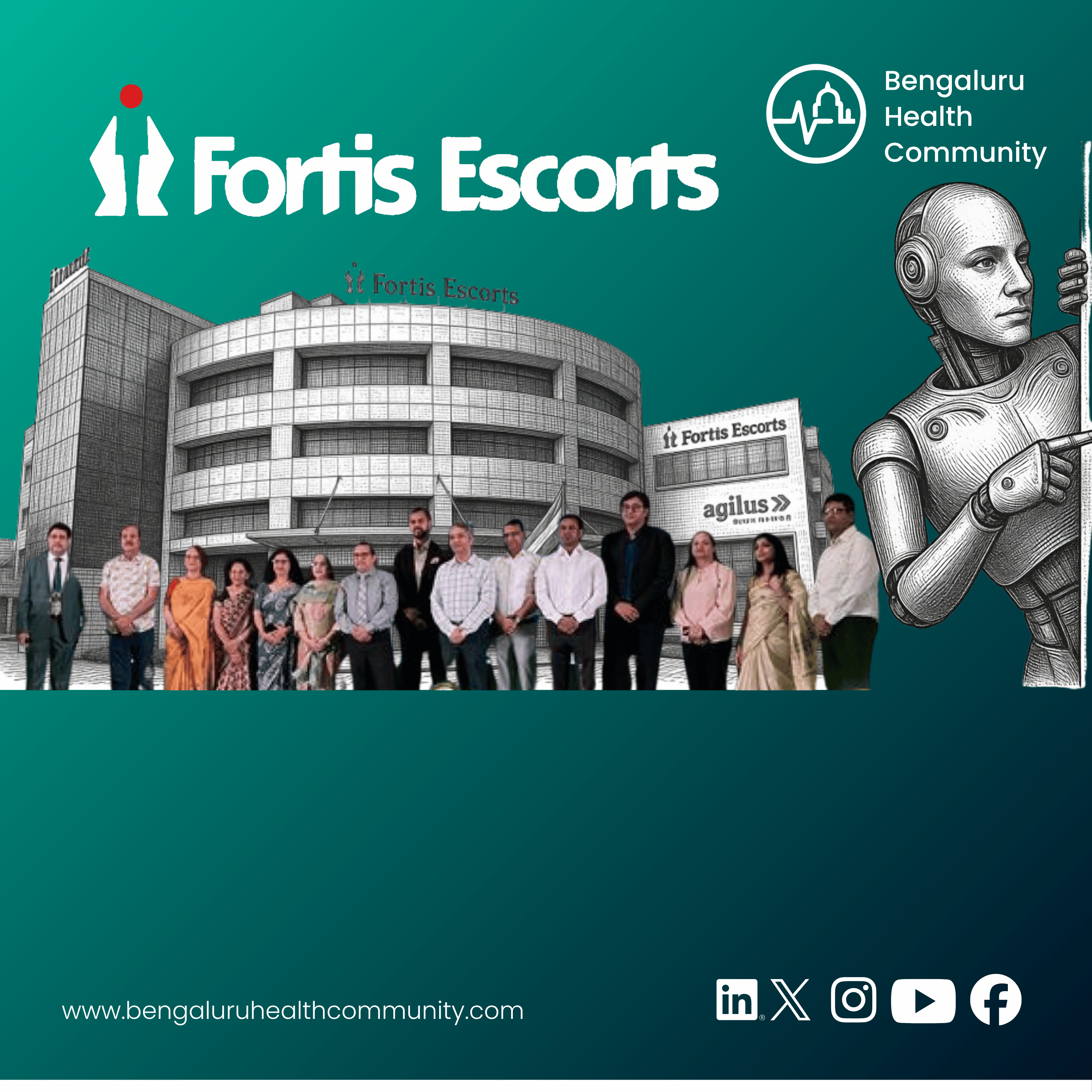
Fortis Escorts Hospital, Faridabad, has launched the Fortis Institute of Robotic Surgery — a dedicated Centre of Excellence established under the hospital's 'Future of Surgery' initiative — designed as the first integrated, multidisciplinary robotic surgery programme in the Faridabad region of Delhi-NCR. The institute represents a significant investment in next-generation surgical infrastructure, bringing together advanced robotic platforms, specialised operating environments, and experienced surgical teams to perform highly precise procedures across multiple clinical specialties under one institutional framework.
The seven specialties covered by the Fortis Faridabad Robotic Surgery Institute are Oncology, General and Gastrointestinal Surgery, Urology, Orthopaedics, Cardiothoracic and Vascular Surgery, Ear Nose and Throat surgery, and Gynaecology. The breadth of this multi-specialty scope is the defining characteristic of what makes the institute structurally significant: robotic surgery at most hospitals in India has been deployed specialty-by-specialty, with different departments acquiring robotic capability independently and operating it in relative isolation. An institute model that integrates robotic expertise across seven specialties under a single coordinated programme creates the shared expertise, case volume concentration, and team learning effects that drive clinical outcomes in robotics-dependent surgery.
Why Robotic Surgery Is India's Fastest-Growing Surgical Technology
Robotic surgery — or more precisely, robot-assisted surgery, where a surgeon controls robotic arms from a console with enhanced visual and dexterous capabilities — has been established as a standard of care for specific procedures in the United States and Europe for over two decades, particularly in urology (prostatectomy), gynaecology (hysterectomy), and cardiac surgery. India's adoption of robotic surgery has been significantly slower, constrained historically by the capital cost of robotic systems (typically $1.5-2 million for a da Vinci Surgical System), the training requirements for robot-credentialed surgeons, and the per-procedure cost premium over conventional laparoscopic surgery.
Over the past three to four years, several forces have converged to accelerate India's robotic surgery adoption. The growing number of hospitals acquiring their first or second robotic systems has created a larger community of robot-credentialed surgeons whose volumes justify the investment. New entrant robotic platforms — including Intuitive's da Vinci Xi, Medtronic's Hugo RAS system, SS Innovations' SSi Mantra (India's first domestically developed robotic surgery system, covered in BHC Media's earlier 2026 editions), and others — have created price competition and increased system availability. And the clinical evidence base supporting robotic surgery's outcomes advantages — reduced blood loss, shorter hospital stay, faster recovery — has expanded to cover more procedure types and patient populations.
The Faridabad Context
Fortis Escorts Hospital Faridabad is a 210-bed multi-specialty facility with a legacy of over 40 years, the first NABH-accredited hospital in Faridabad, and a well-established reputation across cardiac care, neurology, orthopaedics, urology, and critical care. Faridabad — Haryana's most industrialised city, with a population of approximately 1.4 million in the city proper and significantly more in the broader NCR commute zone — has historically depended on Delhi and Gurugram for specialist and complex surgical care. The establishment of a dedicated Robotic Surgery Institute at Fortis Faridabad creates a local option for the complex surgical procedures that were previously requiring patients to travel significantly further.
Dr Abhishek Sharma, Facility Director at Fortis Escorts Hospital Faridabad, articulated the institute's vision as a dynamic platform: designed to be a catalyst where the next generation of surgical technologies are adopted, refined, and innovated upon, with patient outcomes as the foremost priority and a commitment to being an agile, multidisciplinary partner in care delivery across specialties.
"BHC Perspective"
At Bengaluru Health Community, the Fortis Faridabad Robotic Surgery Institute is the hospital sector's clearest example this week of the 'specialisation and scale' investment thesis that has defined India's hospital sector through 2026. Dedicated clinical institutes — not departments, not wings, but purpose-designed centres of excellence with their own identity, governance, and clinical standards — are increasingly how India's best hospital groups differentiate themselves clinically and commercially. For BHC founders building in surgical robotics, clinical training platforms, or hospital management technology — the multi-specialty robotic institute model is the customer environment your products need to serve.
Frequently Asked Questions
Q: What is the Fortis Institute of Robotic Surgery in Faridabad?
A: A dedicated Centre of Excellence launched at Fortis Escorts Hospital, Faridabad, under the 'Future of Surgery' initiative — the first integrated multidisciplinary robotic surgery programme in the Faridabad-NCR region, covering seven specialties: Oncology, GI Surgery, Urology, Orthopaedics, CTVS, ENT, and Gynaecology.
Q: Why does multi-specialty robotic integration matter?
A: Most Indian hospitals have deployed robotic surgery specialty-by-specialty, in relative isolation. An institute integrating expertise across seven specialties under one programme creates shared expertise, concentrated case volumes, and team learning effects that drive better clinical outcomes in robotics-dependent procedures.
Q: What is Fortis Escorts Faridabad's background?
A: A 210-bed multi-specialty facility with 40+ years legacy, the first NABH-accredited hospital in Faridabad, with established capabilities in cardiac care, neurology, orthopaedics, urology, and critical care — and now the first integrated robotic surgery institute in the Faridabad region.