News
Fortis Bengaluru Just Opened a Preventive Genomics Clinic — Inaugurated by the Former Director of IISc — Whole Genome Sequencing Is Now in Your City
"Genomics is no longer a niche area of science. It is becoming a fundamental part of proactive, personalised, and preventive healthcare. Every individual carries a unique genetic story — and reading that story early changes outcomes."
By Mustafa Shariff, Editor in Chief · April 24, 2026 · 5 min read
Summary
- Fortis Bengaluru Opens Preventive Genomics Clinic: What It Means for Precision Medicine in Your City
- Fortis Hospitals Bengaluru has launched a Preventive Genomics Clinic across its network, inaugurated by former IISc Director Prof. Padmanabhan Balaram. Here is the full story and significance for Bengaluru's healthcare landscape.
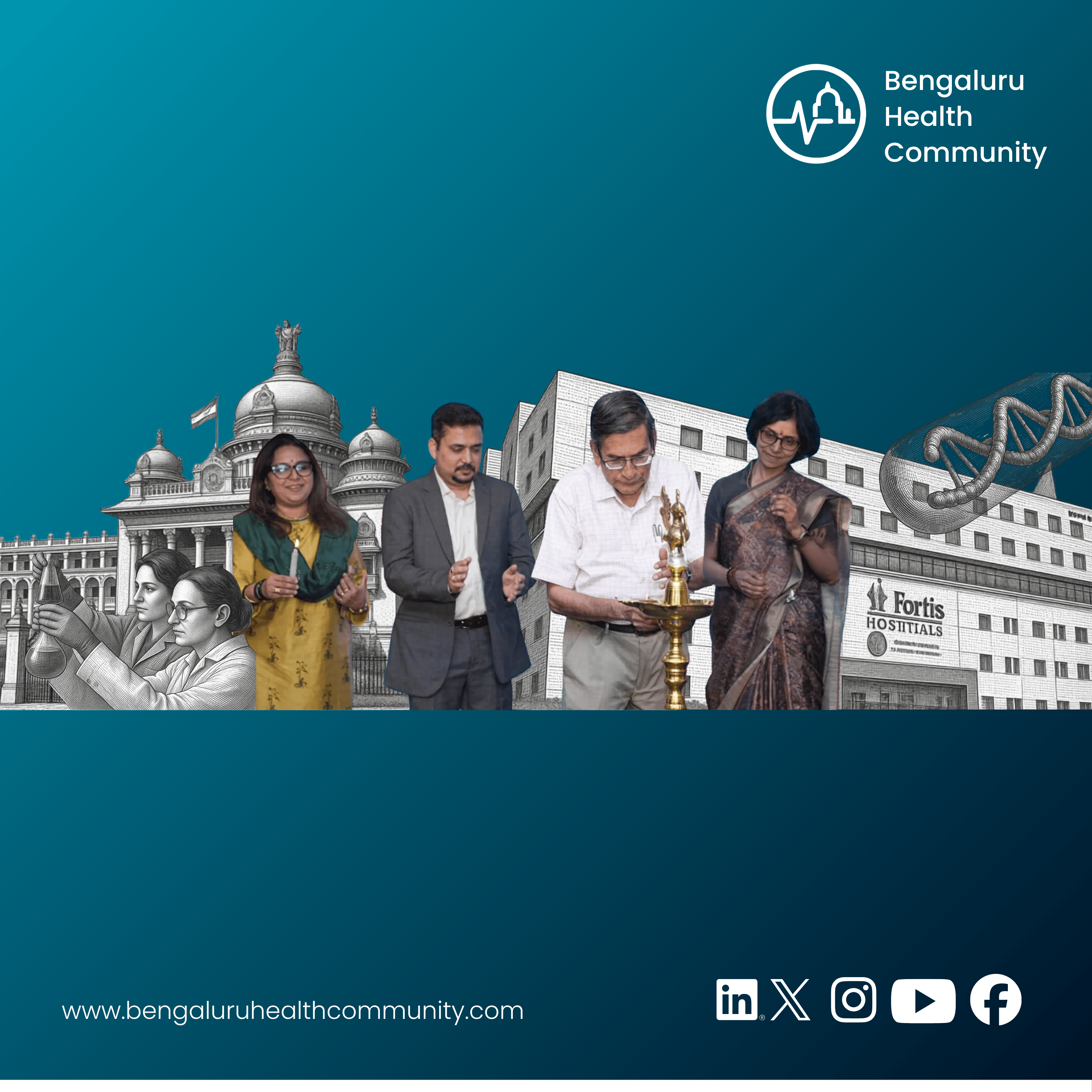
Fortis Hospitals Bengaluru has announced the launch of its Preventive Genomics Clinic across the hospital's Bengaluru network — a development that marks a meaningful step forward in the availability of genomic medicine services in the city. The clinic was inaugurated by Prof. Padmanabhan Balaram, one of India's most distinguished scientists, a Padma Shri and Padma Bhushan awardee, and former Director of the Indian Institute of Science, Bengaluru — an institutional validation that underlines the scientific seriousness of the initiative.
The Preventive Genomics Clinic offers a comprehensive range of genomic services designed to integrate genetic testing into routine preventive and clinical care rather than limiting genomics to rare disease diagnosis or cancer treatment settings. The service menu covers whole genome and exome sequencing — in-depth analysis capable of identifying variants across the entire genome, enabling diagnosis of rare and undiagnosed conditions — hereditary cancer screening using panels targeting mutations in genes including BRCA1, BRCA2, and Lynch syndrome associated genes, pharmacogenomic testing to guide medication selection and dosing based on individual metabolic genetics, prenatal and newborn genetic screening, and cardiac and neurological genetic tests.
Why This Matters for Bengaluru
Bengaluru's claim to be India's genomics innovation capital is grounded in an ecosystem that no other Indian city has replicated. MedGenome — based at the Electronic City campus — is India's leading clinical genomics company and one of the few Indian genomics businesses with US clinical laboratory accreditation. Strand Life Sciences, founded by IISc professors, built one of India's first precision oncology genomics platforms before its acquisition by Danaher's Leica Biosystems. The Centre for Cellular and Molecular Platforms (C-CAMP), located adjacent to the National Centre for Biological Sciences, incubates genomics startups. And IISc itself — the institution Prof. Padmanabhan Balaram led — has multiple laboratories working on genomic medicine, structural biology, and bioinformatics.
The Fortis Preventive Genomics Clinic brings clinical genomic services from this research ecosystem into the hospital setting — creating a pathway from genomic test ordering by clinicians through to patient counselling, interpretation, and care pathway modification. The distinction between research genomics and clinical genomics is significant: clinical genomic services must meet medical-grade quality standards, provide clinically validated interpretation of variants, offer genetic counselling by qualified professionals, and integrate with the clinical workflow in a way that changes patient management decisions.
The Preventive Medicine Argument for Genomics
The Apollo Health of the Nation 2026 report, which BHC Media covered in our April 17 edition, demonstrated with 3 million patient assessments that only 7% of Indians are disease-free by age 40. A significant proportion of India's non-communicable disease burden — cancers, cardiovascular disease, diabetes, rare diseases — has a meaningful hereditary component. Hereditary cancer syndromes account for 5-10% of all cancer diagnoses. Familial hypercholesterolaemia — a genetic condition causing severely elevated cholesterol — affects approximately 1 in 200-500 people and is dramatically undertreated globally because it is underdiagnosed.
Preventive genomics creates a specific clinical opportunity: identifying individuals with elevated genetic risk before disease onset, enabling early surveillance, risk-reduction interventions, and — in some cases — preventive procedures that dramatically reduce the probability of developing the condition. The economics of early genomic diagnosis versus late-stage disease treatment are compelling: identifying a BRCA1 carrier costs a fraction of treating advanced breast or ovarian cancer.
The Pharmacogenomics Opportunity
One of the most immediately actionable components of the Fortis clinic's service menu is pharmacogenomics — testing how an individual's genetic variants affect their response to medications. Approximately 95% of the population carries at least one genetic variant that affects drug metabolism. Common drugs affected include clopidogrel (widely prescribed after cardiac events — variants in CYP2C19 affect its efficacy), warfarin (narrow therapeutic window, variant-dependent dosing critical for safety), codeine (variants in CYP2D6 determine whether the drug is active or toxic), and numerous oncology agents. Pharmacogenomic testing at the point of prescription — before a patient receives their first dose — could prevent a significant number of adverse drug events and treatment failures.
BHC Perspective
At Bengaluru Health Community, the Fortis Preventive Genomics Clinic opening is one of the most locally relevant stories of the week. This is Bengaluru's healthcare infrastructure directly delivering on what the BHC ecosystem builds toward — genomic medicine moving from research to clinical routine in India's most innovation-dense health city. For BHC founders in genomics, precision medicine, or digital health: the clinical market for your products is growing in your own city.
Frequently Asked Questions
Q: What services does Fortis Bengaluru's Preventive Genomics Clinic offer?
A: Whole genome and exome sequencing, hereditary cancer screening, pharmacogenomic testing, prenatal and newborn genetic screening, and cardiac and neurological genetic tests — covering the full range of clinical genomic services for preventive and diagnostic use.
Q: Who inaugurated the clinic?
A: Prof. Padmanabhan Balaram, Padma Shri and Padma Bhushan awardee and former Director of the Indian Institute of Science, Bengaluru — underlining the scientific credibility and institutional seriousness of the initiative.
Q: Why is pharmacogenomics clinically important?
A: Approximately 95% of people carry genetic variants affecting drug metabolism. Pharmacogenomic testing before first prescription can prevent adverse drug events and treatment failures — particularly for cardiac drugs like clopidogrel and warfarin, where variant-dependent dosing affects both efficacy and safety.