Funding News
BREAKING: Max Healthcare Just Entered Eastern India — ₹300 Crore Kalinga Hospital Deal Signed Today
By Mustafa Shariff, Editor in Chief · April 09, 2026 · 5 min read
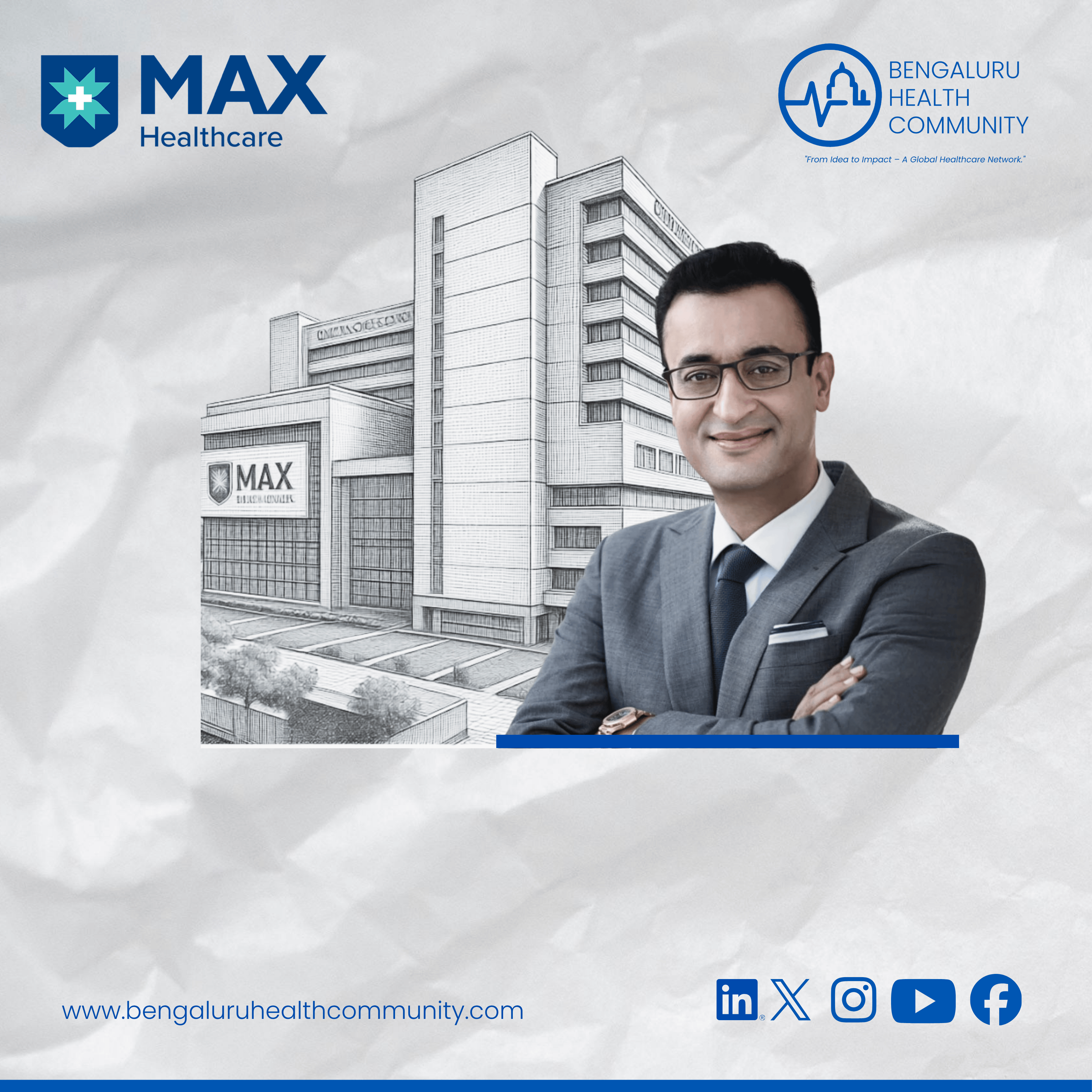
Summary
- "Bhubaneswar is an extremely attractive market. This acquisition allows us to extend high-quality healthcare services to a fast-growing region — with significant operational upside and brownfield potential that are extremely rare."
India's hospital consolidation story has a new chapter — and it happened this morning. Max Healthcare Institute Limited, one of India's largest and most acquisitive private hospital groups, has signed a share purchase agreement to acquire a 58.4% controlling stake in Kalinga Hospital Limited in Bhubaneswar, Odisha, for an equity value of ₹300 crore including control premium. The deal was approved by Max Healthcare's board at its meeting on April 8, 2026, and is expected to close within four to six weeks.
This is Max Healthcare's first foothold in eastern India — a region that the company and its competitors have historically underserved despite significant patient demand and growing health insurance penetration. For Max Healthcare's Chairman and Managing Director Abhay Soi, the strategic logic is direct: Bhubaneswar is an extremely attractive market, and a well-located, reputable hospital with significant brownfield expansion potential represents an opportunity that is genuinely rare.
What Max Healthcare Is Buying
Kalinga Hospital is not a startup acquisition — it is a mature, operationally active facility with an established patient base and a strong track record. The hospital has been operational since 1997, making it a nearly three-decade-old institution with deep roots in Bhubaneswar's healthcare ecosystem. It is NABH-accredited — the gold standard for Indian hospital quality — and operates 250 beds across a 2,60,000 sq ft built-up area on approximately 10 acres of land in Maitri Vihar, one of Bhubaneswar's most central and accessible locations.
The clinical profile is strong: Kalinga Hospital provides multidisciplinary care across Neurology, Cardiology, Orthopaedics, Gastroenterology, Renal Sciences, and Medical Oncology — the specialties that generate the highest patient volume and revenue in Indian private hospitals. It is equipped with a 128-slice CT scanner, a 1.5T MRI machine, and a Catheterisation Laboratory — the diagnostic infrastructure that any serious secondary and tertiary care hospital requires.
The revenue trajectory is equally compelling. Kalinga Hospital's turnover grew consistently from ₹90.39 crore in FY 2022-23 to ₹135.63 crore in FY 2024-25 — a 50% increase over three years, indicating a well-managed operation with genuine growth momentum in its local market.
The Brownfield Opportunity
What makes the Kalinga acquisition particularly strategic is not the current 250 beds — it is what those 10 acres of land can support over time. Max Healthcare has noted explicitly that the campus has the potential to expand to over 1,000 beds on the same site. For a hospital group that has mastered the art of brownfield expansion — taking acquired facilities and systematically upgrading clinical services, adding beds, and improving technology — this is exactly the kind of asset that generates compounding returns over a decade.
Max is financing the acquisition through External Commercial Borrowings of up to ₹300 crore from Standard Chartered Bank, structured as a Senior Secured USD Term Loan with a tenure of up to five years. An additional ₹100 crore in loans will be provided directly to Kalinga Hospital for construction, renovation, and equipment upgrades — signalling that post-acquisition investment in the facility is immediate, not deferred.
Max Healthcare's Acquisition Playbook
Max Healthcare currently operates 20 healthcare facilities with approximately 5,200 beds, concentrated in north India — particularly Delhi-NCR, Punjab, and Uttarakhand — with recent expansion into Mumbai and Nagpur. Its current network utilisation rate exceeds 76%, indicating strong patient demand and limited capacity headroom in existing facilities. Geographic expansion is a commercial necessity, not just a strategic preference.
The Kalinga acquisition follows a pattern that Max Healthcare has refined over several years: identify well-located, NABH-accredited hospitals in growth markets where Max has no presence, acquire a controlling stake at a valuation that reflects the current operational state rather than the full brownfield potential, and then systematically invest in expansion and service upgrades to unlock that potential. It is a replicable playbook — and the hospital consolidation wave in India means there are many more Kalingas to find.
The Bhubaneswar Market
Bhubaneswar is increasingly being recognised as one of India's most underrated healthcare markets. The city serves not just its own growing population but acts as a referral hub for patients from across Odisha and adjacent parts of Jharkhand, Chhattisgarh, and West Bengal — states where quality tertiary care infrastructure is chronically limited. The city already has a well-developed healthcare ecosystem including large public hospitals and multiple medical colleges, which generates consistent patient flow and a trained clinical workforce.
BHC Perspective
At Bengaluru Health Community, the Max Healthcare-Kalinga deal is the kind of story that the BHC ecosystem watches closely. Hospital acquisition activity is accelerating across India — Max, Narayana, Apollo, Fortis, and Manipal are all executing variants of the same consolidation strategy. For healthcare founders building in hospital technology, clinical operations, and revenue cycle management, each new acquisition is a potential customer. For investors tracking the hospital sector, Max Healthcare's systematic expansion is a case study in how high-quality operators build sustainable value in a capital-intensive industry.
Frequently Asked Questions
Q: What did Max Healthcare acquire?
A: Max Healthcare acquired a 58.4% controlling stake in Kalinga Hospital Limited in Bhubaneswar, Odisha, for an equity value of ₹300 crore. Kalinga Hospital is a 250-bed NABH-accredited multi-specialty facility operational since 1997.
Q: Why is the Kalinga Hospital acquisition significant?
A: It marks Max Healthcare's first entry into eastern India, gives it a 10-acre campus with potential to scale to 1,000 beds, and adds Bhubaneswar — an underserved healthcare market serving patients from across Odisha and adjacent states.
Q: How is Max Healthcare financing this acquisition?
A: Max Healthcare is financing the ₹300 crore acquisition through External Commercial Borrowings from Standard Chartered Bank, structured as a Senior Secured USD Term Loan with a five-year tenure. An additional ₹100 crore will be provided to Kalinga Hospital for post-acquisition upgrades.