News
BJP MP Raghav Chadha Tells Rajya Sabha That Referral Commissions Are Inflating Indian Medical Bills by 15-20% — A Systemic Governance Problem Needs a Systemic Fix
By Mustafa Shariff, Editor in Chief · August 20,2026 · 2 mins read
Summary
- Rajya Sabha: Referral Commissions Between Doctors and Diagnostic Centres Inflate Medical Bills 15-20% — BJP MP Calls for Action
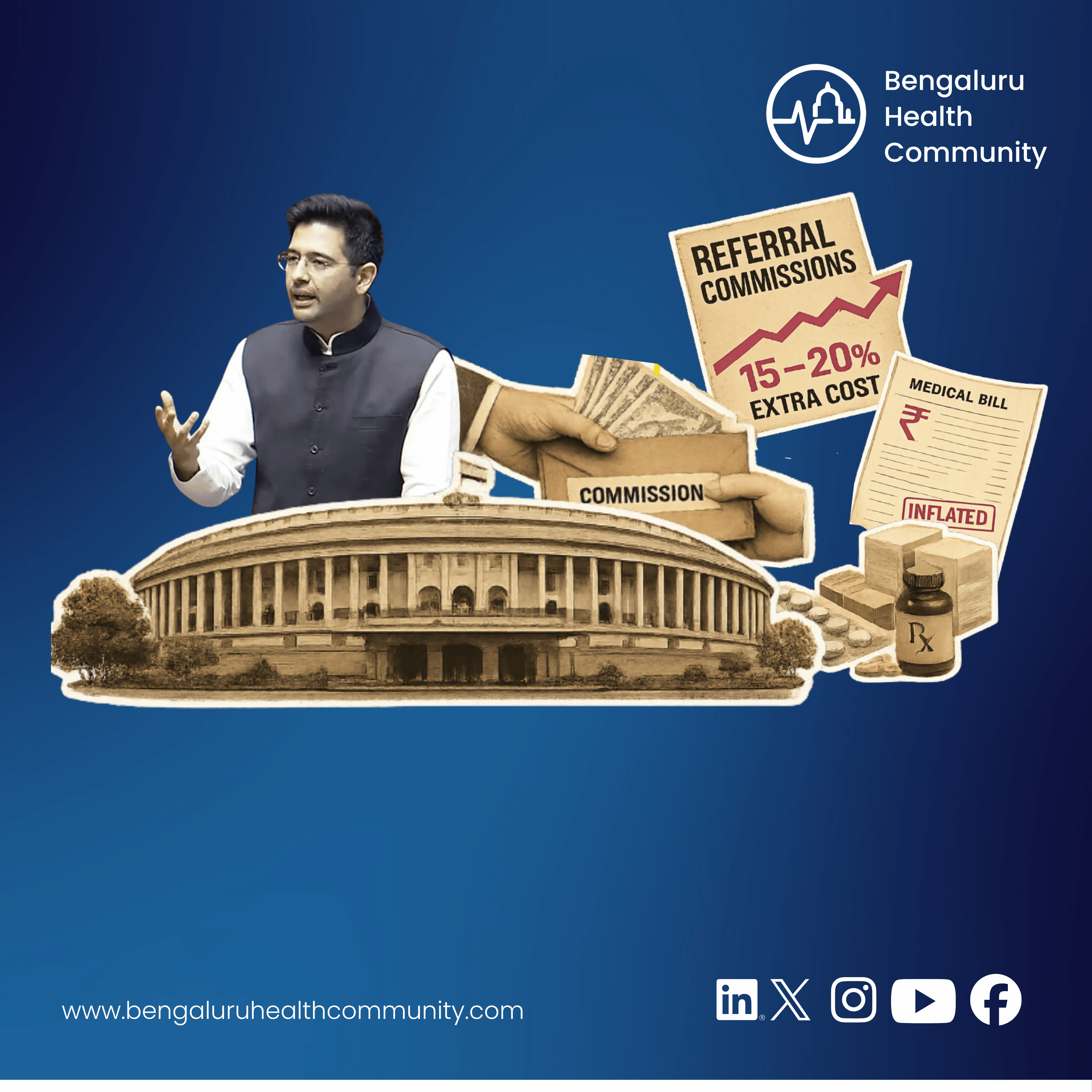
- BJP MP Raghav Chadha alleged in Rajya Sabha that referral commissions between doctors and diagnostic centres inflate patient medical bills by 15-20% — a systemic governance problem in India's healthcare sector that existing MCI guidelines have failed to adequately address.
"There is an illegal nexus between doctors and diagnostic centres. Referral commissions inflate patients' medical bills by 15 to 20 percent. A patient who is referred for diagnostics is often referred not because that diagnostic centre is the most clinically appropriate but because it pays the highest referral fee to the doctor. This is not a marginal problem. It is embedded in the economics of the healthcare delivery system, and it is patients — particularly those without health insurance — who bear the cost."
BJP MP Raghav Chadha raised the issue of referral commissions in the Rajya Sabha, alleging an illegal nexus between doctors and diagnostic centres where financial arrangements for patient referrals inflate patients' medical bills by 15 to 20 percent. The Rajya Sabha discussion places one of India's most persistent and publicly acknowledged healthcare governance problems in the legislative spotlight — potentially signalling regulatory attention.
The referral commission practice — where doctors receive a percentage of the diagnostic, pharmacy, or specialist consultation revenue generated by their referrals — is widely acknowledged to exist in India's private healthcare sector. The Medical Council of India's Code of Medical Ethics explicitly prohibits doctors from receiving 'gifts, gratuities, commissions or bonuses in return for the referring, recommending or procuring of patients.' However, the distinction between legally permissible consultancy arrangements, hospital-based salary compensation, and prohibited commission structures has been difficult to enforce in practice.
The Economic Mechanics of Referral Commissions
The financial mechanics that referral commissions create are straightforward and problematic. A physician who receives a referral commission — typically 20-40% of the diagnostic fee — has a financial incentive to order more investigations, to order more expensive investigations, and to refer to the facility that pays the highest commission rather than the facility with the best clinical quality or the lowest cost to the patient. For patients without health insurance who pay entirely out-of-pocket, this creates a direct 15-20% overcharge on their diagnostic bills — the cost Raghav Chadha cited in his Rajya Sabha statement.
The distortion extends beyond the immediate diagnostic bill: over-investigation drives up the overall cost of healthcare episodes, can expose patients to unnecessary medical procedures with their associated risk and recovery burden, and contributes to the high out-of-pocket health expenditure that BHC Media covered in the context of the Centre asking states to adopt uniform hospital rates (covered July 30 edition).
BHC Perspective
At Bengaluru Health Community, the referral commission issue is a healthcare integrity story with direct implications for the clinical decision-making environment in which BHC's founding clinicians and hospital managers operate. For BHC founders building clinical decision support, diagnostic pathway technology, or healthcare ethics platforms — the referral commission problem is the distorted incentive structure your products need to help healthcare systems navigate or overcome.
Frequently Asked Questions
Q: What are referral commissions?
A: Financial arrangements where doctors receive a percentage of diagnostic, pharmacy, or specialist consultation revenue generated by patient referrals — creating incentives to over-investigate or refer to higher-cost facilities that pay higher commissions rather than the most clinically appropriate or cost-effective option.
Q: What percentage inflation was alleged?
A: Raghav Chadha alleged in Rajya Sabha that referral commissions inflate patients' medical bills by 15-20% — a direct cost burden borne primarily by uninsured patients paying out-of-pocket.
Q: Is this practice legal in India?
A: No. The Medical Council of India's Code of Medical Ethics explicitly prohibits doctors from receiving gifts, gratuities, commissions, or bonuses for referring patients. However, enforcement has been inconsistent, and the practice is widely acknowledged to persist.