Funding News
Agilent Acquires AI Pathology Platform Proscia for $240 Million to Lead Digital Diagnostics
By Mustafa Shariff, Editor in Chief · October 20,2026 · 2 mins read
Summary
- Agilent acquires Proscia for $240M — AI digital pathology, FDA-cleared, serving 4,000 labs
- Agilent Technologies has agreed to acquire Proscia, an AI-enabled digital pathology software platform, for up to $270 million. Proscia's platform is FDA 510(k)-cleared for primary diagnosis and serves over 4,000 labs, hospitals, and pharmaceutical companies.
"Proscia is in 4,000 labs and 16 of the top 20 pharma companies — Agilent is buying the operating system of modern pathology."
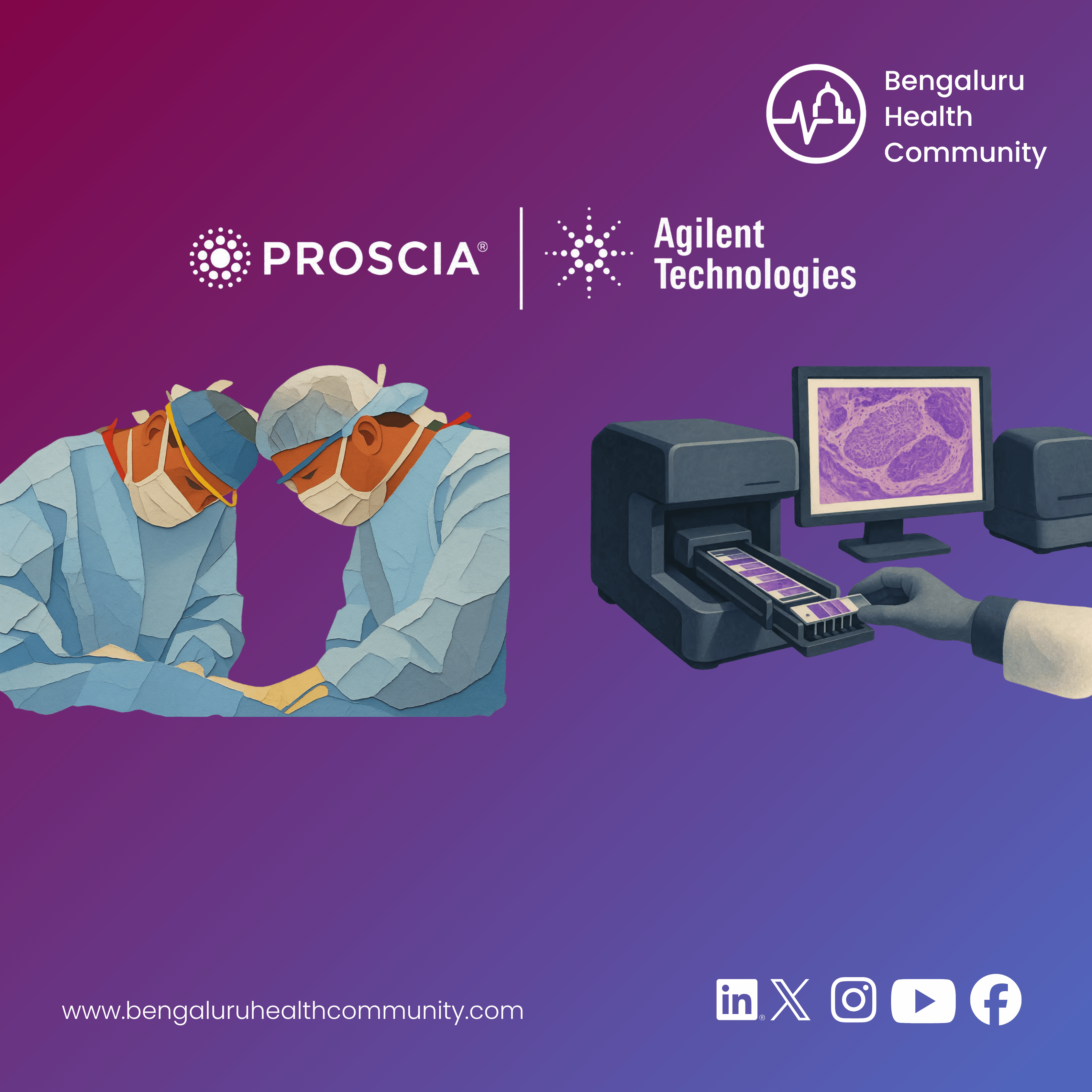
On 13 October 2026, Agilent Technologies (NYSE: A) announced it has entered into a definitive agreement to acquire Proscia, Inc., a Philadelphia-based digital pathology software company, for $240 million in cash at closing, plus up to $30 million in additional payments contingent on future performance milestones — a maximum consideration of $270 million. The deal is all-cash, with DLA Piper advising Agilent and Cooley advising Proscia. Closing is expected in early Agilent fiscal year 2027, subject to customary regulatory conditions. Post-close, Proscia will join Agilent's Life Sciences and Diagnostics Markets Group.
What Proscia Does
Proscia's Concentriq platform is an enterprise digital pathology operating layer. Think of it as an integration platform that sits at the centre of a pathology department's workflow, connecting slide scanners (from any vendor), laboratory information systems (LIS), AI-powered image analysis tools (from Proscia and third parties), pathologist review workstations, and data management systems into a single coherent environment. This vendor-agnostic approach — Concentriq works with scanners and AI tools from any manufacturer rather than requiring an all-in-one proprietary stack — has been a key differentiator. Proscia serves more than 4,000 laboratories, hospitals, and clinics, and counts 16 of the top 20 global pharmaceutical companies as customers. Notably, Concentriq holds FDA 510(k) clearance for primary diagnosis — meaning pathologists can legally use it for cancer diagnosis without a physical slide being present — a high regulatory bar that few platforms have cleared. The platform won 2026 Best in KLAS for Digital Pathology.
Strategic Rationale for Agilent
Agilent describes the $5 billion global pathology market as one of its priority growth areas. The company already has a strong instruments and reagents business in pathology — it sells tissue processors, stainers, antibodies, and assay kits used in diagnostic laboratories and pharmaceutical R&D. Proscia adds the software intelligence layer that sits on top of these instruments, giving Agilent a more complete end-to-end pathology solution. It also provides access to a real-world clinical data repository built from millions of scanned slides — an increasingly valuable asset for AI model training and companion diagnostic development. For Agilent's biopharma customers, Proscia's capabilities in clinical trial pathology workflows and digital biomarker quantification are immediately applicable.
The Shift From Glass Slides to Digital Pathology
The transition from traditional glass-slide pathology to digital pathology (WSI — whole slide imaging) has been slower than many predicted but is now accelerating. The 510(k) FDA clearance for primary diagnosis (achieved by a handful of platforms) removed the last major regulatory barrier in the US. In Europe, CE-IVD marking has enabled primary digital diagnosis even longer. The COVID-19 pandemic exposed the fragility of centralised, single-reader glass-slide pathology when pathologists couldn't be physically co-located. Telepathology — sending digital slides to remote readers — is now standard practice in many institutions. AI-assisted detection of cancer subtypes, HER2 scoring, PD-L1 quantification, and microsatellite instability determination are moving from research to routine clinical deployment. Proscia is positioned at the centre of all of these trends.
Financial Profile and Accretion
Proscia's trailing twelve-month revenue exceeds $18 million — a relatively small base for a $240 million acquisition, implying a revenue multiple above 13x. This is typical for SaaS platforms with high gross margins, sticky enterprise customer relationships, and strong growth rates. Agilent acknowledged the deal may be dilutive to EPS in the near term as it integrates the software business, but described the long-term contribution as "high-growth, high-margin" and consistent with its Life Sciences and Diagnostics strategy. The deal follows Agilent's recent acquisition of Biocare Medical, suggesting a deliberate sequencing to build a more comprehensive pathology portfolio.
India Angle: Digital Pathology is Coming
India's pathology sector remains predominantly glass-slide based, with digital pathology adoption limited to a handful of large reference labs (SRL, Dr. Lal PathLabs) and academic medical centres. However, the drivers for adoption are strengthening: severe pathologist shortages in Tier 2 and Tier 3 cities, growing cancer incidence requiring rapid and accurate diagnosis, NABH accreditation pushing quality standards, and a nascent AI diagnostic startup ecosystem in Bengaluru, Hyderabad, and Mumbai. Companies like Niramai, HealthPlix, and a growing cohort of AI diagnostics startups are building adjacent capabilities. As digital pathology scanner costs fall and platforms like Proscia mature, Indian reference labs will face both the opportunity and the competitive pressure to adopt whole-slide imaging. This Agilent-Proscia deal accelerates the global platform consolidation that will eventually reach India.
Frequently Asked Questions
Q: What is the significance of Proscia's FDA 510(k) clearance for primary diagnosis?
A: FDA 510(k) clearance for primary diagnosis means that pathologists in the US can legally use Proscia's Concentriq platform as the sole method of diagnosis — reviewing a digital whole-slide image without ever looking at the physical glass slide. This is a high bar: most digital pathology systems are cleared only for secondary review (adjunct to glass) or archiving. Primary diagnosis clearance eliminates the glass slide from the workflow entirely, enabling full digital pathology adoption in clinical settings. Very few platforms globally have achieved this clearance.
Q: How does Proscia's vendor-agnostic approach work?
A: Proscia's Concentriq platform is designed to integrate with slide scanners from any manufacturer (Leica, 3DHISTECH, Hamamatsu, Philips, etc.) and AI analysis tools from any developer, rather than requiring hospitals and labs to use a single vendor's full stack. This is strategically important: most pathology departments have existing scanner investments and don't want to replace them. Concentriq acts as the integration layer that makes heterogeneous hardware and software work together as a unified system.
Q: Why is Agilent paying a 13x+ revenue multiple for Proscia?
A: Enterprise SaaS platforms in healthcare with high gross margins (typically 70-80% for software), sticky multi-year customer contracts, strong growth rates, and regulatory moats (510(k) clearance) typically command high revenue multiples because investors expect the revenue base to grow significantly. At $18M trailing revenue with 4,000+ institutional customers including 16 top-20 pharma companies, Proscia's growth profile justifies a premium. Agilent is also paying for the platform's strategic fit with its own pathology instruments business and the cross-sell opportunity.
Q: Is digital pathology relevant for Indian hospitals and labs?
A: Yes, increasingly so. Indian reference labs like SRL Diagnostics and Dr. Lal PathLabs are beginning to adopt whole-slide imaging for second-opinion workflows and remote reporting. As AI-assisted diagnostic tools mature and pathologist shortages become more acute in underserved regions, digital pathology will move from premium referral labs to community and district-level hospitals. Platforms like Proscia — particularly under Agilent's global commercial umbrella — are well-positioned to enter India as digital pathology adoption accelerates.